
Commission hears wide testimony praising county reentry work and warning against DOC consolidation driven by economics
Get AI-powered insights, summaries, and transcripts
Subscribe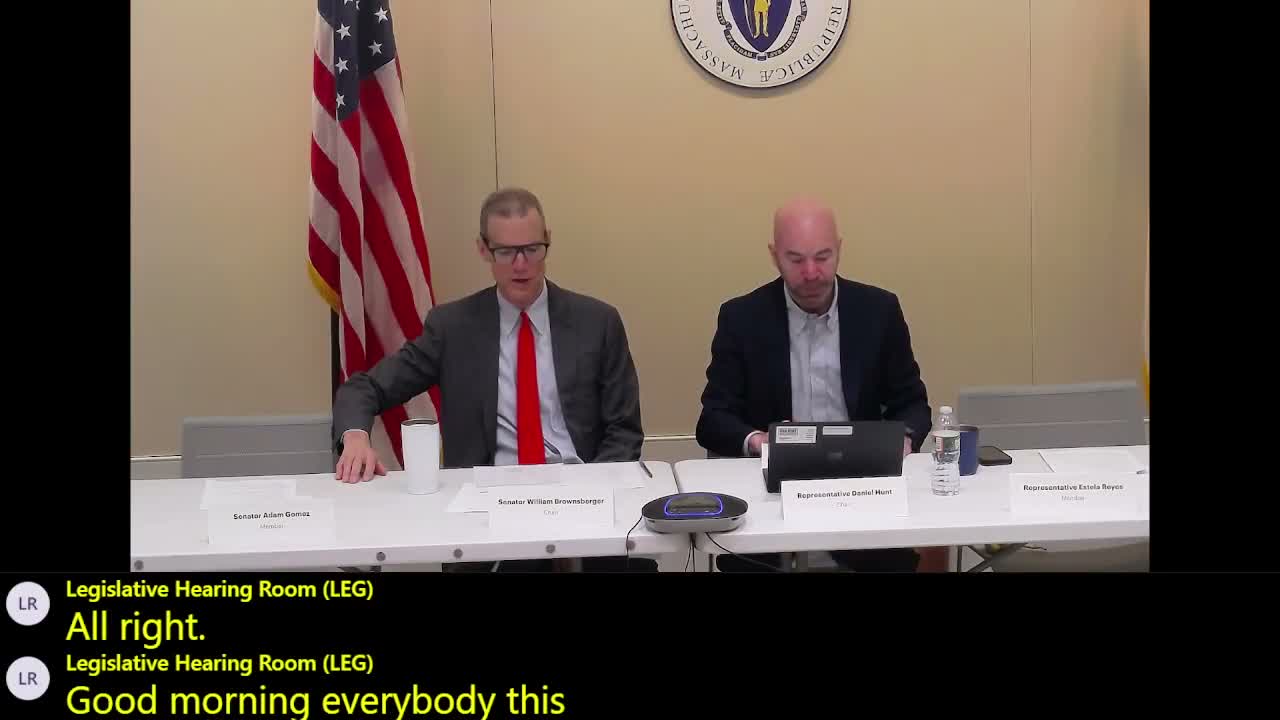
Summary
Witnesses at the Special Commission on Correctional Consolidation and Collaboration praised county reentry programs for rapid in‑reach, education and housing supports while urging caution about consolidation under public‑safety control; they recommended centering health‑services expertise, lived experience, and better data on outcomes.
The Special Commission on Correctional Consolidation and Collaboration opened at 10:07 a.m. and heard more than three hours of public testimony from people with lived incarceration experience, county sheriffs, and reentry practitioners.
Many witnesses, including participants from Hampshire, Barnstable and Franklin counties, described reentry and step‑down programs as life‑changing. "The reentry team, the justice center, everybody here would always let me walk in, talk to them for a good hour," Derek Wills said of Franklin County's supports. Nicole Packard, who recently completed a step‑down and reentry sequence, told the commission that she was relieved to have a parole date but urged more mental‑health and adjustment preparation: "the mental preparation for release is just as important as getting all the paperwork and medication referrals done." Testimony repeatedly credited vocational training, education classes, mentoring and housing placements with improving chances for safe reintegration.
At the same time, a number of witnesses urged restraint about how consolidation is designed. "Consolidation to me looks more like my brothers that come from this directly affected being at the table," Justin Rodriguez, recently released, told commissioners, arguing that consolidation framed primarily as an economic reorganization risks sidelining Health and Human Services expertise and community leadership.
Several speakers with long periods of incarceration described a pattern they said reduced access to programs inside the Department of Correction (DOC). Marquise Mitchell, a person who served many years in state custody, urged more culturally specific programming and said classification labels and security designations often blocked access to programs he needed. Other witnesses described a policy (referred to in testimony as a restrictive implementation of program approvals, cited around policy "4.73") that narrowed outside community participation in cultural and reentry events, reducing opportunities for civic engagement inside facilities.
Women's experiences also drew attention. Jocelyn Vasquez, who said she was wrongfully convicted, described gaps in mental‑health support and visitation rules that excluded key supports: "When I reached out for help, the response I received was being offered coloring pages and crossword puzzles." She and others told commissioners that when family members are denied visits—often for security reasons related to an earlier conviction—that denial can worsen mental health outcomes and impede reentry.
Commissioners and sheriff officials acknowledged both the strengths and gaps in the current system. Several sheriffs described robust audits, ongoing public‑health partnerships, and reentry centers that provide IDs, housing help and job connections. Sheriff Nick Koji (referenced in testimony) and other county leaders described reentry work as a core county responsibility and said county programs frequently provide faster access to in‑reach services than the DOC.
Commission discussion emphasized three crosscutting needs: better, consolidated data on outcomes; clearer pathways to transfer individuals into programs or prerelease when clinically appropriate; and protections to ensure that reforms do not unintentionally reproduce racial disparities. Multiple commissioners asked for consistent outcome metrics so the state can measure recidivism, employment and housing placement across county and state programs.
The commission did not take formal votes at the session. Chairs closed the public testimony and proposed a follow‑up meeting for commissioners to craft a work plan and prioritize information requests (budget lines, program capacity and statewide outcome metrics) to support recommendations. The commission said it will schedule a convening where members will attempt to translate the testimony into concrete data requests and potential short‑ and long‑term policy options.
What happens next: commissioners asked staff to draft a focused agenda for the next meeting that will aim to identify immediate items the commission can recommend (data consolidation, pilot reinvestment strategies, and targeted oversight) and which issues require deeper study (statutory reorganization or agency consolidation).