
Cannabis regulators ask for $32.9M to expand testing, enforcement and public education after fraud findings
Get AI-powered insights, summaries, and transcripts
Subscribe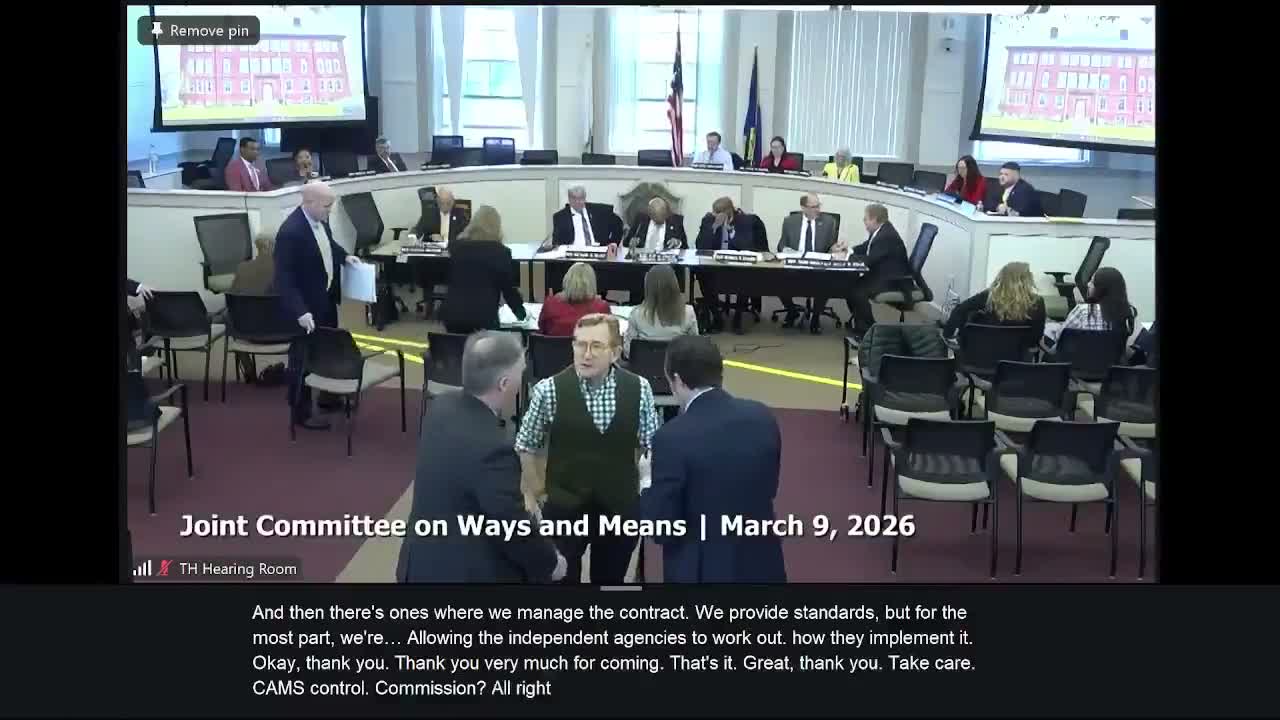
Summary
The Cannabis Control Commission told the joint committee the regulated market is a major revenue source but the agency remains underfunded. Commissioners highlighted testing fraud investigations, proposed a state confirmatory laboratory and a secret-shopper program, and requested $32.9 million to bolster enforcement and public health work tied to a growing retail market.
Chair Shannon O'Brien and CCC staff urged the Ways and Means panel to fund an expanded enforcement, testing and education program for Massachusetts' booming regulated cannabis market.
O'Brien said the industry has generated more than $1.65 billion in adult-use sales in the most recent calendar year and that state revenues from the market are projected at about $325 million annually. "For every dollar invested in the commission, the Commonwealth received approximately $15 back in tax revenues," she said, summarizing the commission's argument for increased appropriation.
Commissioner Kimberly Roy and the commission's finance staff detailed operational strains. They asked for $32.9 million in FY27 to sustain enforcement, expand laboratory capabilities and fund public education efforts that have been unfunded since 2020. Roy described recent enforcement actions and testing problems: the commission fined a private laboratory for data manipulation in a high-profile case and said it needs independent confirmatory testing capacity to reduce reliance on licensee-submitted results.
"We really need a standards laboratory," Roy told the committee. Commissioners estimated a state-run lab capability could be stood up for an initial investment on the order of $700,000 (start-up estimates vary depending on whether the state retrofits existing lab space), and they said a standards lab would support confirmatory testing, public-health investigations and post-market surveillance.
Commissioners also asked for funding to support a secret-shopper and tip line program, additional compliance staff for rollouts such as social-consumption licensing, and public education targeted at youth and parents. The commission highlighted concerns about unregulated hemp-derived products that are widely available at convenience stores and which, they said, are often not subject to lab testing and age verification.
Lawmakers raised public-safety questions, noting media reports of increased emergency-room visits linked to illicit or mislabeled products. The commission said it had done a back-of-the-envelope analysis suggesting emergency visits tied to such products may cost the state on the order of millions of dollars and argued that funding independent testing and stronger enforcement would reduce public-health impacts and protect consumers.
The commission did not pursue any formal committee action during the Barnstable hearing. Members signaled interest in the commission's proposed confirmatory lab and in options for how fee revenue or other mechanisms might better support the regulator without eroding the programs that rely on general-fund appropriations.