
Birmingham Public Schools to review cell‑phone policy and AI guidance after parent petition
Get AI-powered insights, summaries, and transcripts
Subscribe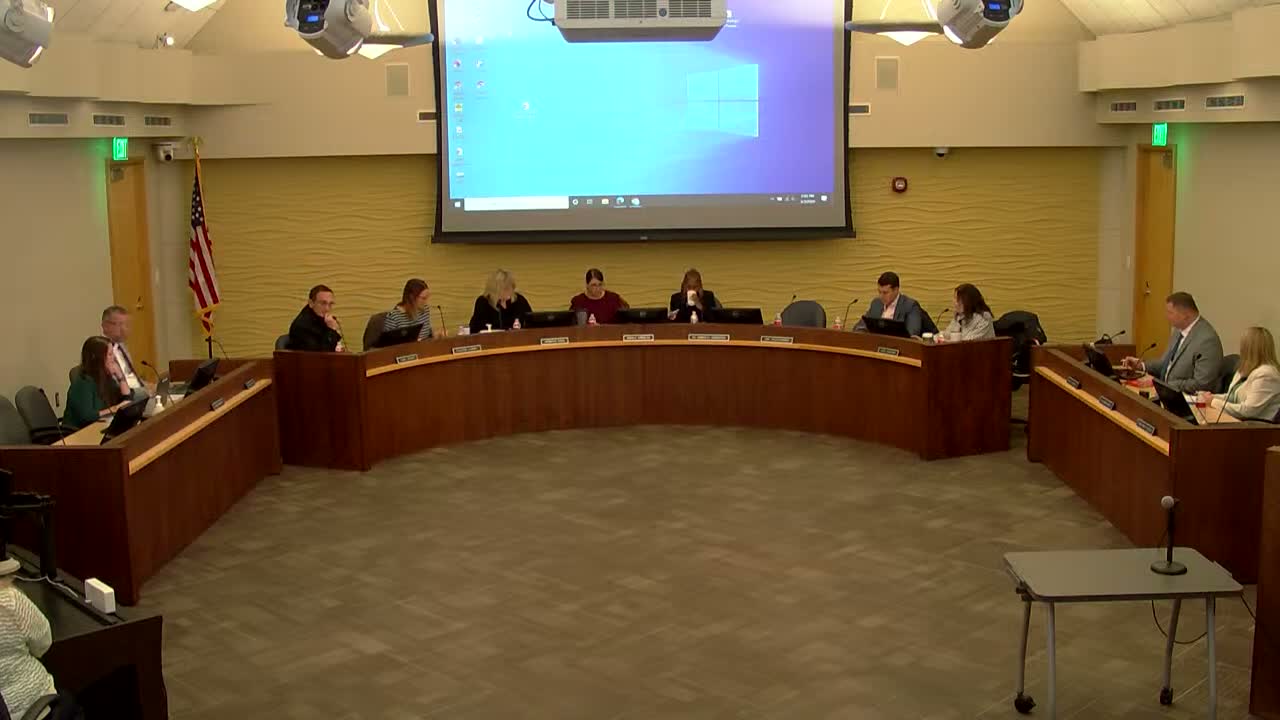
Summary
District staff told the board March 3 they will review a new state wireless‑device law, update administrative regulation 8001 and revisit AI guidance after a parent petition with about 400 signatures asked for a cell‑phone ban, YouTube restrictions and screen‑time limits. Staff outlined a stakeholder timeline and said recommendations will go to the board after March 26.
The Birmingham Public Schools Board of Education received an instructional‑technology briefing March 3 as staff described current policies, content‑filtering practices and next steps after a parent petition seeking stricter device limits.
Riley Kelly, the district's instructional‑technology presenter, said the board’s governing documents include board policy (referenced in paperwork as policy number 2006), student technology agreements, school handbooks and AI guidelines developed by a task force. “We have a few documents that guide us in this work,” Kelly said, noting the documents define minimum expectations and that some schools set stronger rules locally.
Kelly cited the district’s administrative regulation 8001 as the operational guide for student software and hardware use and described content filtering and monitoring tools. In a 30‑day sample he reported that the district’s filters removed “60,000 images,” “15,000 hours of video,” and “650,000 sites” students attempted to visit, and he emphasized the software is imperfect and requires both technical and educational responses: “it is a piece of technology … there’s whole threads out there of students trying to bypass this piece.”
Kelly said the parent petition — which he said had “about 400 signatures” — requests a blanket cell‑phone ban during school, blocking YouTube access for students, developing screen‑time limits by grade and ensuring academic integrity around AI. April Imperial, who represented student‑learning and inclusion work in the presentation, said staff will use the District Curriculum Council (teachers, instructional staff, administrators, students, parents and board members) to review research and stakeholder input and produce recommendations.
Imperial outlined a timeline: research and stakeholder input in February–March with the District Curriculum Council reviewing recommendations on March 26; the instructional leadership council will then vet the council’s guidance, staff will update administrative regulation 8001, and the district will communicate changes to schools and families before implementation begins.
Superintendent Dr. Roberson said the district will examine a recently enacted state wireless‑device law and determine which parts are mandated and which are discretionary. “We are going to investigate that internally and then give some recommendations to the board after we had more time to dig into that,” he said.
Next steps staff described include convening building administrators, special‑education and technology leadership and union representatives; receiving a model policy from counsel; running a policy committee review; and presenting an update to the board in April with community communication to follow.
The board did not vote on policy at the March 3 special meeting; staff said a model policy and administrative details will be developed and returned to the board for formal consideration.