
Health officials warn high SNAP error rate could cost Alaska millions; cite IT fixes and staffing as priorities
Get AI-powered insights, summaries, and transcripts
Subscribe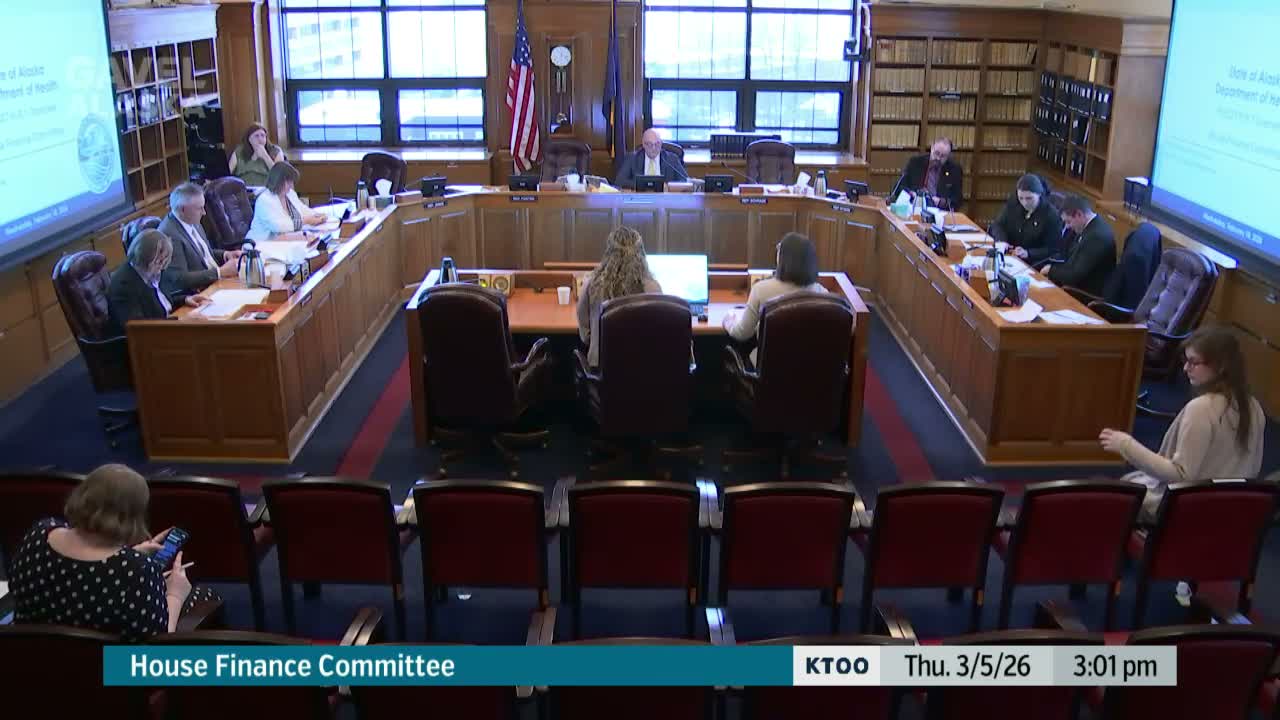
Summary
Department of Health officials told the House Finance Committee that HR 1 shifts SNAP administrative costs to states and that Alaska’s SNAP payment‑error rate (above 15%) exposes the state to federal penalties unless error rates are driven down through training and IT modernization funded with prior appropriations.
Department of Health leaders on Thursday told the House Finance Committee that HR 1 will significantly change SNAP (food assistance) administration in Alaska and that the state must reduce its payment‑error rate to avoid possible federal liability.
"Because our payment error rate is above 15%, we have two years to drive that percentage down," Commissioner Heidi Hedberg said. She described three primary HR 1 changes: expanding the able‑bodied‑adult‑without‑dependents age bracket to 18–64, shifting SNAP administrative cost share toward states (from roughly 50/50 to 75% state/25% federal), and the federal payment‑error‑rate regime that can require states to pay a portion of benefits when error rates stay high.
Members pressed whether error rates can fall quickly with staffing and IT improvements. Hedberg said reduction is the goal but "it's not a light switch" because federal error‑rate calculations are tied to federal fiscal years and the measures capture both client and eligibility technician errors. She said recent audits find much of the state's errors trace to eligibility‑technician mistakes and those are the department's focus.
Deputy Commissioner Emily Ritchie and department staff described an ongoing IT modernization effort financed in prior years — roughly $52 million for Medicaid and SNAP eligibility systems — and said modernization work is proceeding via an agile, iterative process that will stand up improvements incrementally. Ritchie noted the legacy SNAP system dated from 1983 and needs replacement.
Committee members also sought historical context. Hedberg said error‑rate calculation methods changed around 2015–16 and at times have been calculated differently in prior years; she offered to provide the committee with a historical series and more details on audit methodology. The department said it had received a round of position deletions (about 121 positions removed in FY22) that contributed to staffing shortfalls and is now adding staff: the department reported 15 new eligibility technicians in the prior year, with 13 currently in training and two nearing completion.
DOH provided program size metrics: about 65,000 individuals (roughly 30,000 households) participate across SNAP and related public‑assistance programs, and the department said it maintains a public dashboard for program counts. Hedberg told lawmakers the department is tracking call times and said it would follow up with the committee on performance goals and call‑center metrics.
Lawmakers asked about costs: one lawmaker noted federal penalties escalate sharply above the 10% threshold and asked whether investing in fixes now would cost less than future penalties; Hedberg said she believed fixing problems sooner is cheaper and offered to follow up with cost comparisons.
DOH told the committee it is expanding communications to beneficiaries this spring about Medicaid changes tied to HR 1 and that it will continue to pursue staffing, training and IT changes to reduce error rates and improve client interactions.