Senate committee hears split testimony on SB193 to give limited prescribing rights to naturopathic doctors; bill set aside
Loading...
Summary
At a March 5 second hearing on Senate Bill 193, witnesses offered both support and safety concerns about granting limited prescription authority to licensed naturopathic doctors; the committee closed testimony, set the bill aside for further consideration and set amendment deadlines for March 9.
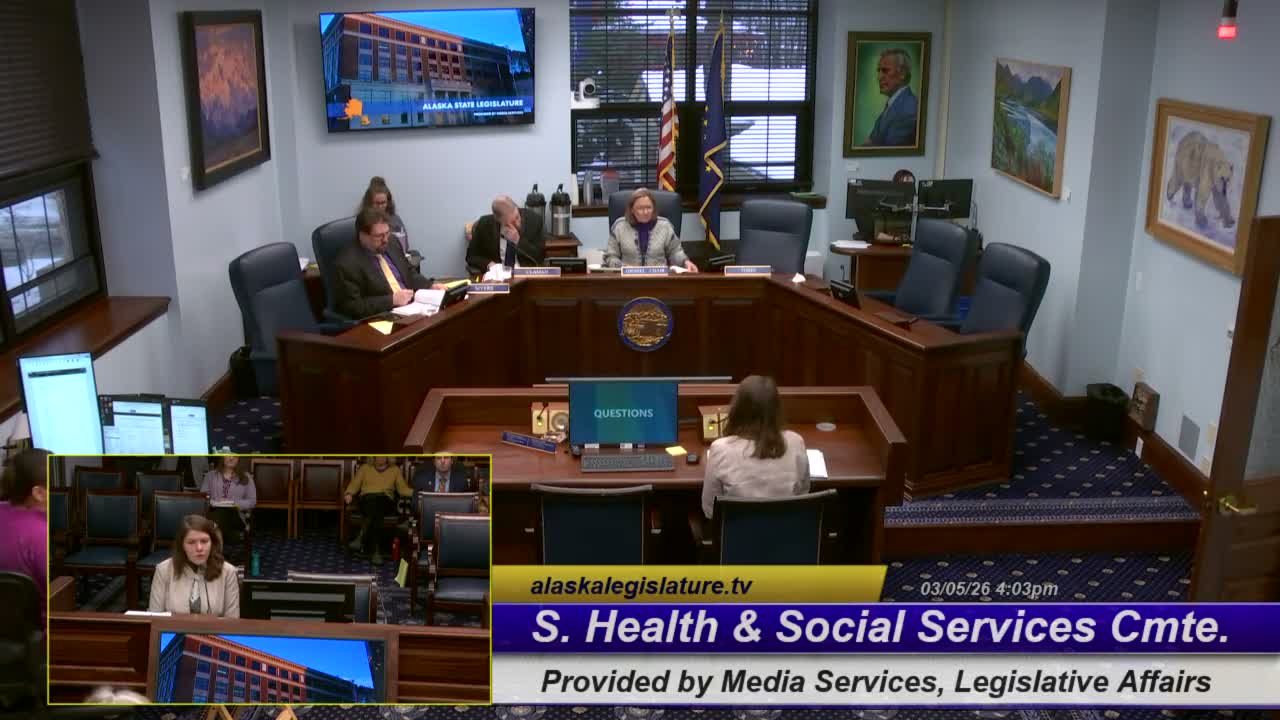
The Alaska Senate Health and Social Services Committee held a second hearing on March 5 for Senate Bill 193, which would allow licensed naturopathic doctors who meet specified education and testing requirements to prescribe a limited set of medications after one year under a supervising physician’s collaborative agreement.
Jenna Calhoun, staff to the bill sponsor, told the committee SB193 would permit a naturopathic doctor who completed four years of accredited postgraduate study and passed the elective pharmacology exam to prescribe medications after one year of supervised practice. Calhoun said the bill would exclude controlled substances, poisons, chemotherapy, antipsychotic drugs, therapeutic ionizing radiation and minor surgery, and that 11 other states already authorize similar prescriptive scope for naturopathic doctors.
Public testimony was mixed. Supporters — including clinicians and patients — said the bill would expand primary‑care access in Alaska, especially in underserved areas. "The services they offer are highly in demand," testified Bethany Buchanan, who said she represented the APRN Alliance at one point in her remarks and described long professional collaboration with naturopaths. Dr. Scott Looper (Fairbanks) described naturopaths as "well trained, competent, safe practicing practitioners" who can be part of a team that refers to specialists when needed.
Regulatory and association voices urged caution. Pam Benton, executive director of the Alaska State Medical Association, asked the committee to review physician comments filed with the committee and said the lack of live physician callers did not reflect the depth of concern. Benton told the panel that one year of supervision after graduation "does not seem significant enough to establish safety for the patients in Alaska" and urged a reasonable formulary and stronger supervision language.
Other speakers tried to quantify safety data. Shannon Braden, a board member of the Federation of Naturopathic Medicine Regulatory Authorities, cited multi‑state disciplinary statistics and told the committee that in some states with broad prescriptive rights there were, in Braden's words, "0 disciplinary actions" for inappropriate prescribing over a 2010–2024 period for the level of authority SB193 proposes.
Clinical leaders also raised condition‑specific concerns. Dr. Anu Mariam Kala, medical director of the Cancer Center at the Alaska Native Medical Center, said she is concerned about patient confusion and possible disruptions to continuity of care for seriously ill patients; she described cases where patients opted for non‑standard care and later returned with more advanced disease.
After public testimony, Vice Chair Giesel closed the record and said the committee would set the bill aside for further consideration. She announced amendment deadlines: SB193 amendments are due March 9 at 12:00 p.m., and she set an identical deadline for SB206 (school suicide policies and firearms storage). The committee scheduled its next meeting for March 10.
What the committee did: no vote was taken. The committee recorded testimony and directed staff to accept amendments by the announced deadlines for further consideration.