
Committee hears emotional testimony on bill to require insurance coverage for PANS/PANDAS treatments
Get AI-powered insights, summaries, and transcripts
Subscribe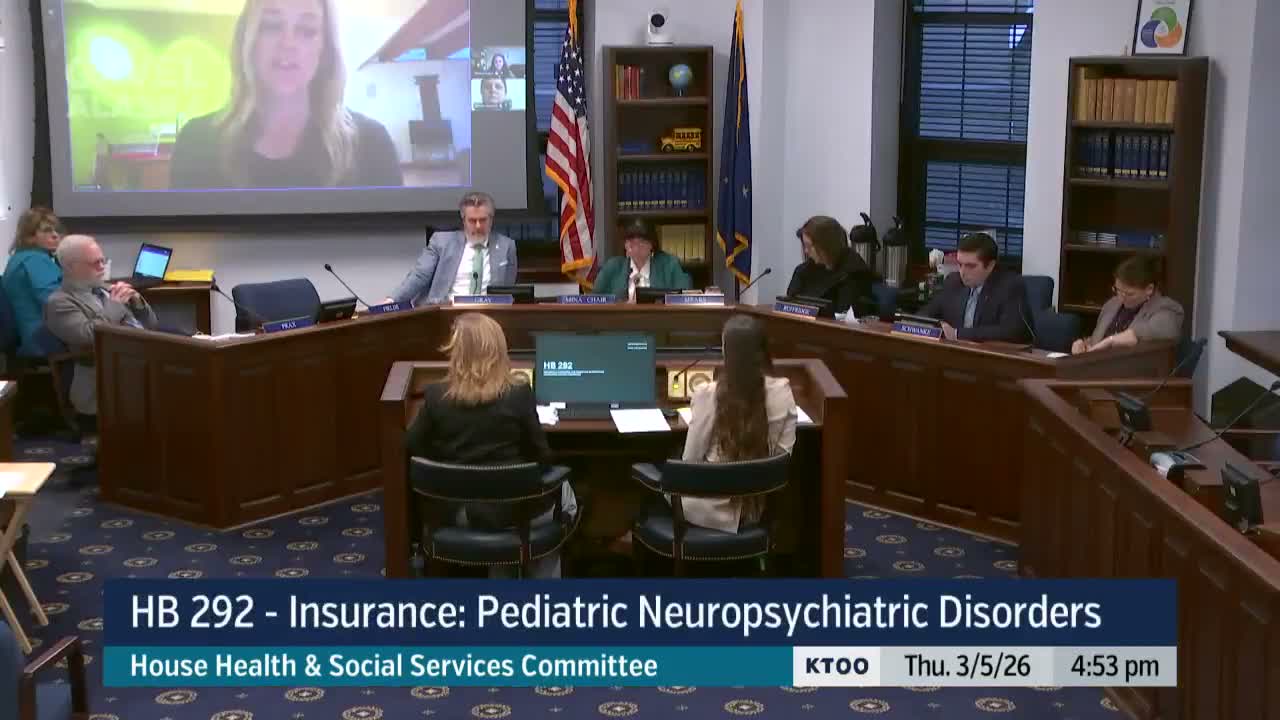
Summary
Rep. Julie Colomb introduced HB 292 to require insurance coverage for pediatric autoimmune neuropsychiatric disorders (PANS/PANDAS), including treatments such as IVIG; families testified about delayed diagnosis, financial hardship and life-changing responses to treatment. The committee set an amendment deadline and requested medical testimony at the next hearing.
Representative Julie Colomb introduced House Bill 292 on March 5, a bill that would require insurers to cover treatments for pediatric autoimmune neuropsychiatric disorders (PANS/PANDAS), including advanced therapies such as intravenous immunoglobulin (IVIG). The committee heard multiple, often emotional personal accounts from Alaska families and advocates who described long diagnostic journeys and treatment denials by insurers.
Sarah Lemley, executive director and co-founder of the Northwest PANDAS/PANS Network and a parent, described the disorders' clinical presentation and argued that IVIG is an established treatment for the most severely affected children. "One round of IVIG out of pocket can cost tens of thousands of dollars," Lemley told the committee, and she said denials by insurers force providers into lengthy appeals or cause families to exhaust savings. Lemley said early diagnosis and first-line treatments (antibiotics, anti-inflammatories) can resolve many cases, but the sickest children require IVIG; she cited phase 3 placebo-controlled work and fiscal analyses from other states that found coverage raised premiums only marginally.
Two Alaska parents described their families' experiences. Rebecca Pullins said her son's rapid decline in 2023 ended in a PANDAS diagnosis after a positive strep test and prompt first-line treatment that led to improvement; she told the committee that delayed diagnosis often means families face higher-cost interventions later. Michelle Hayworth described a son who was briefly detained in juvenile facilities before an eventual PANS diagnosis and said early recognition and treatment changed her children' outcomes. Hayworth asked the committee to ensure coverage includes Medicaid, noting that a large share of Alaska children rely on public coverage and should not be excluded from access to evidence-based care.
Committee members asked for medical testimony at the next hearing to review diagnostic criteria, treatment evidence and the spectrum of severity among PANS/PANDAS cases. Witnesses said disorders vary in severity, early intervention reduces progression to higher-cost therapies and insurer denials frequently cite treatments as experimental or investigational. The committee set an amendment deadline for HB 292 (March 9 at noon) and will consider additional testimony in future hearings.
Next steps: the committee set an amendment deadline and requested clinical witnesses and fiscal analyses to inform future action.