Lifetime Citizen Portal Access — AI Briefings, Alerts & Unlimited Follows
Senate panel hears contested testimony on SB203, a bill to criminalize firearm conversion devices
Loading...
Summary
Supporters say SB203 will give local law enforcement clear authority by aligning state law with federal prohibitions on conversion devices; opponents — including the NRA and several firearm experts — say the draft language is overbroad or vague and could criminalize lawful parts or infringe constitutional protections. The committee set an amendment deadline of March 15.
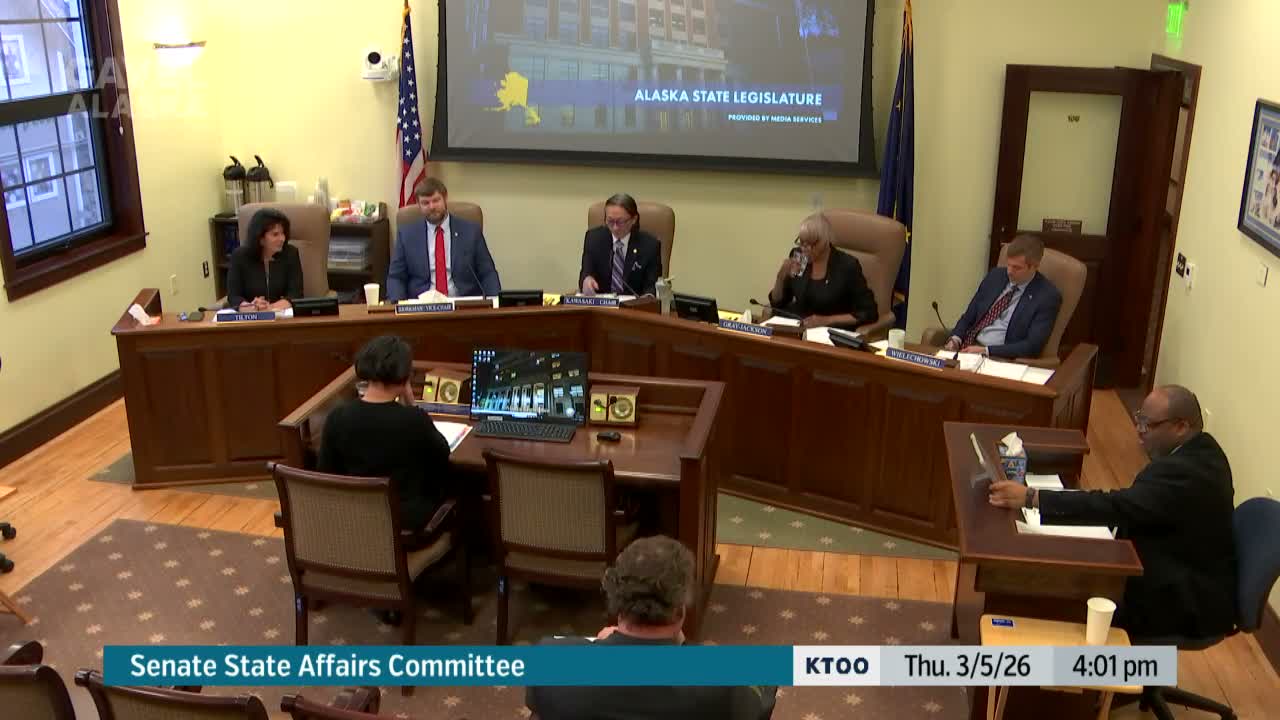
The Senate State Affairs Committee heard extended testimony March 5 on SB203, which would make possession of devices that convert handguns into automatic weapons a state crime. Sponsor Senator Lukey Gail Tobin said SB203 is intended to "ensure that it is easier and quicker for our local law enforcement to prosecute these already federally prohibited crimes." He emphasized that the bill targets devices, not firearms.
Proponents — including Jan Caulfield and other commenters — said updating state law to address Glock switches and similar conversion devices will streamline enforcement and protect communities. "SB203 would allow troopers to become adequately trained and to take state enforcement action and not rely on federal action," Caulfield told the committee.
Opponents raised drafting, constitutional and enforcement concerns. Aveen Klein, state director for the NRA Institute for Legislative Action, said the Alaska draft contains broader language than federal and Alabama statutes and could create "traps for law‑abiding gun owners" due to overbroad or missing definitions. Several firearm experts and callers warned the bill's phrases (for example, "without manual reloading") could be read to cover lawful tools and older firearms.
Other public commenters offered mixed views: some urged swift passage to address a perceived rise in converted firearms; others urged the committee to hold the bill until language is clarified to avoid litigation and unintended criminalization.
The committee closed public testimony and the chair set an amendment deadline of March 15 for SB203. No committee vote on final passage occurred at the hearing.
Why it matters: Supporters say state‑level prohibitions give local law enforcement clearer and timelier enforcement options. Opponents say vague statutory language risks criminalizing lawful behavior and invites legal challenges, potentially implicating state and federal constitutional protections. The committee signaled willingness to accept amendments before further action.