
Committee debates HB282’s effect on Anchorage charter, pauses action
Get AI-powered insights, summaries, and transcripts
Subscribe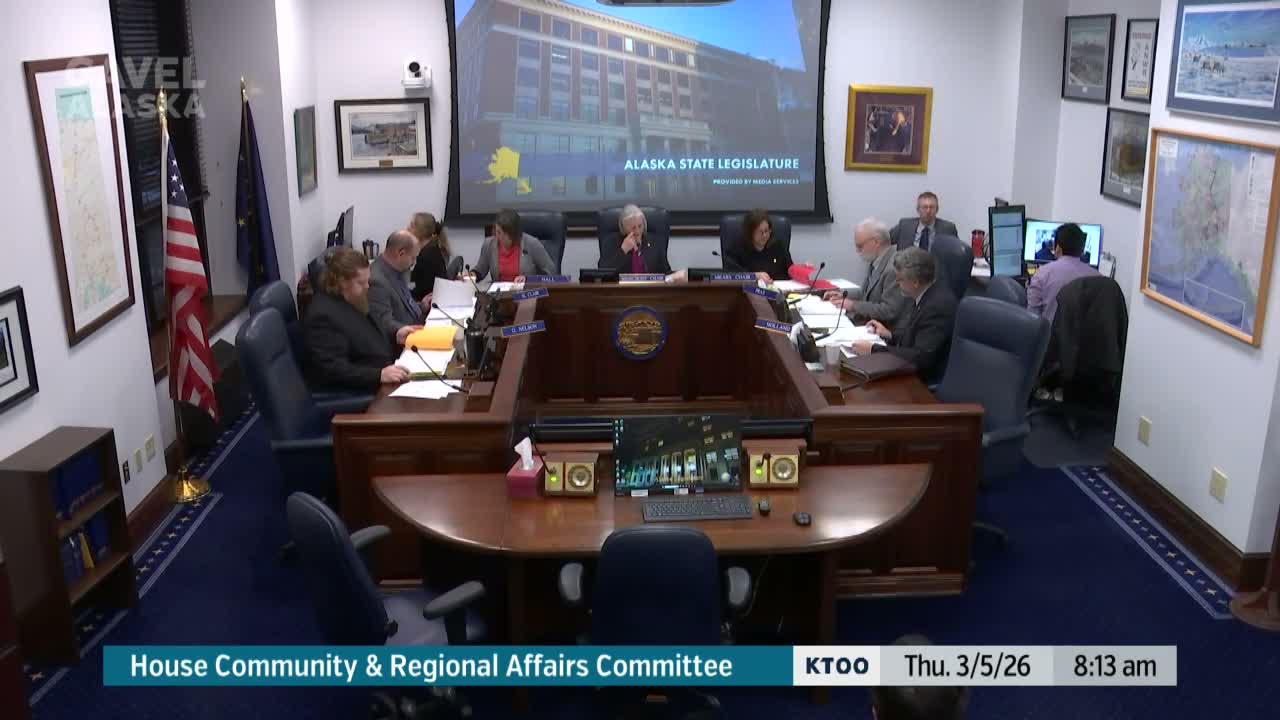
Summary
Lawmakers and transportation officials debated HB282, which would prevent municipalities from banning automated traffic safety cameras; sponsors said the bill restores local assemblies’ options, DOT said it is not an enforcement agency, and the committee set the bill aside for further work and potential amendments.
The House Community and Regional Affairs Committee held a second hearing on House Bill 282 on Thursday, considering whether the Legislature should prevent municipalities from banning automated traffic safety cameras.
Sponsor Representative Zach Fields (House District 17) described the bill as restoring local assemblies’ ability to consider automated enforcement. "All this bill does is put it back in the hands of the assembly and let the assembly make a decision," Fields told the committee, adding the bill does not require any municipality to adopt cameras.
A remote public commenter, Tom Atkinson, said Anchorage faces an "epidemic of red light running" and that police staffing shortages limit in-person enforcement. "We don't have enough police in Anchorage for writing tickets for traffic violations," Atkinson said, urging passage of the bill to give localities the option to use technology.
Pam Golden, state traffic and safety engineer with the Department of Transportation, told the committee DOT could fund or install camera systems as a safety countermeasure but is not an enforcement agency. "We are not in the enforcement business," Golden said, and emphasized that automated enforcement requires partnership with a law enforcement agency and local public process.
Zach Hartman, traffic signals manager for the Municipality of Anchorage, described engineering countermeasures already in use at problematic intersections (Minnesota/Northern Lights), including a pedestrian barrier, changes to signal timing at night and other FHWA-proven measures. Hartman said recent fatalities at higher speeds motivated late-night signal timing changes.
Lawmakers debated the larger question of when the Legislature should alter voter-approved municipal charter provisions. Representative Kai Holland said she was "struggling with when does the legislature step in and negate the decision that voters made," while Fields and Representative Prox argued that substantial changes in circumstances over decades can justify restoring local legislative authority.
Members also discussed a Senate CRNA amendment that would prevent municipalities over 25,000 population from imposing a ban; the sponsor said he is open to working with members on amendments. After extended discussion and Q&A with DOT and municipal engineers, the committee set HB282 aside for further consideration and did not take final action.