
Committee advances HB329 after utility warns staffing and logistics strains
Get AI-powered insights, summaries, and transcripts
Subscribe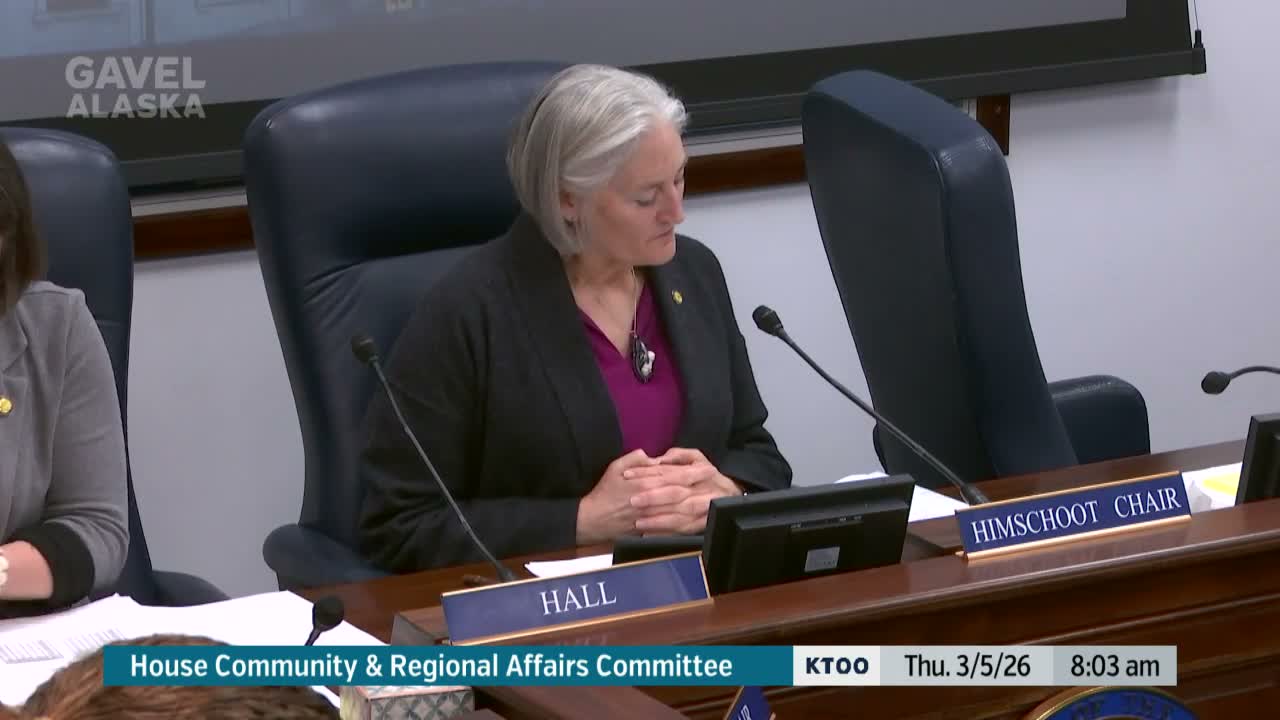
Summary
The House Community and Regional Affairs Committee voted to move HB329 from committee after Alaska Village Electric Cooperative (AVEC) testified that a recent statutory interpretation is increasing repair delays and costs across 58 rural communities, and co-chairs said a legislative fix is needed to restore timely service.
The House Community and Regional Affairs Committee on Thursday moved House Bill 329 from committee following testimony from Alaska Village Electric Cooperative that recent regulatory interpretation has strained its ability to maintain power in small, remote communities.
Bill Stamm of Alaska Village Electric Cooperative told the committee AVEC supplies power to 58 rural communities and that a recent reading of statute after Bethel joined AVEC’s service area (Bethel population about 6,000) has forced the cooperative to impose burdensome certificate and mobilization rules. "We are getting further behind in the work that we need to do in these small communities," Stamm said, citing higher contractor costs, freight restrictions on small aircraft and increased logistical complexity when moving crews and equipment between towns.
Co-chair Donna Meares said AVEC and the utilities had pursued other avenues but concluded a statutory fix was required to avoid a year of service delays and escalating expenses. Committee members asked why the interpretation had surfaced now and whether statutory language could be clarified to apply to utilities rather than to communities.
Representative Carolyn Hall moved to discharge HB329 (work order 34-LS1412) from committee with the attached fiscal note and individual recommendations. "I move HB329 work order 34-LS1412 backslash I from committee with attached fiscal note and individual recommendations," Hall said. Seeing no objections, the chair announced the bill had moved out of committee. The committee took a brief at-ease for paperwork and returned to the record.
The committee offered no recorded roll-call vote; the motion was approved by voice with no objections recorded. The bill will proceed according to the Legislature's next procedural steps.