
Sponsor pitches $150 head tax plus 4% surtax to close Alaska’s fiscal gap; lawmakers press for updated modeling
Get AI-powered insights, summaries, and transcripts
Subscribe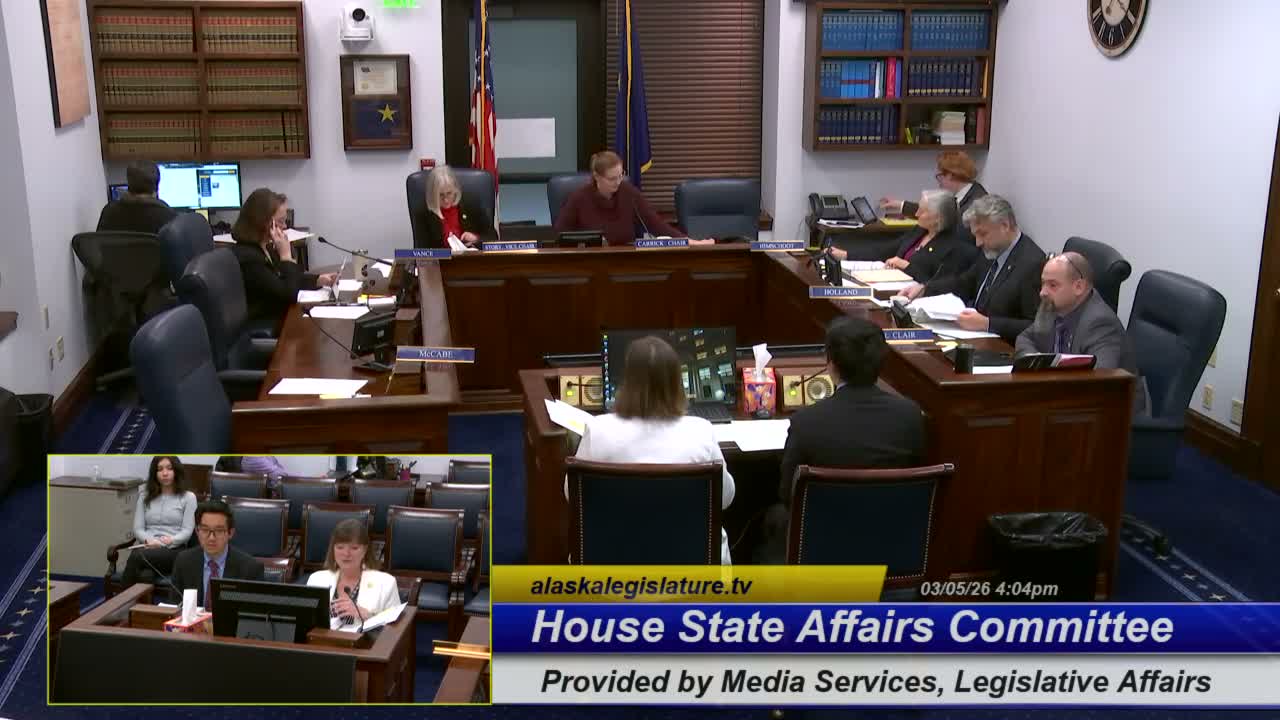
Summary
Rep. Elise Galvin presented HB152, combining a $150 annual head tax with a 4% surtax on income above $150,000; the Department of Revenue fiscal note estimates $300–$350 million, and lawmakers requested more granular, up‑to‑date modeling for local impacts and nonresident workers.
Representative Elise Galvin summarized House Bill 152 on March 5 as a combined revenue measure — a $150 per‑year head tax and a 4% surtax on earnings above a $150,000 threshold for single filers (and $300,000 for joint filers) — intended to help close a structural state fiscal gap and fund education priorities.
Galvin said the goal is to broaden the state’s revenue base and described the bill as a mix of a head tax and an income tax that would also close an S‑corporation tax loophole. Legislative staff advised that the most recent Department of Revenue fiscal note estimated roughly $300–$350 million in revenue from the measure, with most revenue coming from the 4% surtax on high earners. Galvin acknowledged the estimate used older data and said updated projections may change with new industry activity.
Committee members pressed the sponsor on distributional effects and locality‑specific impacts. Members asked how the tax would interact with communities that already levy local taxes (Bethel, Homer, Seldovia, Sitka) and whether seasonal industries and large incoming projects (North Slope/LNG) would materially change revenue outcomes. Representative Vance and others requested models that incorporate projected incoming workers and their wages; legislative staff (David Chang) pointed to Department of Labor reports showing high nonresident shares in oil and seafood industries and explained how average quarterly wages affect whether workers hit the surtax threshold.
Lawmakers also debated technical design choices — whether to implement the head tax first and phase in the surtax, whether to include intent language tying proceeds to education, and how to structure the standard deduction to alter revenue yields. Representative Galvin said she was open to collaboration on stair‑step implementation and agreed to provide additional examples and modeling focused on specific communities.
The committee did not vote on HB152. Chair Kerrick said the bill will return to the committee for amendments and signaled the extended amendment deadline (Monday, March 9) and likely follow‑up next week.