
Committee advances Working Connections childcare changes after adopting attendance tiers and survey delay
Get AI-powered insights, summaries, and transcripts
Subscribe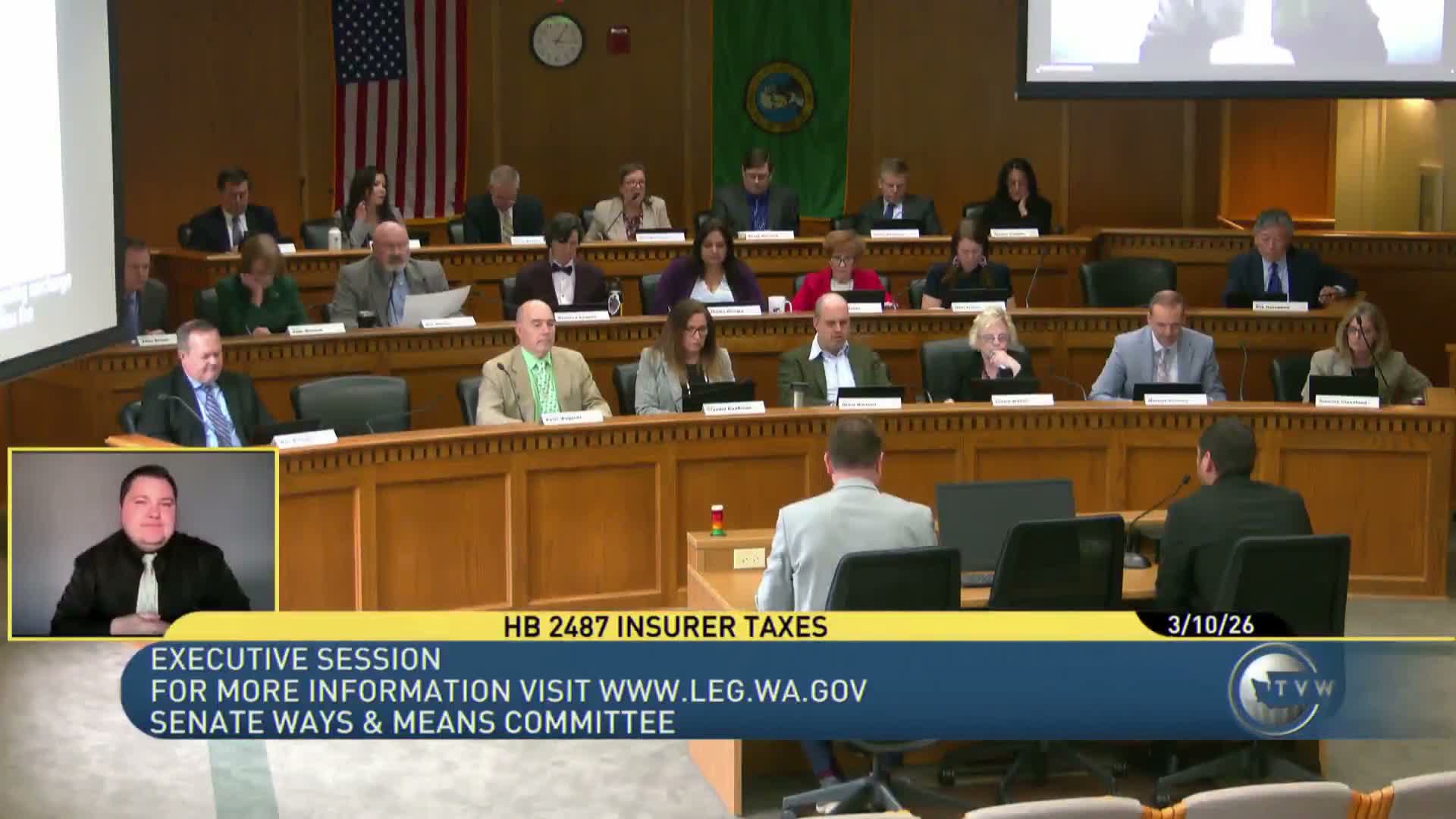
Summary
The committee gave Substitute House Bill 2,689 a due-pass recommendation after adopting amendments that delay a strict 65% market-rate survey requirement and create a three-tier attendance reimbursement schedule; fiscal notes cited multi-hundred-million-dollar savings projections.
The Ways and Means Committee advanced Substitute House Bill 2,689, which revises reimbursement and rate-setting rules for the Working Connections childcare program, giving the substitute bill a due-pass recommendation to the rules committee after adopting key amendments.
An analyst summarized that the substitute bill would change the program’s attendance-based reimbursement policy, modify planned rate increases (the transcript contains an unclear percentile reference), introduce a 65% market-rate survey response-rate requirement for rate-setting, and eliminate enhanced-rate regions and some planned income-eligibility expansions. The fiscal note cited in the hearing estimated $565,000,000 in savings over the full year for the base substitute bill.
Senator Wilson, who offered Amendment 6, argued that the committee should delay imposing a strict 65% regional survey-response threshold until the 2028 survey (affecting the 2029 biennium) and proposed a fallback that would validate a region’s results if it had at least a 40% response rate and showed improvement over the prior survey. “Right now, the highest response rate has been between 40–42% per region,” Wilson said, urging a policy that encourages continuous improvement rather than invalidating entire surveys.
Amendment 6 — delaying the 65% requirement and providing the 40% fallback — was adopted by voice vote. Senator Robinson’s Amendment 7, which established a three-tier attendance reimbursement schedule (16 or more authorized days: full reimbursement; 9–15 days: providers may claim payment for 15 days or full payment for certain part-time authorizations; 1–8 days: providers may claim 11 paid days), was also adopted; committee discussion noted that the attendance tiers were intended to protect providers while achieving savings. Committee members then rolled the adopted amendments into a striking amendment and gave Substitute HB 2,689, as amended, a due-pass recommendation to the rules committee (voice vote).
The transcript records no roll-call tallies for the voice votes. Analysts and senators noted that fiscal notes for some amendments were not yet available, and that the ultimate savings figures will depend on future survey results and response rates.