Get Full Government Meeting Transcripts, Videos, & Alerts Forever!
Get email alerts on the Tourism Funding topic
No spam. Unsubscribe anytime.
County attorney presents draft agreement to raise Chamber's hotel-motel allocation to 7% and formalize DMO duties
Summary
County Attorney Miss Davis presented a draft contract to formalize allocations of hotel-motel taxes to the Chamber of Commerce as the county's direct marketing organization (DMO) and proposed increasing the Chamber allocation from 6% to 7% of collections; staff noted state-law reporting and auditing requirements and suggested an April 1 effective date if the board directs negotiation.
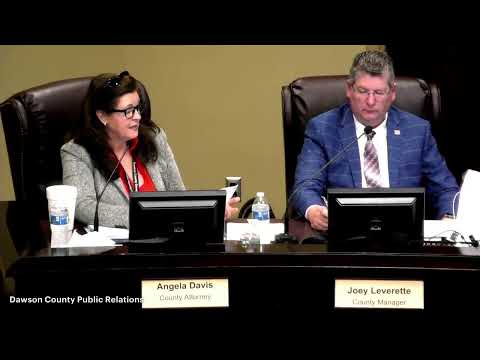
County Attorney Miss Davis presented a draft agreement to the board to formalize how Dawson County will allocate hotel-motel (lodging) tax revenues to the Chamber of Commerce acting as the county's direct marketing organization (DMO). Davis told the board the draft addresses detailed statutory requirements about how lodging-tax revenue can be spent, including required budget submissions, annual reporting and auditing obligations under state law.
"So what you've got before you is a contract that would be with the chamber that would identify what our obligations are in terms of remitting these funds based upon our hotel motel tax collections," Miss Davis said. She said the draft contemplates moving the Chamber's allocation from 6% to 7% of collections (the county collects at an 8% rate) and noted differences in spending flexibility across statutory collection levels.
Davis warned that state oversight (the Department of Community Affairs) enforces statutory rules and can recommend rescinding a county's right to collect lodging taxes if allocations are not handled properly. She asked the board whether it wanted staff to negotiate the final agreement with the Chamber and discussed a potential effective date of April 1 should the board move quickly.
Why it matters: the change would increase the Chamber's share of tourism-related revenue and requires a legally compliant agreement and budgeting process to ensure funds are spent within statutorily permissible categories (TCT and TPD). The decision affects how much revenue remains for the county's general purposes.
Next steps: the board directed staff to negotiate with the Chamber and to consider placing the draft on a future meeting agenda (potentially effective April 1); staff will work with the Chamber on budgets and reporting deadlines before bringing a final agreement back for approval.