
Senate file 42 proposes $740,000 for culturally specific suicide-prevention curriculum; bill laid over
Get AI-powered insights, summaries, and transcripts
Subscribe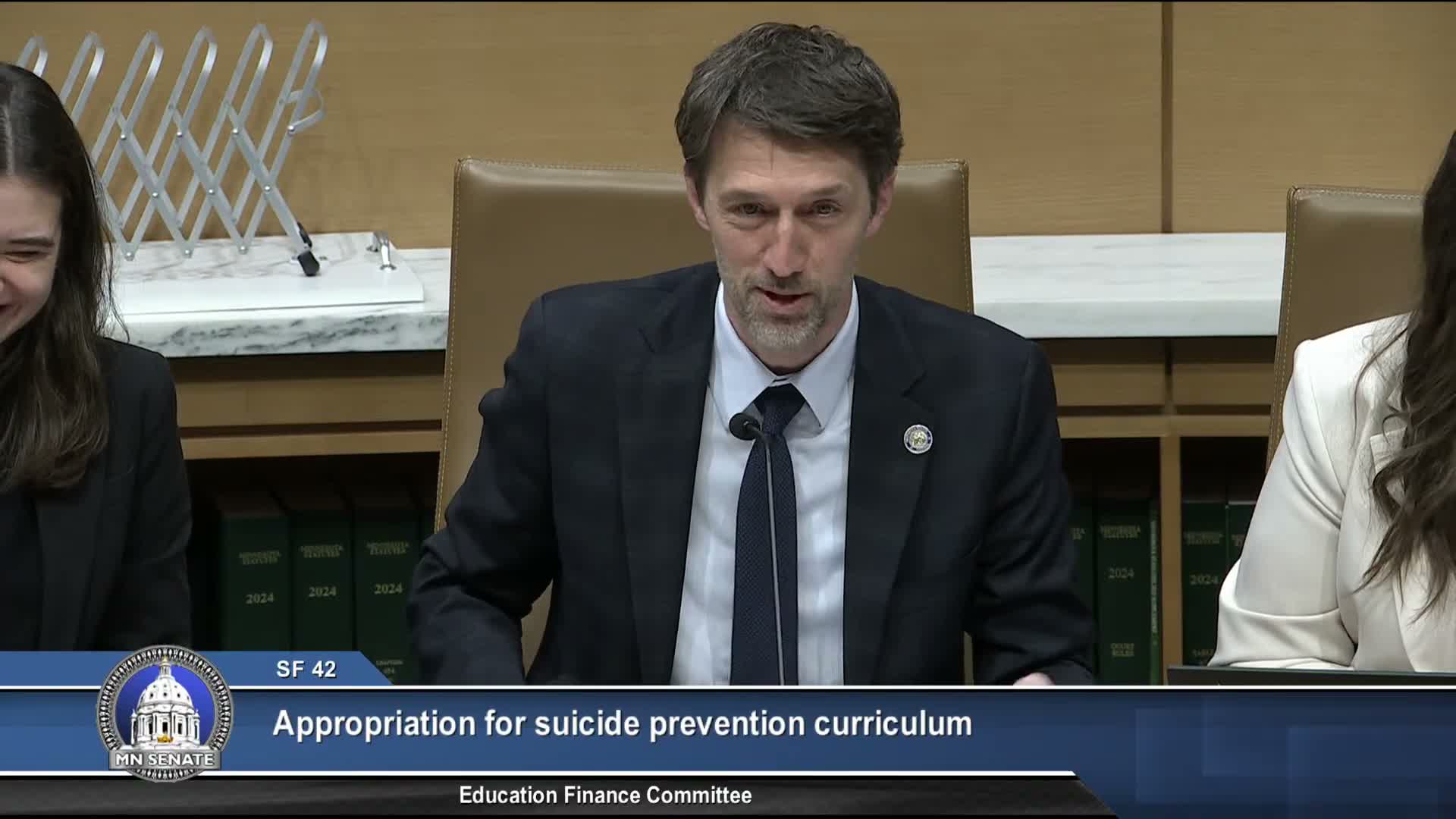
Summary
Senate File 42 would appropriate about $740,000 to the Division of Indian Work for a pilot culturally specific suicide-prevention curriculum for Native youth; testifiers described rising youth suicide rates and urged culturally grounded interventions. The measure was laid over for possible inclusion in an omnibus bill.
Senate File 42, introduced during the Minnesota Senate Education Finance Committee’s March 10 hearing, would appropriate about $740,000 to the Division of Indian Work to support a pilot, culturally specific suicide-prevention curriculum for Native American youth. The committee chair said the bill was laid over for possible inclusion in a future omnibus bill.
The bill sponsor told the committee that suicide rates are rising among Minnesota youth and described the proposed grant as a targeted response: “For the past 20 years, the number of suicides in Minnesota has steadily increased,” the sponsor said, and noted that Indigenous people are at particularly high risk. The proposal covers curriculum developed by Division of Indian Work staff in collaboration with community members and mental-health professionals to address mental health, emotional intelligence, substance use and suicide prevention.
Beth Bridal, who identified herself as a member of the White Earth Band of Ojibwe and a Division of Indian Work school attendance liaison and trainer, testified in support and described her personal experience: “When I was 17, I had planned to die by suicide,” she told the committee, arguing that a culturally specific curriculum could have reduced that risk and that similar programming today could help students and families access practical and cultural tools to cope.
A 20-year-old testifier identifying as Midnight from the Red Lake tribe and a health educator at Indigenous Peoples Task Force described participating in DIW youth programs and an internship called Keep the Fire Alive, saying those spaces provided community support and culturally grounded skills. Midnight told the committee that practicing traditional teachings daily made them feel safer and better supported in a way they had not felt elsewhere.
Committee members did not take a final vote on the bill. The chair announced that Senate File 42 would be laid over for possible inclusion in a future omnibus bill, allowing further review and potential amendment before final action.
The committee’s next scheduled meeting was announced; no further action on Senate File 42 was recorded at the March 10 session.