Get Full Government Meeting Transcripts, Videos, & Alerts Forever!
Council hears in-depth briefing on tax-increment financing, urban renewal authorities and special/metro districts
Summary
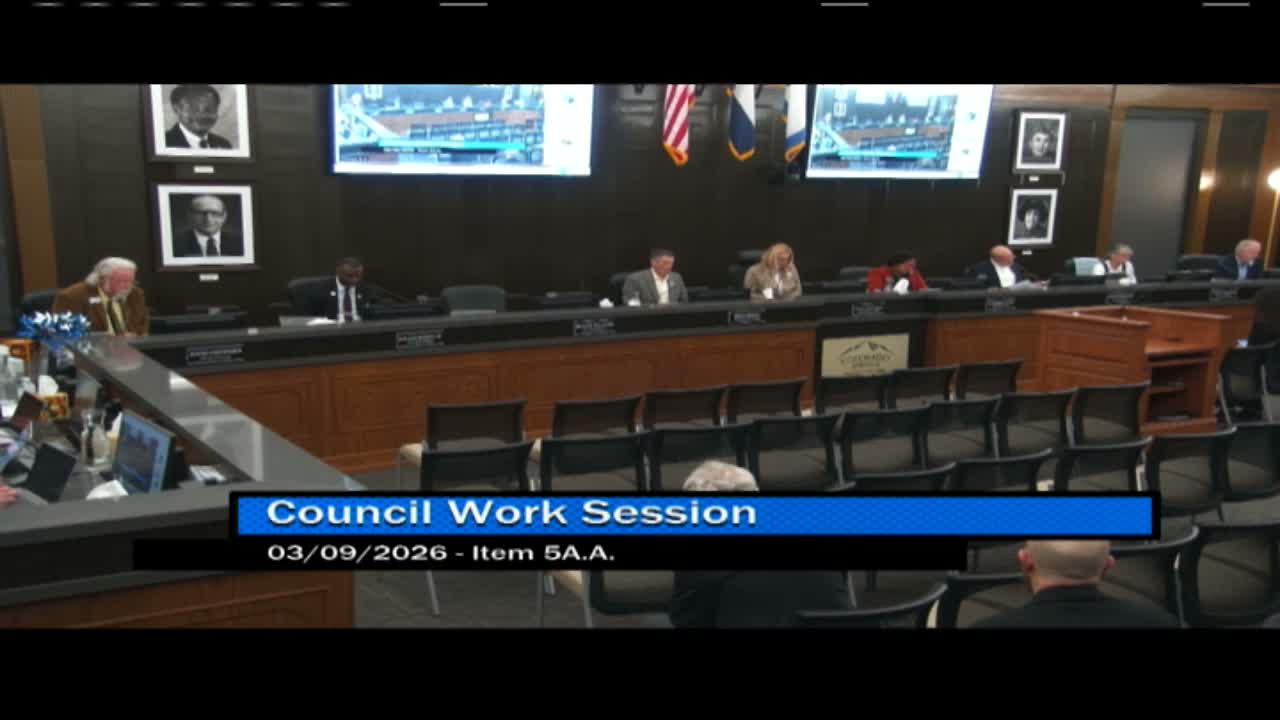
An outside attorney briefed the City Council on how tax-increment financing (TIF), urban renewal authorities and special and metropolitan districts work in Colorado, including statutory limits, the post‑2015 negotiation process, disclosure requirements and common governance concerns; council members pressed for local examples and follow-up materials.
Carolyn, a private attorney with Brownstein Hyatt Farber Schreck, told the City Council on March 9 that tax-increment financing (TIF) and special/metropolitan districts are neutral tools cities can use to finance infrastructure if general revenues are insufficient.
"These tools in and of themselves are value neutral," Carolyn said, explaining she advises both developers and local governments. She outlined the mechanics of TIF — a base valuation is set when an urban renewal plan is adopted, and the net increase in assessed value (the increment) can be pledged to finance public improvements or be borrowed against to attract private investment. She noted the statutory maximum term for tax increment pledges is 25 years.
The presentation emphasized that a legislative finding of blight requires four or more of the statute’s 11 factors across a defined geographic area, and that boundaries should be drawn as narrowly as possible. The presenter also described the post‑2015 statutory regime…
Already have an account? Log in
Subscribe to keep reading
Unlock the rest of this article — and every article on Citizen Portal.
- Unlimited articles
- AI-powered breakdowns of topics, speakers, decisions, and budgets
- Instant alerts when your location has a new meeting
- Follow topics and more locations
- 1,000 AI Insights / month, plus AI Chat