
Minnesota senators present bipartisan package to curb consumer-facing AI, propose ban on minors’ access to chatbots
Get AI-powered insights, summaries, and transcripts
Subscribe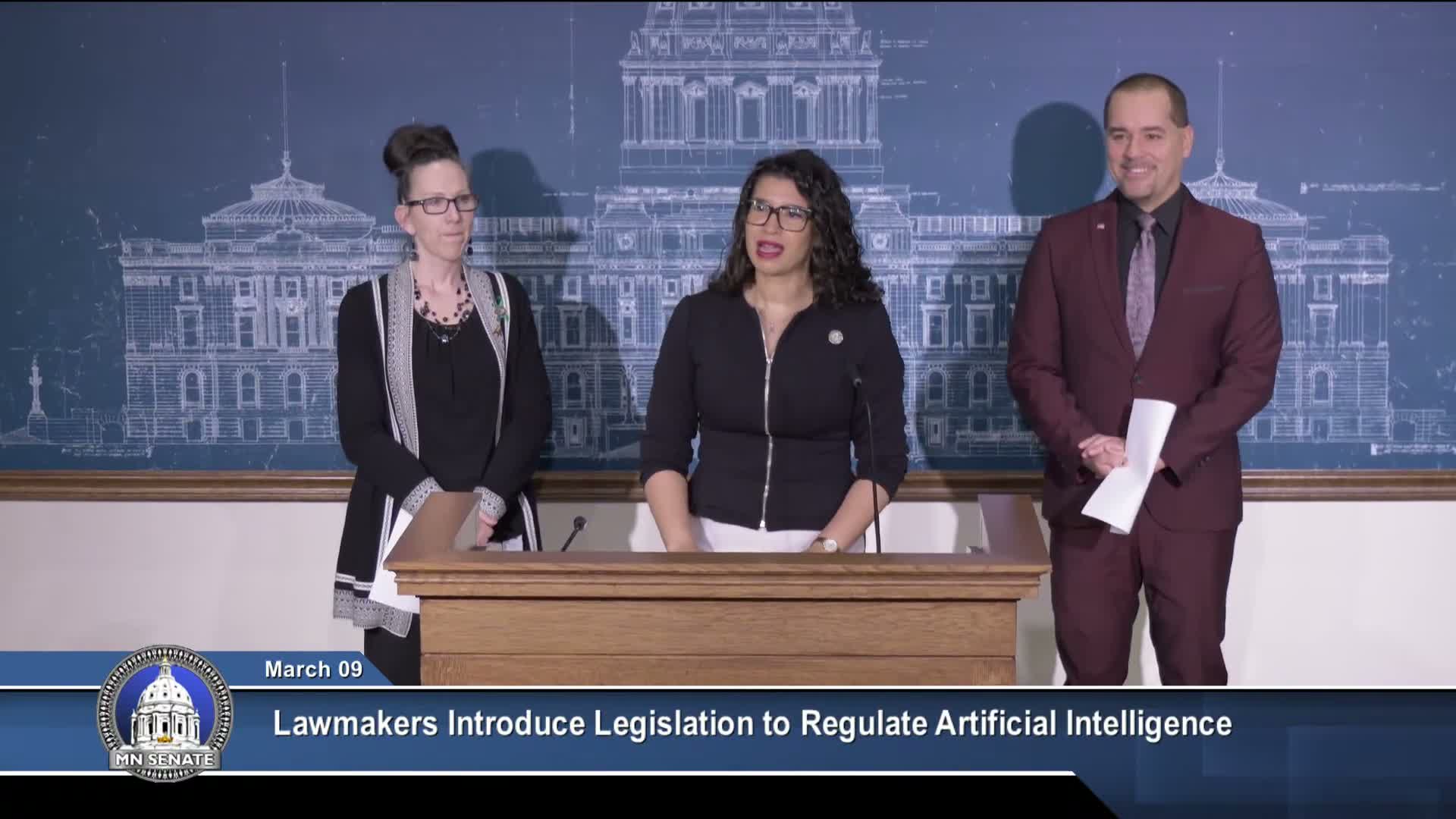
Summary
State senators in a Judiciary Committee hearing outlined bills to require disclosure when AI is used, ban so-called reverse warrants that sweep device/location data, and bar minors from accessing conversational chatbots; sponsors said the measures aim to protect privacy, health and constitutional rights.
Senators from both parties told the Minnesota Senate Judiciary Committee they will press a package of bills this session intended to rein in consumer-facing artificial intelligence, arguing that unregulated systems can threaten privacy, health and constitutional rights.
"I don't hate AI," said Sen. Erin Maye Quaid, who opened the hearing and identified herself as sponsor of several measures. "If it's done right, the promise of AI ... could be tremendous. But the way that consumer-facing AI has been rolled out is a five-alarm fire for our society and has devastating and deadly consequences for both humans and our constitutional rights." She listed examples she said motivated the bills, including automated insurance denials without human review, large-scale data collection used for surveillance and price discrimination, and fabricated sexual-abuse material.
Sen. Eric Lucero said technology is outpacing law and framed one proposal as protecting Fourth Amendment principles. "Reverse warrants are the antithesis of that," Lucero said, describing a reverse warrant as a dragnet that collects devices or location data from a place and time window to work backward to identify a suspect. He and other sponsors said the bill would prohibit that type of undifferentiated search.
Sen. Liz Bolden, a registered nurse, focused on health-care risks: she argued AI should not be permitted to automate prior-authorization denials and said minors are particularly vulnerable to conversational systems. "Healthcare is a human-centered industry," Bolden said. "We don't need an AI roadblock getting in the way of people's care."
Committee members asked about conversations with law enforcement and industry. Committee questions noted an opposition letter from the BCA; sponsors said they have been in discussions with the BCA, chiefs of police and TechNet lobbyists and expect ongoing negotiation. Sen. Maye Quaid described a bill she said would bar companies from allowing minors to access chatbots and cited parental-control limitations she says are inadequate because they require parents to know of and link accounts.
Lucero identified two bills he said he did not coauthor and currently does not support in their present forms: a prohibition on AI-driven dynamic pricing and a restriction on AI in utilization-review prior-authorization. He said he supports disclosure when AI is used and restrictions on reverse warrants and youth access.
Sponsors said Judiciary is the intentional first stop so related measures can be referred to Commerce for further hearings. No formal motions or votes were recorded in the transcript. The committee members agreed to public discussion and further negotiation with stakeholders before any final action.
The hearing continued through a question-and-answer period in which senators described examples and legal concerns and said they expect amendments and conversations with industry before bills move forward.