Get Full Government Meeting Transcripts, Videos, & Alerts Forever!
Get email alerts on the Custodial Contract topic
No spam. Unsubscribe anytime.
Board rejects full outsourcing, approves hybrid custodial model after hours of debate
Summary
After extensive public comment and board discussion about pay, benefits and school culture, the Farmington Public Schools board rejected a full outsourcing proposal and approved a hybrid contract with ABM: district daytime custodians retained; ABM to staff afternoons/evenings.
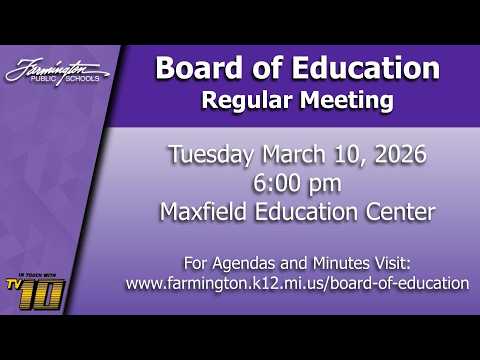
The Farmington Public Schools Board of Education declined a full outsourcing plan and voted to adopt a hybrid custodial model on March 10, approving a contract that retains district daytime custodians while contracting ABM Educational Services to provide afternoon and evening custodial staff.
Board members spent more than an hour on the issue after a multiweek review. Mrs. Heinrich moved the hybrid motion, which passed after an earlier motion to fully outsource all custodial positions (with ABM responsible for equipment and consumables) failed on a roll-call vote. The board’s discussion revisited contract details, projected savings, and the impact on employees and school culture.
Why it mattered: the district said the outsourcing bid process produced potential savings that could be redirected to student-focused programs, while staff and community speakers warned that full outsourcing could erode institutional knowledge, reduce employee benefits continuity, and harm morale.
Supporters of retaining daytime staff and using a hybrid model pointed to negotiated concessions from the contractor. Superintendent Dr. Coffin said the district negotiated wage and benefit provisions after custodians raised concerns: “Anyone who wanted to transition over would be able to transition over so there would be no turnover there,” the superintendent stated, describing renegotiated benefits to minimize disruption.
Board members weighed competing priorities. Mrs. Heinrich (finance/facilities chair) emphasized the importance of relationships and managing the contract to preserve service quality, saying the district had required ABM to commit to presence and management oversight in schools. Board member Walker commended the committee’s work but warned that assurances from a contractor must be enforced: “They need to make sure they do right by our folks regardless because we are the customer and they are our client.”
Public commenters overwhelmingly urged caution. A series of custodial staff and supporters described long service, community ties and retirement concerns. One commenter told the board the decision “is one that considers a sense of safety, community and consistency that we provide,” warning that outsourcing had failed in the district previously. Another commenter said adopting a contract that reduces benefits would be effectively a pay cut for some employees.
What the motions said and how the board voted: the first motion would have contracted ABM for all daytime, afternoon and evening custodial positions, with ABM providing equipment and consumables; it failed (several No votes, recorded in the meeting transcript). A second motion approved a hybrid model that keeps Farmington Public Schools daytime custodians and has ABM supply afternoon and evening staff while the district retains custody of equipment and consumables; that motion passed by roll call.
Next steps: the board approved the hybrid resolution as presented and waived the reading; staff will finalize contract documents and implement transition details, including management oversight and regular meetings with custodial staff, as described during the meeting. The board did not set a separate public vote timeline; follow-up implementation and oversight were presented as district responsibilities during discussion.
Context: the district sought bids because an existing custodial contract was ending. Board members and staff repeatedly framed the choice as a trade-off between fiscal savings (in part from consumables and equipment economies of scale) and preserving employee relationships, benefits and school culture. The discussion included reference to past privatization experiences and multiple reference checks the district ran on ABM with other districts.
The meeting ended with the hybrid model approved and direction for staff to manage the transition and monitoring commitments from the contractor.