Lifetime Citizen Portal Access — AI Briefings, Alerts & Unlimited Follows
Senate committee adopts author's amendment and hears families, providers on IHST daily-cap changes
Loading...
Summary
The Senate Human Services Committee adopted an author's A2 amendment to SF3657 and heard providers and family members argue that the 6-hour daily cap on Individualized Home Supports with Training (IHST) undermines clientsability to live at home; the bill as amended would replace a hard daily cap with a monthly cap and exempt people with complex needs from limits.
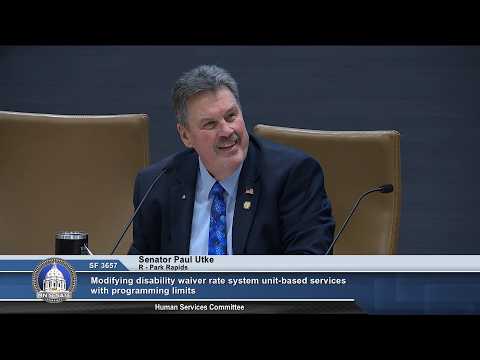
The Minnesota Senate Human Services Committee adopted an author's A2 amendment to Senate File 36 57 and heard testimony from providers and families urging more flexible limits for Individualized Home Supports with Training (IHST).
Sarah Grafstrom, senior director of state and federal policy at ARM, told the committee IHST is a personalized habilitation service for people on disability waivers and that a hard six-hour daily cap enacted last session "makes it incredibly difficult to stay in their own home." Grafstrom said ARM supports replacing the daily cap with a monthly limit and removing consecutive-hour restrictions so individuals can direct when they receive services.
Jeremy Wendt, executive director of the small nonprofit EGH, described IHST as a habilitation service that "doesn't have a clock in or a clock out time" and said the six-hour limit can impede people with work or medical schedules. Wendt cited state guidance and argued a monthly cap would preserve individuals' right under state statute 245D to receive services "when and where they prefer."
Mark and Lee Storhane, guardians of a 33-year-old man who receives 16 hours a day of IHST, described the program as life-changing and said limiting daily hours would be "catastrophic" for people with complex medical and behavioral needs. Mark Storhane said the program provided safety and consistent, skilled staff; Lee Elliot Storing said the service enabled her son to participate in social activities and avoid emergency-room visits.
Senator Aki, the bill sponsor, said the adopted amendment shifts a proposed annual cap to a monthly cap and changes the criteria for exemptions to focus on individuals assessed with complex medical or behavioral support needs. After testimony, the committee laid SF3657 over for further consideration.
The committee did not vote on final passage. The authorsamendment was adopted by voice vote; the bill as amended will return to the committee for additional review.