
Lawmakers hear clash over reviving ATV task force as landowners and agencies urge enforcement instead
Get AI-powered insights, summaries, and transcripts
Subscribe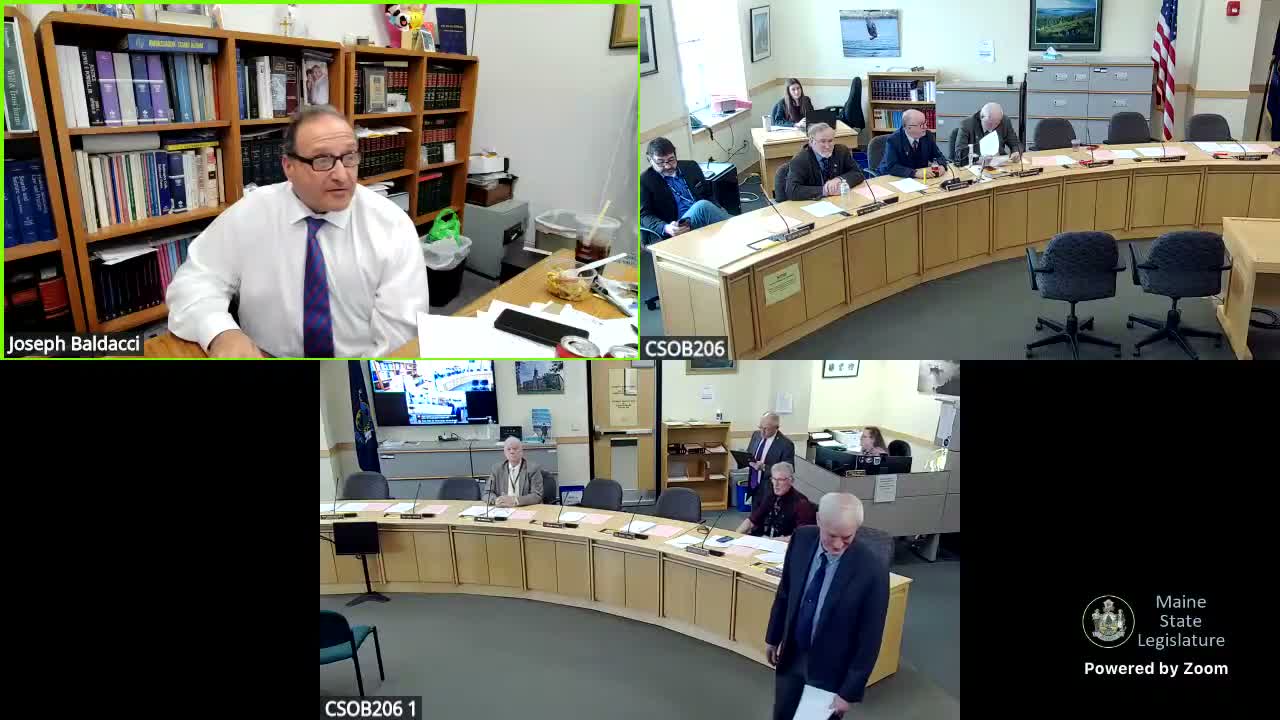
Summary
Supporters of LD 350 urged reconvening a 2019 ATV task force to update size and registration rules and include manufacturers and dealers; landowner groups and state agencies opposed a new task force, saying the Landowner and Land User Relations Advisory Board (LSRAB) or recent reports already address the issues and enforcement must be fixed first.
Sen. Joseph Baldacci convened the Inland Fisheries and Wildlife Committee on March 9 to take public testimony on LD 350, a resolve that would reconvene the 2019 task force on all-terrain vehicle (ATV) trail initiatives. Representative Jim Dill, who said he would use a sponsor amendment as a vehicle, told members the goal is to revisit weight and registration rules in light of technological change and inconsistent enforcement.
"We may end up completely 180 degrees from here," Rep. Jim Dill said, calling the measure a discussion vehicle to produce a bill that reflects the current "state of the art." He urged reopening stakeholder conversations rather than relying only on short committee deliberations.
Proponents included manufacturers and ATV-club leaders who asked to be included on any stakeholder panel. Jared Bornstein of BRP, maker of Can-Am, said manufacturers and dealers bring engineering and market data that will inform practical rules and warned Maine is only one market among many.
"Having manufacturers and dealers are super important in all of these conversations," Bornstein said, adding the industry maintains a trail fund and can provide project-specific help for bridges and road work.
Local club leaders said implementation and enforcement problems left many owners uncertain. Richard Howard of ATV Maine and other club officials said the initial rollout of size rules in 2020 produced confusion: they cited 354 machines over 2,000 pounds in 2019 and told the committee many more oversized machines exist now.
"We told [the deputy director] that there's going to be an issue with that, and here we are two years later," Richard Howard said, describing cases where town clerks or dealers registered oversized vehicles that later were disallowed.
State agencies and landowner groups strongly opposed creating another task force. Deputy Commissioner Tim Peabody of the Department of Inland Fisheries and Wildlife said the department appreciates the intent but prefers to use the Landowner and Land User Relations Advisory Board (LSRAB), which holds public meetings and can invite additional stakeholders.
"The department feels that this is the best forum to work through issues related to oversized ATVs," Peabody said, urging adjustments to licensing and the MOSIS system so illegally registered machines can be identified quickly.
Matt Foster of the Department of Agriculture, Conservation and Forestry called a new task force "time consuming, inefficient and redundant," noting the 2019 task force, a recent LD 1308 report and the LSRAB have already addressed many points. Foster warned reconvening a standalone task force could cost taxpayers and drain staff time.
Landowner representatives warned reopening a settled compromise would risk removing private access to trails. Amanda Egan of Maine Woodland Owners and Krista West of the Maine Forest Products Council urged the committee to vote "ought not to pass," arguing the 2,000-pound weight and 65-inch width limits were hard-won and that the central problem is lack of enforcement.
"Until the department has the resources it needs to adequately enforce rules and ensure those who disregard them are held accountable, we cannot support a process that invites even larger vehicles onto private land," Egan said.
Large corporate landowners and timber companies echoed those concerns in testimony, and multiple witnesses asked the committee to prioritize enforcement measures — including better registration checks at the town-clerk and dealer level, improved data in the state's licensing system, and adequate funding for warden staffing — before considering statutory changes.
Several neutral or mixed witnesses, including club trail masters and the Maine Snowmobile Association, urged continuing discussion but recommended strengthening and resourcing LSRAB rather than creating a one-off task force. Club leaders also pressed for inclusion of club members, wardens and dealers in any advisory or stakeholder body.
Committee members asked DIFW and other agencies for additional material ahead of a work session: Rep. Dill requested a current list of advisory-board members and any proposed new appointees under LD 2221; members asked for licensing and enforcement data and for DIFW to propose MOSIS or licensing-system improvements. The hearing closed after a motion to adjourn was moved and seconded.
The committee did not take a vote on LD 350 at the hearing; members requested follow-up information and indicated a work session will consider the compiled testimony and agency materials.