Committee reviews substitute language for LD 2070, bars state-owned landfill at Carpenter Ridge and directs capacity studies
Loading...
Summary
The committee reviewed substitute language for LD 2070 that incorporates department recommendations, includes a statutory statement that Carpenter Ridge not be developed or used for a state-owned landfill, expresses legislative intent to give the Penobscot Nation a right of first refusal consistent with applicable law, and directs state studies on waste-management capacity with reports due in 2027 and 2028.
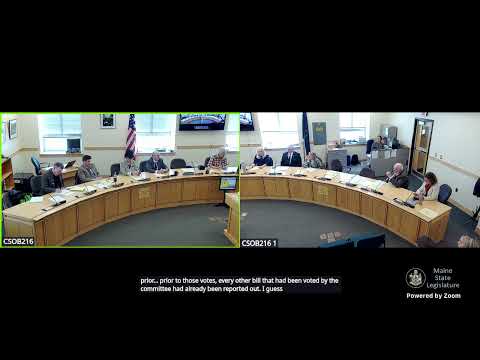
Analyst Daniel Tartikoff presented substitute language for LD 2070, a proposal to prohibit landfill expansion into wetlands that the committee previously voted to replace with department language. The substitute draft includes a new provision expressing the Legislature's intent that the Carpenter Ridge state-owned site not be developed as or used for the operation of a state-owned solid-waste landfill and that the Bureau of General Services and other agencies not apply for or operate such a facility at that location.
Tartikoff said the change was necessary partly because a license for operation at Carpenter Ridge issued in 1996 remains on the books. He also said the language expresses the Legislature's intent that the Penobscot Nation have a right of first refusal to purchase the site "in a manner consistent with applicable laws or rules regulating the sale of state owned property." Tartikoff added that it is awkward to encumber state property by statute when there is no active sale plan; the right‑of‑first‑refusal clause is meant to trigger applicable processes if a sale were proposed.
Representative Joe Martin raised concerns about giving a single entity a first right of refusal for a 1,500‑acre parcel and asked whether contiguous Penobscot land ownership and recreational uses (snowmobile and ATV trails) would be protected. Representative Bill Brigio and others said a fair‑market appraisal could be required so the tribe would match market value or a traditional public bidding process could follow if the tribe declined.
The committee also discussed two study and reporting directives included in the substitute language. One directs the Bureau of General Services to procure technical information from waste‑industry professionals on options to ensure sufficient capacity for special and municipal solid wastes through at least 2050, including siting options, with a report due Jan. 15, 2027. The second directs DEP to evaluate its rules and identify opportunities to support or improve facilities and systems consistent with the solid‑waste hierarchy, soliciting stakeholder input and submitting a report on or before Jan. 15, 2028.
A motion to reconsider the committee's earlier action on the bill was moved and failed (three in favor, six opposed), leaving the reviewed language intact. Committee members noted that final drafting will require coordination with the Bureau of General Services and possible subsequent resolves if state property sale actions occur. The substitute language and study directives will be subject to further processing, fiscal analysis and language review.