Get Full Government Meeting Transcripts, Videos, & Alerts Forever!
Get email alerts on the Elevate Downtown Plan topic
No spam. Unsubscribe anytime.
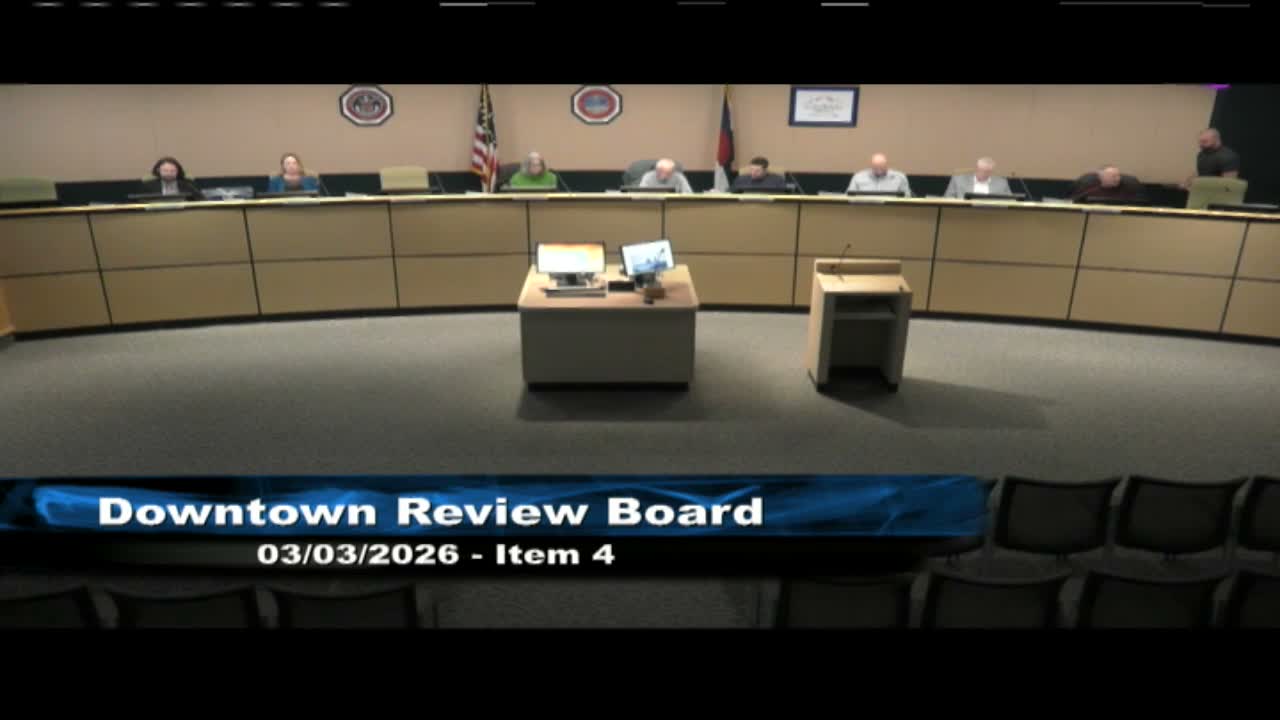
Downtown Review Board unanimously recommends Elevate Downtown Plan to planning commission
Summary
The Downtown Review Board unanimously recommended the Elevate Downtown Plan (PLN-26-001) on March 3, 2026, after presentations by city staff, the Downtown Partnership, the DDA and consultant MIG and a question-and-answer period about heights, homelessness, safety and TIF boundaries.
The Downtown Review Board voted unanimously on March 3, 2026, to recommend the Elevate Downtown Plan (PLN-26-001) to the city’s Planning Commission and City Council. Board member Sam Friesen moved approval; Harrison Sokol seconded, and the clerk recorded the motion as passing unanimously with the board present.
The plan covers roughly one square mile of the downtown Development Authority boundary and is delivered in two volumes: Volume 1 is a Plan of Development that guides tax increment financing (TIF) and DDA priorities; Volume 2 is a land-use and master plan covering chapters on economic vitality, parks and waterways, mobility, public realm and urban design, community and culture, and infrastructure and utilities. “Downtown is a vibrant and inclusive part of our community where history, culture, and nature meet modern urban living,” consultant Ellie Schafer read from the plan’s vision statement during the presentation.
City planning manager Ryan Tiefertuller told the board the plan resulted from a year-long process of data collection and public engagement and that the document will be used to align upcoming form-based code updates with community priorities. Chelsea Connick, chief executive officer of the Downtown Partnership, said the process reached thousands of residents and stakeholders and that the plan reflects extensive community input.
Consultant MIG described outreach that included focus groups, in-person events and two online surveys that together produced roughly 2,000 survey responses and a month-long public review period that drew more than 900 views and dozens of comments. The plan identifies five consolidated goals and lists prioritized action steps for each goal, including supporting small businesses, enhancing walkability and mobility, expanding arts and culture, addressing housing and homelessness, and activating the public realm.
Specific plan elements highlighted to the board included a qualitative treatment of density and building heights, a set of 20–26 catalytic sites with illustrative visualizations, a market-driven analysis identifying nine potential downtown grocery sites and suggested incentive options, priorities for completing the Legacy Loop trail and waterfront activations, mobility hub and street-type recommendations, and a new infrastructure chapter addressing electric, stormwater and public-service capacity.
Board members raised questions about several topics before the vote. On height and density, Schafer said, “The plan does not recommend restricting height anywhere in particular,” noting that height limits and sector designations will be determined by the upcoming form-based code update. On homelessness and safety, consultants and partnership staff said the plan recommends continuing and learning from a Clean and Safe pilot program, coordinating multiple partners in the Pikes Peak continuum of care, expanding tenant and business training, and using design and activation to improve visibility and perceptions of safety.
Several board members asked whether the plan recommends converting streets to pedestrian-only corridors; staff and consultants said the mobility framework identifies placemaking street types and prioritized alley activation but does not propose full pedestrian-only malls. Members also discussed the DDA boundary and when properties might be brought into the downtown development authority for potential TIF support; presenters said those would be evaluated separately as opportunities arise.
No members of the public registered to speak at the hearing, and presenters said public comments submitted during the review period had been considered in drafting the plan. After discussion the board moved to recommend the plan; the Planning Commission will review the Elevate Downtown Plan next month and, if it recommends adoption, the measure will move to City Council.
The board’s recommendation is advisory: adoption of the plan and any related code changes requires further action by the Planning Commission and City Council. The DRB and staff said comments and the board’s questions would be transmitted to the Planning Commission for its public hearing and formal consideration.