
Panel approves refundable tax credit to offset net energy billing costs for Maine residents and small businesses
Get AI-powered insights, summaries, and transcripts
Subscribe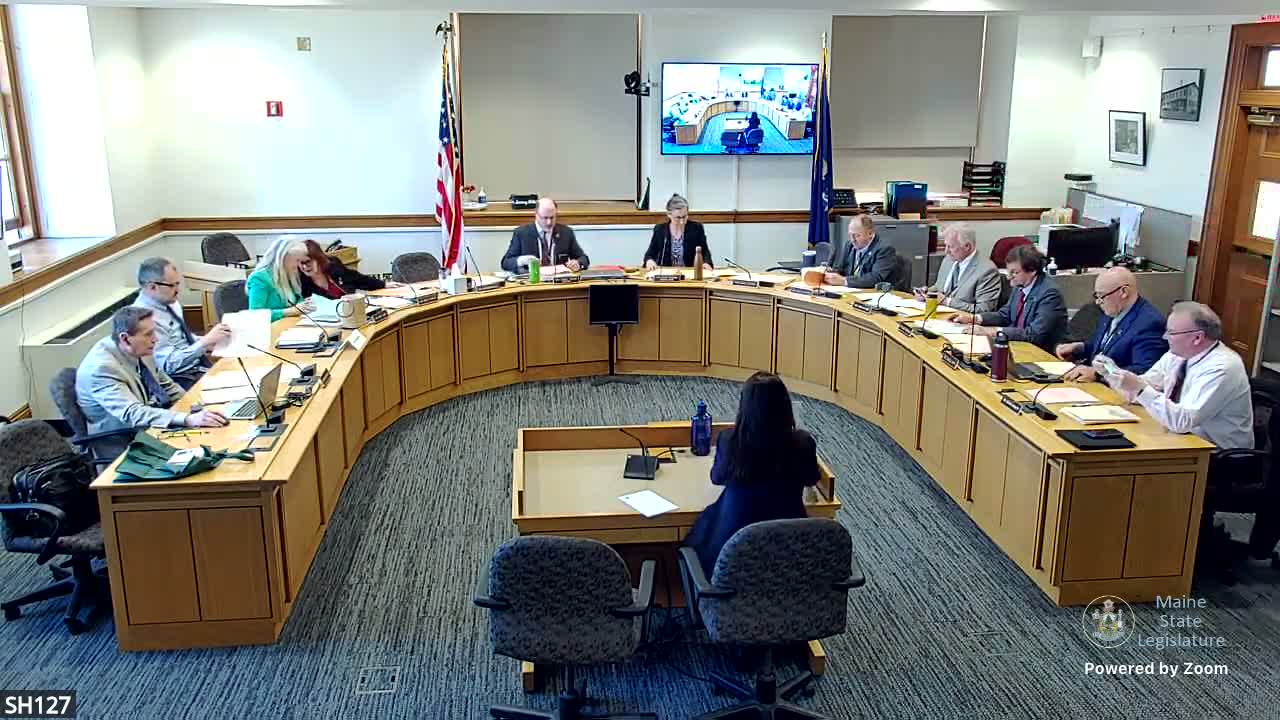
Summary
The taxation committee voted to advance LD 1223, a refundable individual income tax credit aimed at offsetting net energy billing (NEB) customer costs for residential and small commercial customers starting Jan. 1, 2027, with amendments limiting eligibility to Maine residents and Maine small businesses and requiring a fiscal note.
The Joint Standing Committee on Taxation voted to advance LD 1223 as amended, creating a refundable tax credit to offset certain net energy billing (NEB) customer costs for residential and eligible small commercial customers beginning Jan. 1, 2027.
Analyst Jessica Griswold explained sponsor and March 9 amendments: the credit is refundable, calculated from utility‑reported NEB customer costs reduced by monetized benefits determined by the Public Utilities Commission, and would exclude medium/large commercial customers and customers of consumer‑owned utilities. The March 9 amendment also requires investor‑owned utilities to report a monthly NEB charge on residential and small‑commercial bills and adds statutory language making NEB program participants ineligible for this credit.
Representative Steve Foster, the bill sponsor, said the policy shifts an estimated share of NEB costs from electricity bills to the general fund so taxpayers broadly bear the societal benefit costs of distributed generation. He provided sponsor estimates of roughly $9–$16 per month per residential customer and a program cost in the $80–$90 million range, acknowledging the Legislature needs a fiscal note for final figures. Dr. Allen (tax administration) warned the credit’s administration would impose significant work for Maine Revenue Services, noting many low‑income households do not file returns and that nonresident second‑home owners could claim benefits unless eligibility is restricted.
Lawmakers debated alternatives—restricting eligibility to Maine residents or principal residences, means‑testing, or giving credits to utilities to pass through the benefit. Representative Tracy Quint argued that having taxpayers apply for the credit builds awareness and allows them to claim other benefits; Senator Bruce Bickford favored restricting eligibility to Maine residents and Maine‑owned small businesses. On a roll call, the committee approved the motion to pass LD 1223 as amended (yeas: Harriman, Quint, Rudnicki, Sayre, Burrowski, Tipping, Bickford, Levine, Friedman, White; nays: Swallow). The bill moves forward with instructions for a fiscal note and clarified eligibility language.