
Taxation committee debates overhaul of tax appeals process, tables changes pending clearer text
Get AI-powered insights, summaries, and transcripts
Subscribe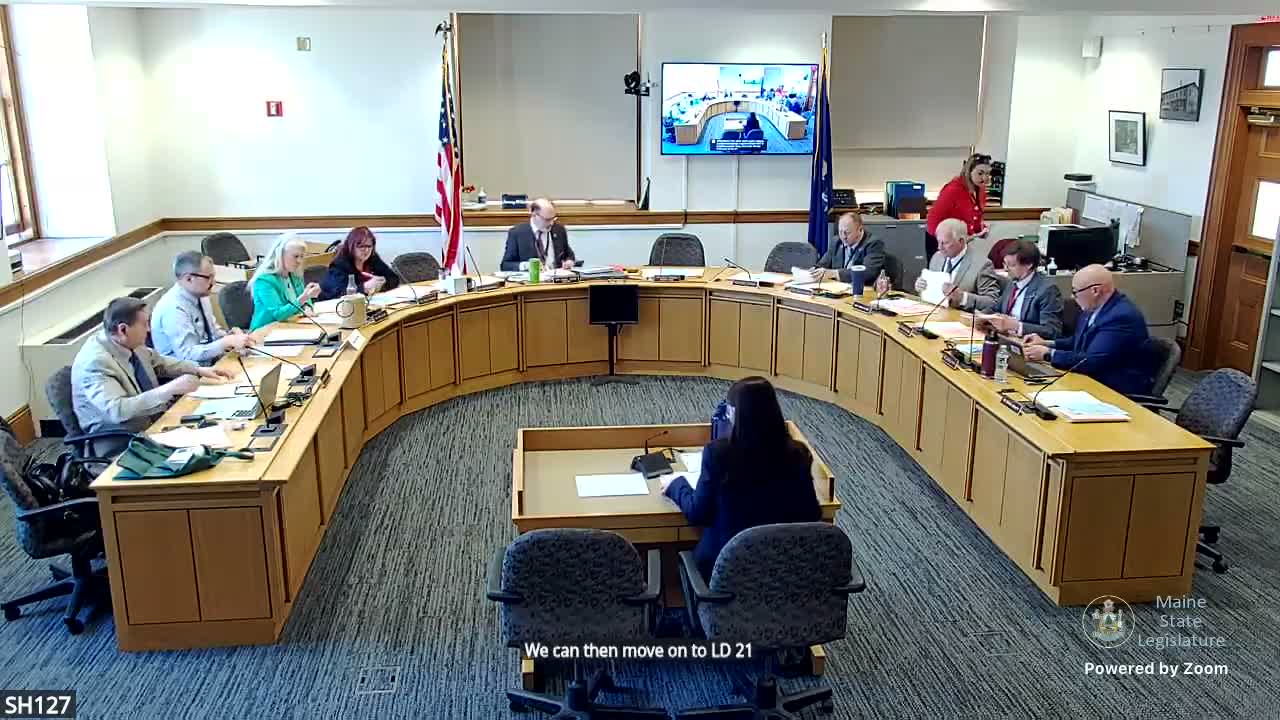
Summary
LD 2178 would reorganize Maine's tax appeals system—replacing the Board of Tax Appeals with an independent Office of Tax Appeals, adjusting panel sizes, and changing property tax appeal thresholds—and would add a directed study. Lawmakers voiced concerns about local control and panel composition and voted to table the bill until a revised text and supporting materials are provided Thursday.
The committee took up LD 2178, a multipart Department bill that would reorganize tax appeals and adjust when cases go to the State Board of Property Tax Review.
John Sagaser, tax policy counsel for Maine Revenue Services, outlined the proposal’s components: adding duties to the taxpayer advocate, repealing the three‑member Board of Tax Appeals and creating an independent Office of Tax Appeals with staff transferred into DAS, clarifying the State Board of Property Tax Review’s jurisdictional rules for nonresidential abatements, and launching a study and ongoing legislative review. Sagaser described recommended amendment language on panel size, qualifications, duties and transition dates and urged changes that preserve legislative oversight where appropriate.
Stakeholders and practitioners raised objections and clarifying requests. Kerry Leishman, an assessor and State Board member, cautioned that three‑member panels can lack the varied expertise (engineer, lawyer, appraiser, assessor) typically needed for complex nonresidential cases. Amanda Campbell of the Maine Municipal Association said assessors generally prefer the status quo for local boards but agreed that very large commercial cases often require state expertise. Tax attorney Jonathan Block recommended a fuller stakeholder task force and sufficient municipal, assessor and practitioner representation before making broad structural changes.
Senator Bruce Bickford proposed an amendment to remove parts C and D and create an expedited task force with legislative appointees and stakeholder seats; members debated whether to adopt immediate structural changes or to funnel disputed items into a focused study. After a committee caucus, members voted to table LD 2178 until Thursday so staff and agency partners can provide a clean bill text, workflow charts and revised amendment language for clearer review.