
Committee hears compact to streamline teacher mobility while preserving state licensing authority
Get AI-powered insights, summaries, and transcripts
Subscribe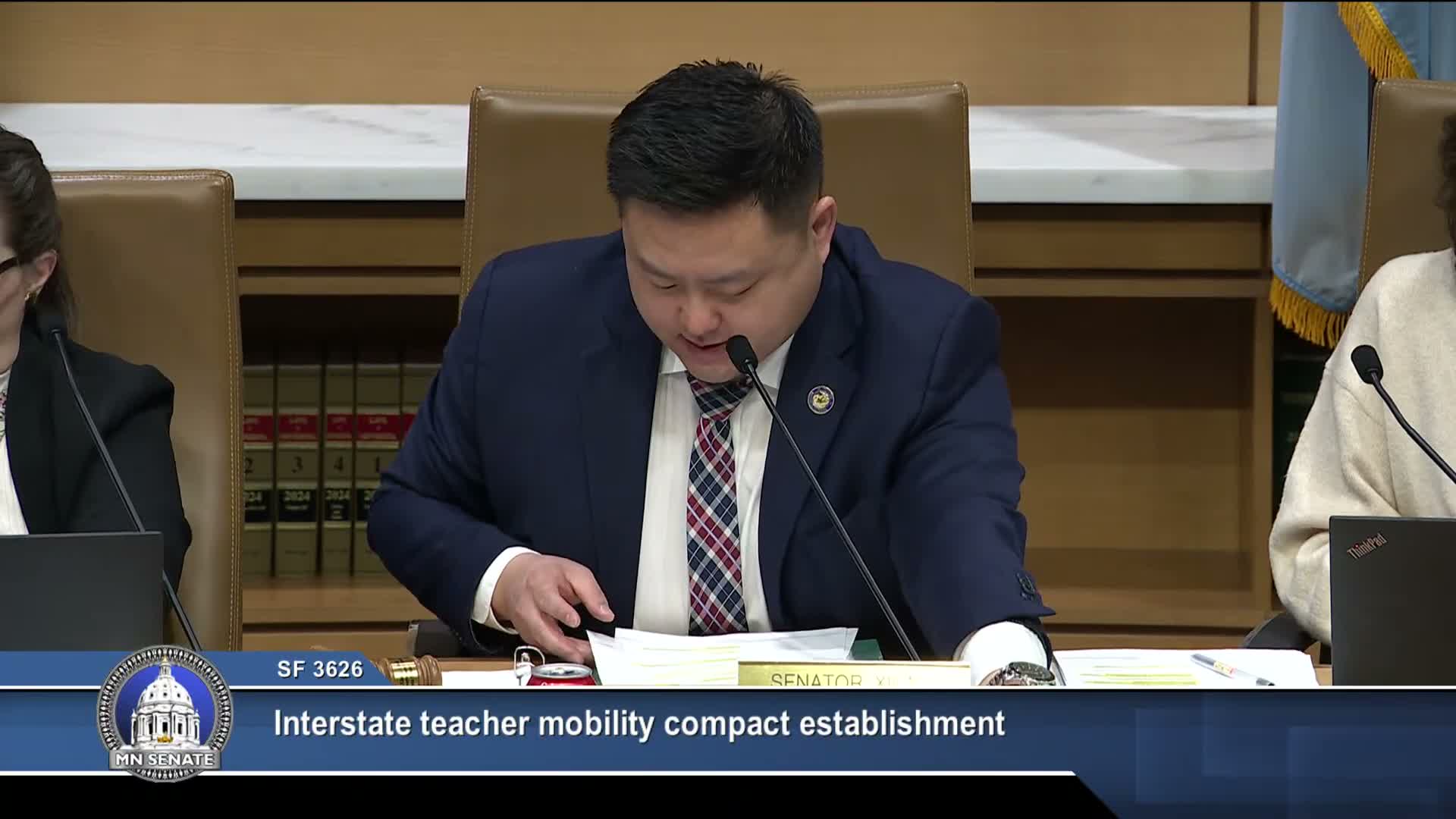
Summary
Senate File 3626 would join the Interstate Teacher Mobility Compact to ease licensure between member states while preserving Minnesota's disciplinary authority. PELSB testified that the compact shortens paperwork timelines and retains state sovereignty over licensing and discipline.
Senator May Quaid presented SF 3626 to establish Minnesota's participation in the Interstate Teacher Mobility Compact, which aims to reduce paperwork and speed licensure for teachers moving between member states while preserving state authority over discipline and license terms.
Dr. Elena Bailey, executive director of the Professional Educator Licensing and Standards Board (PELSB), said the compact narrows reciprocity to applicants who meet defined criteria (for example, a bachelor's degree and completion of teacher preparation) and that Minnesota would retain the right to impose renewal criteria and disciplinary measures. She noted the compact originated from Department of Defense interests and was later taken up by the Council of State Governors and that states must enact the compact without substantive modifications to remain in compliance.
Committee members asked about rulemaking authority for the interstate commission and how compact membership affects processing time; Dr. Bailey said Minnesota already processes many transfers under existing reciprocity laws but that compact membership would reduce paperwork and could shorten some cases from 30 days to roughly two weeks where background checks are the only remaining step.
SF 3626 was laid over for possible inclusion; committee questions centered on jurisdiction, rulemaking, and protecting state oversight.