Get Full Government Meeting Transcripts, Videos, & Alerts Forever!
Get email alerts on the Budget Tax topic
No spam. Unsubscribe anytime.
Nags Head commissioners opt to include 1.2‑cent tax increase in FY26 budget to blunt shared‑revenue loss
Summary
At a May 21 budget workshop, Nags Head commissioners agreed to include a 1.2¢ tax increase in the FY26 recommended budget—partly dedicating half a cent to beach nourishment—to offset a projected county shared‑revenue shortfall driven by neighboring towns' proposed rate hikes.
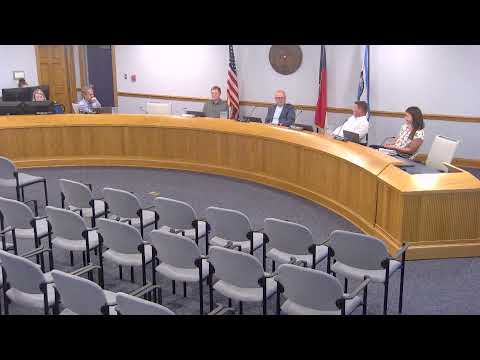
NAGS HEAD, N.C. — At a May 21 Board of Commissioners budget workshop, town leaders agreed to include a 1.2‑cent tax increase in the FY26 recommended budget to reduce the financial impact of a projected drop in county shared revenue.
The board’s manager presentation showed the county’s recent property revaluation raised Nags Head’s assessed value by about 59%, putting the town’s total assessed value near $5 billion. The manager said the revenue‑neutral tax rate after revaluation was 20.87¢ per $100 of assessed value; the published recommended FY26 rate had been 22¢. “We now expect to lose about $420,000 in shared revenue because of the substantial tax increases from the other towns,” Andy said, naming Kill Devil Hills as one jurisdiction proposing a large increase.
Why it matters: the town receives a large portion of its operating budget from shared revenues — occupancy, sales and land‑transfer taxes distributed across towns — and those allocations lag one year behind levy changes. Commissioners warned that failing to act now could force larger increases later or erode progress on stormwater and capital projects.
During discussion, the board considered three options: keep the recommended 22¢ rate, move the planned FY27 1¢ increase into FY26 (raising the FY26 increase to 2.13¢), or adopt a slightly larger FY26 increase (2.33¢) to preserve the financial plan for FY27. The group settled on a compromise that would bring the recommended rate to about 23.2¢ by moving the planned penny forward and adding a smaller additional fraction of a cent. The plan dedicates half a cent of the increase to beach nourishment — raising the townwide beach nourishment tax from 1.5¢ to 2¢ — and uses the remainder to reduce the $400,000 fund‑balance appropriation in the FY26 budget.
“A mixture of the two” was the Chair’s preference, the Chair said, describing the approach as a way to “help people out a little bit” ahead of a likely larger beach project next year. Several commissioners cautioned that if neighboring towns continue to raise levies, Nags Head risks losing more shared revenue over time. “If you don't look at it with some respects to where you're gonna be in three years of shared revenue … you just go further and further,” one commissioner said.
Staff financial context: Amy, the board’s finance staff, said the town currently carries a $400,000 fund‑balance appropriation for FY26; reducing that appropriation would restore revenue to fund balance and help close the gap. The proposed 5% water‑rate increase in the budget was estimated to generate about $200,000 to cover operational cash flows while a water master plan is completed. The town also has a $500,000 0% loan program for septic replacements and budgeted $30,000 for other septic loans; the septic advisory committee recommended increasing pump‑out credits from $150 to $250.
Other capital and operational items summarized in the presentation included a campus master plan with associated debt service (roughly $300,000), continued multiuse path and sidewalk projects, police vehicle replacements and technology investments such as migration to cloud hosting, security cameras and key‑card systems.
Next steps: staff will reflect the board’s consensus in the recommended budget, which the board will vote on at a later meeting and present at a public hearing on June 11. No formal budget adoption vote occurred at the workshop.
Representative quotes
“We now expect to lose about $420,000 in shared revenue because of the substantial tax increases from the other towns,” Andy said.
“I think what I'm hearing then is the 1.2 instead of just the 1,” the Chair said as discussion coalesced.
“So let's just put it in the budget, and then we vote on it when we approve the budget,” the Chair said.
Ending
The workshop closed with no formal vote; commissioners agreed to include the 1.2¢ change in the recommended budget for formal action at the budget adoption meeting and a public hearing scheduled for June 11.