
Missouri lawmaker urges repeal of death penalty; clergy, defenders and exonerees’ advocates tell committee to abolish capital punishment
Get AI-powered insights, summaries, and transcripts
Subscribe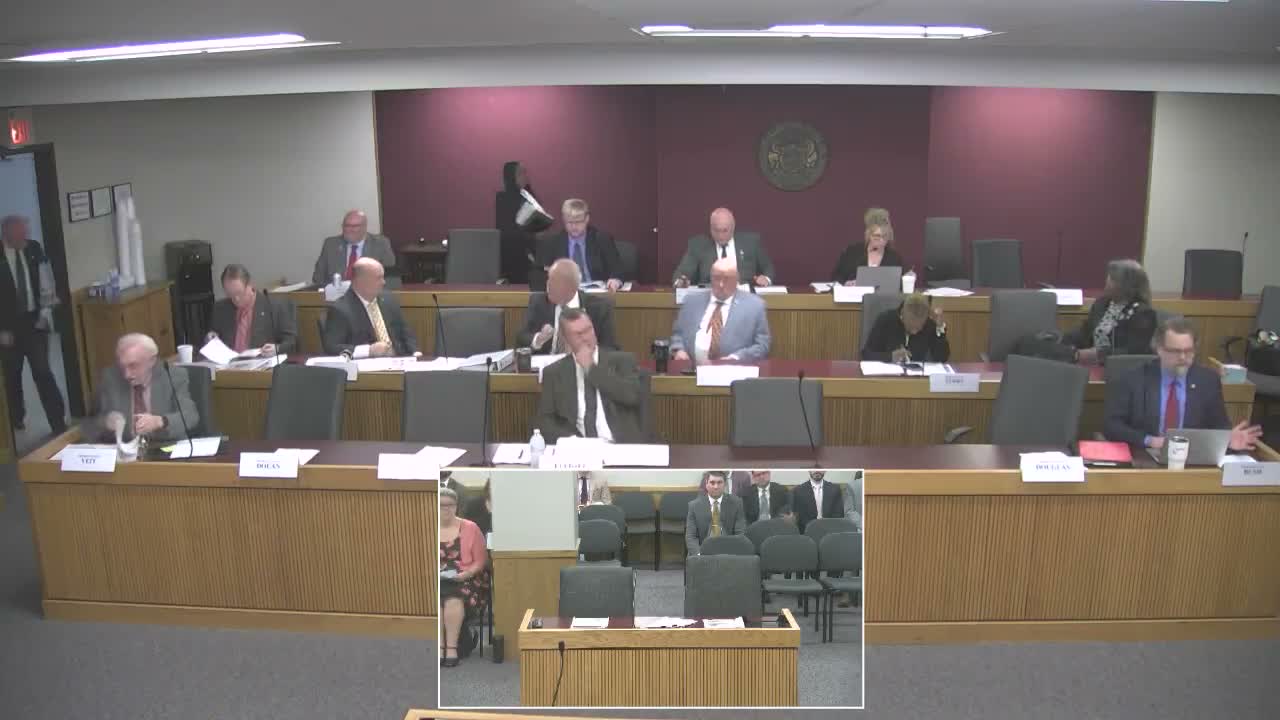
Summary
Representative Jim Murphy presented House Bill 21-53 to repeal Missouri’s death penalty at a House Corrections and Public Institutions hearing. Supporters — including clergy, the state public defender and former corrections staff — cited wrongful convictions, staff trauma and higher costs of capital cases; the committee took testimony but did not vote.
Representative Jim Murphy introduced House Bill 21-53 to the House Corrections and Public Institutions Committee, asking lawmakers to repeal capital punishment in Missouri.
Murphy, the bill’s sponsor, told the committee the state should “lead by example” and argued the death penalty is costly, inconsistent and irreversible. “The fact of the matter is anybody that's put on the...death penalty track...costs the state as much as $4,000,000 more than somebody that’s incarcerated for the rest of their lives,” Murphy said, citing higher trial and appellate expenses and heightened security needs.
The bill drew a stream of witnesses in favor. Archbishop Mitchell Rozanski testified on behalf of the Catholic Bishops of Missouri, urging repeal on moral grounds and pointing to the risk of irreversible error: “Since 1973, over 200 people sentenced to death have later been exonerated,” he said, arguing a justice system capable of that level of error should not impose an irreversible penalty.
Matthew Crowell, director of the Missouri State Public Defender, focused on the fiscal and resource burden on defense services. He described specialized capital units and staffing he said are disproportionately consumed by a small number of death-penalty cases and said those resources could be redirected to other clients and programs if the penalty were repealed. Crowell provided staffing and salary figures for capital defense offices and summarized the long hours and expert costs that accompany capital litigation.
Several witnesses with corrections experience described nonfinancial harms. Dr. Heidi Moore, executive director of Missourians to Abolish the Death Penalty and a former parole officer at Potosi Correctional Center, described moral injury among staff involved with executions and said life-without-parole is a severe punishment in Missouri prisons. Clifton Davis, a former corrections employee, told lawmakers the average time between sentence and execution can exceed two decades, a delay he said compounds suffering for victims’ families.
Committee members asked about practical effects and scope. Murphy and witnesses repeatedly clarified the bill, as introduced and discussed at the hearing, would not apply retroactively to people already on death row; several committee members urged consideration of retroactivity while others emphasized victims’ families’ desire for closure. Members also asked about budget implications for the Department of Corrections and for local prisons such as Potosi. Murphy and defense witnesses said defense-side costs would decline over time but that immediate savings to other agencies would vary.
Advocacy groups including Empower Missouri, the Innocence Project and faith organizations also urged repeal, citing local exonerations and national data on wrongful convictions and comparative costs.
The committee closed the public-comment record on HB 21-53 after extended testimony; no vote or formal committee action was recorded during the hearing. The chairman moved on to other bills on the agenda.