
Residents and educators urge council to protect classrooms as FY27 BPS cuts loom
Get AI-powered insights, summaries, and transcripts
Subscribe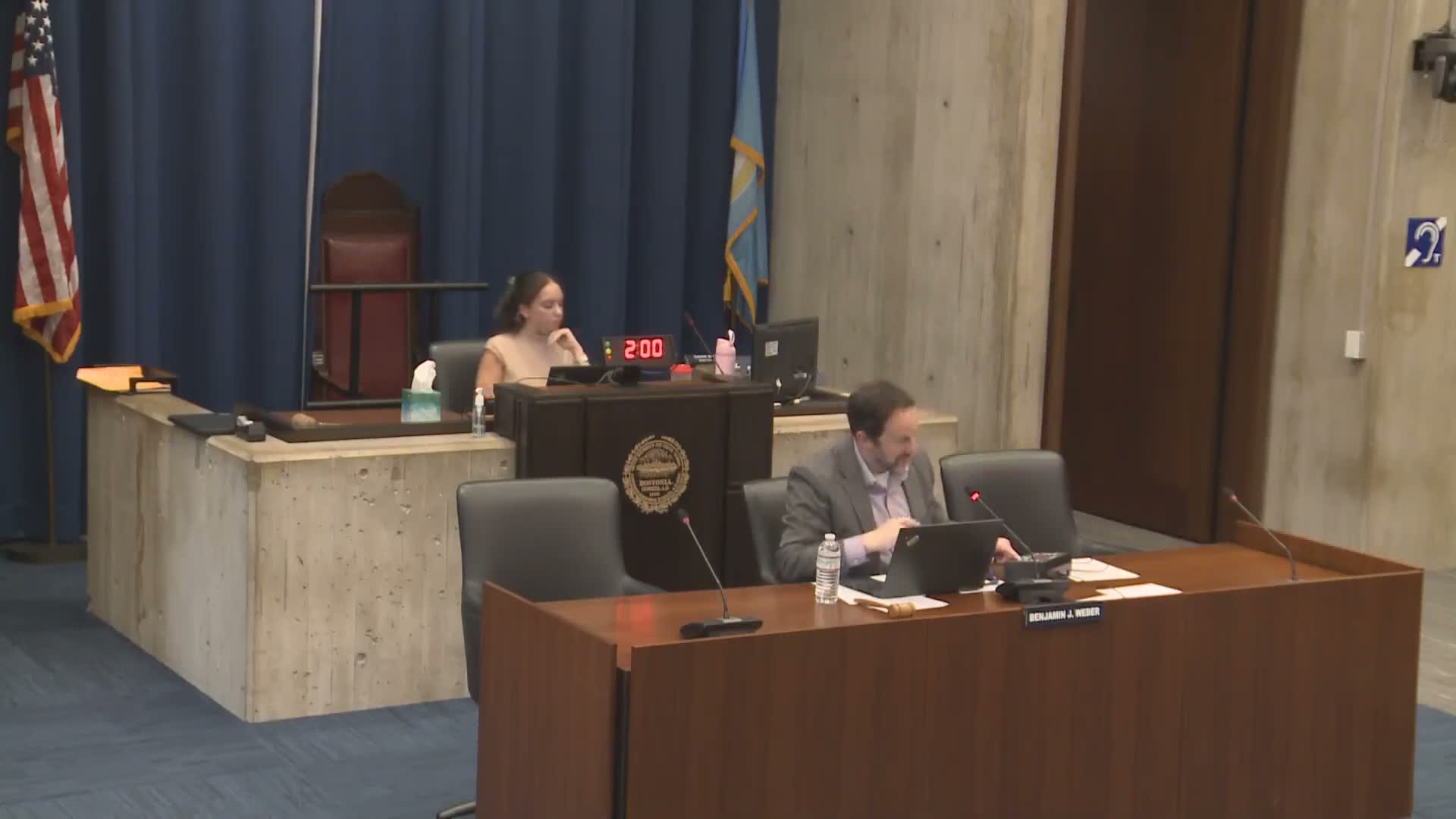
Summary
Parents, teachers, students and union researchers told the Boston City Council Committee on Ways and Means that proposed FY27 cuts threaten special‑education, bilingual and school‑level staff and asked the council to use reserves or reallocate city funds to preserve positions.
Boston — At a March 10 pre‑budget public testimony session, dozens of parents, students, teachers and union representatives urged the Boston City Council Committee on Ways and Means to shield classrooms from proposed FY27 cuts to Boston Public Schools. Keo Maclay, executive director of the Boston Education Justice Alliance, said, “Students in Boston Public Schools deserve better,” and called for the mayor and council to allocate 1% of the city’s operating budget to prevent classroom staff reductions.
The hearing focused on two dockets: the city’s FY27 operating budget and Boston Public Schools’ FY27 operating budget. Dr. Bianca Ortiz Wythe, a strategic researcher for the Boston Teachers Union, told the committee the city’s unassigned general fund balance stood at about $1.3 billion and said the FY27 BPS proposal raises total district spending to roughly $1.71 billion while eliminating approximately 531 staff positions, “more than 400 of which are at schools that will remain open.” She said the district projects a $48 million shortfall in additional school‑level funding required to maintain current services.
Teachers and school staff described the concrete classroom effects they expect. Hannah Hoovan, a teacher at UP Academy Holland and a BTU member, said recent gains — including recovery from pandemic learning loss and exiting receivership — are at risk without sustained staffing for special education, multilingual learners and paraprofessionals. A parent, Ziba Cranmer, said her child’s school, the Curley, faces an estimated 10% cut (about $1.6 million) and credited social workers and co‑teaching models with helping her child avoid disciplinary incidents; she urged the council not to sacrifice those supports.
Students also testified. Nyla Hicks Fernandez, a senior and vice president of the Boston Student Advisory Council, warned that cuts to programs and supports worsen already stretched classrooms and said, “If we want better outcomes for students, then Boston has to make a stronger commitment to investing in our education.” David Damiani, a supervisor of attendance, said proposed reductions would shrink a team that has helped lower chronic absenteeism through home visits and coordination with court and social‑service agencies.
Several witnesses and letters entered into the record asked the council to consider using reserve funds and to explore alternative revenue sources rather than cutting school staff. A BTU white paper was announced as forthcoming with additional analysis of staffing impacts.
The committee did not take formal votes at the session. Chair Ben Weber said the council will hold another pre‑budget listening session on March 24 and additional public testimony after the mayor releases the full budget on April 8, and staff said they will follow up on specific staffing questions raised for schools such as John O’Brien.