Get Full Government Meeting Transcripts, Videos, & Alerts Forever!
Get email alerts on the Education School Funding topic
No spam. Unsubscribe anytime.
Waynesboro residents urge council to reject proposed 3% cap on school funding
Summary
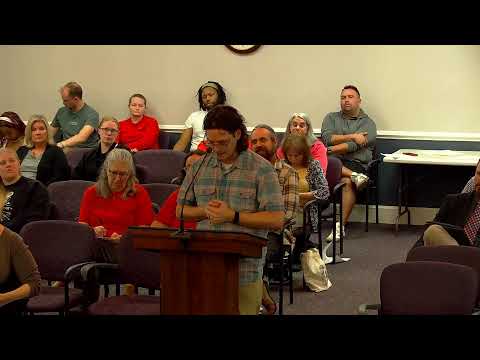
At a September 2026 Waynesboro City Council meeting, dozens of residents and students urged council members not to approve a proposed 3% cap on annual increases to the local school funding formula, warning it would compound into long-term shortfalls and harm programs and staffing.
Dozens of Waynesboro residents and students told the City Council on a September 2026 meeting night that a proposed change to the local school‑funding agreement — which would cap annual increases at 3% — risks shrinking school resources over time.
Speakers told personal stories and cited city figures to press the council to preserve the current funding formula. Orthopedic surgeon and longtime resident Tom Peerless said the cap would compound across years and urged the council not to sign any agreement that imposes a 3% ceiling. "3% sounds reasonable until you understand how it works," Peerless said, adding that, using the city's audited revenue figures, applying a 3% cap over 25 years would have left schools with about "76¢ of every dollar" they currently receive and would create what he described as a $5,000,000 shortfall this year and roughly $43,000,000 cumulatively over 25 years.
Other speakers described the practical consequences. Christopher Williams, a Waynesboro graduate who said he relied on school extracurriculars, told the council it is "not fair that the youth in the area aren't supported" and warned that less funding would further strain programs such as band and other activities that require fundraising. Caitlin Krambach, a Waynesboro High School junior, described advanced‑placement and dual‑enrollment opportunities and urged council members to "remember these students in your decision making."
Several parents and long‑time residents framed the debate as a choice about stewardship. Adam Seiple, a parent and youth volunteer, thanked earlier commentators and said the council "has the power tonight to choose what kind of stewards you want to be." Darcy Martin, who identified herself as a retired local business owner, connected stable school funding to property values and community vitality.
Speakers repeatedly asked the council to coordinate with the school board; several urged the board not to sign any agreement reflecting the 3% cap. No formal council action on the funding formula was recorded in this meeting's minutes; public comment concluded and the council adjourned later in the same session.
Why it matters: Council changes to the funding formula would affect classroom staffing, extracurricular programs and long‑range budgeting. Residents at the meeting framed the proposed cap as a structural change that would reduce schools' flexibility and cumulative revenue over time.
What happens next: Speakers requested further discussion and coordination with the Waynesboro School Board; the transcript records no vote or formal council directive on the formula at this meeting.