Get Full Government Meeting Transcripts, Videos, & Alerts Forever!
Get email alerts on the Fare Policy topic
No spam. Unsubscribe anytime.
Advocates and providers urge CapMetro to restore accessible free‑pass distribution for people experiencing homelessness
Summary
Advocates representing service providers and people with lived experience told the board that recent changes to the free‑bus‑pass (BuzzPass) program and added data requirements have reduced access for unhoused Austinites and increased theft and loss; they requested a dedicated agenda item and a board recommitment to accessible passes.
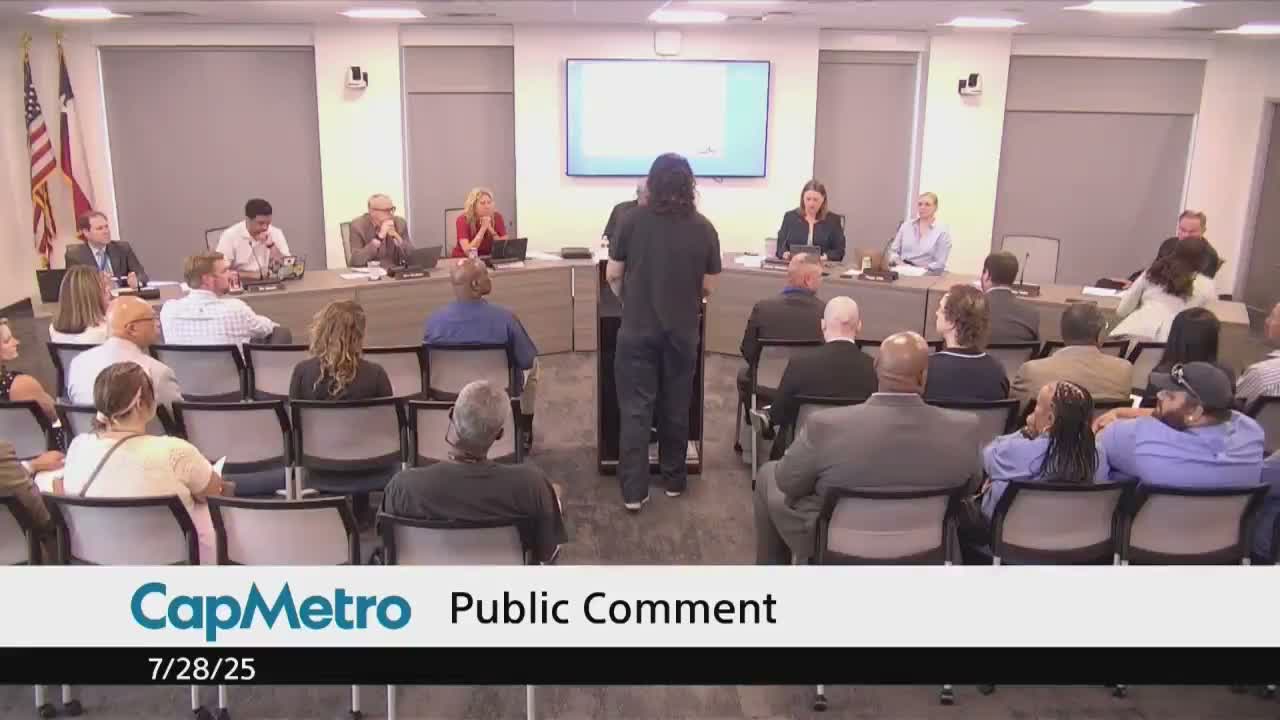
Multiple advocacy groups and people with lived experience asked the CapMetro board July 28 to address changes to the agency's free‑bus‑pass program that they say have reduced access for people experiencing homelessness.
JJ (identified in the record as JJ Ademidoz) of Vocal Texas urged the board to put the matter on an agenda so directly impacted people could testify in full; JJ said the program previously released 7,000 31‑day passes monthly to more than 40 organizations and that the recent switch and new data requirements have forced providers to ration passes.
"So we're asking specifically for 2 things today. We ask that this item be put on an agenda... and then additionally, recommitment from the board to having a permanent access for all unhoused Austinites," JJ said.
Lily Hughes, outreach team lead at Texas Harm Reduction Alliance, said her organization "struggled to keep up with the demand" under the earlier two‑year passes and that the new pass system's data burden has prevented providers from distributing passes as before. Hughes said passes have been lost in encampment sweeps and that driver discretion sometimes prevents people with passes from boarding.
Victoria Lundstein Brown, who works with ECHO and Vocal Texas and has lived experience, described confusion during the BuzzPass switch, inconsistent machine performance and insufficient information for riders; she said people who received new passes still lacked confirmation that the passes worked and that the rollout left them vulnerable to theft.
Zenobia Joseph framed parts of her remarks under Title VI of the Civil Rights Act of 1964, urging the board to document and consider racial equity impacts in stop and sidewalk design and in program implementation.
The board response: Chair Trevillion and board members acknowledged the program's importance and several board members and staff committed to follow‑up meetings with providers, operators and staff to identify gaps. VP Mukherjee (presenting later) and other staff said they welcomed feedback from frontline operators and providers and offered to convene follow-up briefings.
Context and next steps: Advocates requested a formal agenda item and a board recommitment to permanent, accessible pass distribution for people experiencing homelessness. The board recorded a commitment to convene staff, providers and impacted community members for further work; no policy change or vote occurred during the meeting.