
Heated committee hearing on veterans bill: VFW warns of federal conflict while industry groups back transparency reforms
Get AI-powered insights, summaries, and transcripts
Subscribe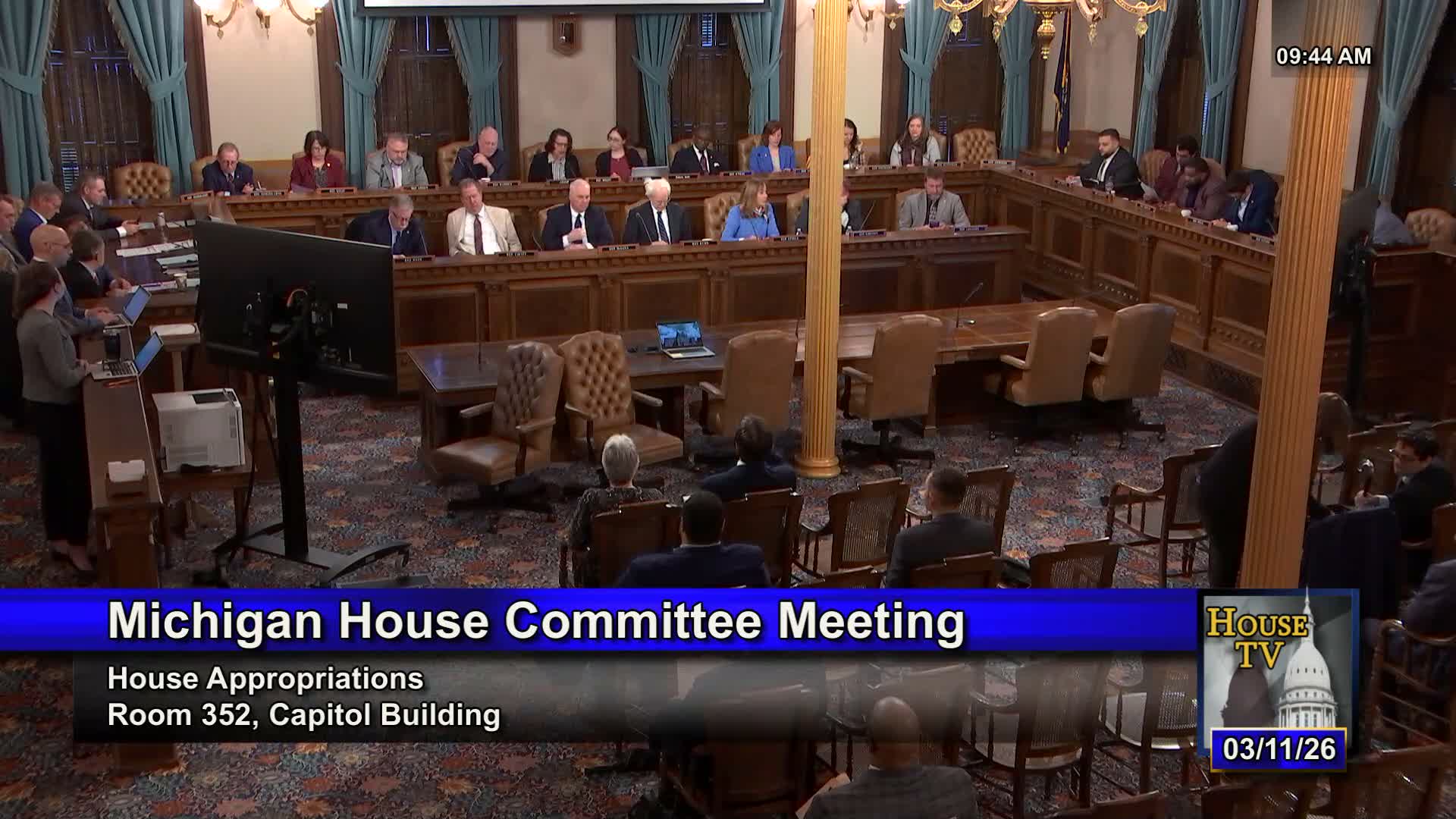
Summary
Senate Bill 215 would amend the Michigan Consumer Protection Act to add consumer protections for veterans using paid benefit-assistance services; supporters said it increases transparency and preserves choice while the Veterans of Foreign Wars urged rejection, arguing sections could conflict with federal law and cited a recent court decision striking a similar Louisiana law.
The House Appropriations Committee heard competing testimony on Senate Bill 215 on March 11, a measure intended to protect Michigan veterans from deceptive or costly assistance when they seek federal VA benefits.
"These are basic consumer protections," Rafael B. Johnson, legislative director for Senator Sylvia Santana, told the committee, summarizing SB 215's requirements for written fee agreements, limits on compensation and protections for veterans'personal data. Johnson said the bill passed the Senate unanimously and was designed to reduce exploitation while preserving legitimate assistance.
House Fiscal's Aaron Meek told members the bill is not expected to impose substantial state spending and described several consumer-protection provisions, including that compensation for paid representatives would have to be contingent on an increase in benefits and capped at a multiple of a one-month benefit increase.
But Derek Blumke, representing the Veterans of Foreign Wars Department of Michigan, urged members to oppose SB 215, warning that the bill as written could effectively legalize fee-taking practices that federal statute restricts. Blumke cited 38 U.S.C. 5901 and said a U.S. district court recently struck down a Louisiana law with similar features (noting a Feb. 11, 2026 ruling) because it conflicted with federal authority over accredited representatives.
"States cannot rewrite federal law to accommodate companies that rip off veterans," Blumke said, urging the committee to protect free VSO and county services and avoid creating opportunities for predatory "claim shark" firms.
Industry witnesses and some supporters disagreed. John Blumstrom of Veteran Guardian, testifying by Zoom, said his organization does not act as an agent or attorney and argued the bill would increase transparency and allow veterans to choose additional services when VSOs cannot meet demand. Representative Jamie Greene, a veteran and former county service officer, said social-media solicitations promising guaranteed benefit increases have appeared and supported guardrails such as the bill's disclosure and compensation limits.
Committee members pressed witnesses on whether SB 215 would be preempted by federal regulation, what enforcement mechanisms the state attorney general would have, and whether fines or criminal penalties were intended. Witnesses and committee members agreed additional legal review and drafting changes may be needed to avoid federal conflict while protecting veterans.
Ending: The committee heard robust testimony for and against SB 215 and asked sponsors and witnesses to follow up with legal citations and proposed drafting changes; no vote was taken.