Get Full Government Meeting Transcripts, Videos, & Alerts Forever!
Get email alerts on the Land Use Development topic
No spam. Unsubscribe anytime.
Residents press water, wildlife and traffic concerns as commission approves Arbor Estates preliminary plat
Summary
The Idaho Falls Planning and Zoning Commission voted to approve the Arbor Estates preliminary plat after hours of public testimony in which nearby residents urged reduced density, raised alarms about groundwater and wildlife, and warned of traffic and low fiber‑optic lines that hamper farming.
The Idaho Falls Planning and Zoning Commission approved the preliminary plat for Arbor Estates, a roughly 50‑acre subdivision proposed near Holmes Avenue and 65th South, after residents urged the commission to reduce density and address water, wildlife and traffic concerns.
The preliminary plat, presented by the applicant and engineering team, proposes about 128 lots with roughly 123 buildable lots and an average lot size near a quarter acre; staff reported the development would result in an overall density of about 2.54 units per acre, below the R‑1 zoning maximum. City staff recommended approval, noting the proposal is consistent with the comprehensive plan’s suburban transect and that required connectivity and stormwater infrastructure are shown in the submitted materials.
Why it matters: Neighbors said the project sits on productive agricultural land and could increase competition for scarce water resources and strain local wildlife habitat. Multiple speakers told the commission they bought properties on acreages out of concern for open space and the wildlife that uses it; they asked the commission for a lower net housing count, green‑space buffers and assurances about water supply and irrigation.
Residents’ concerns and developer responses
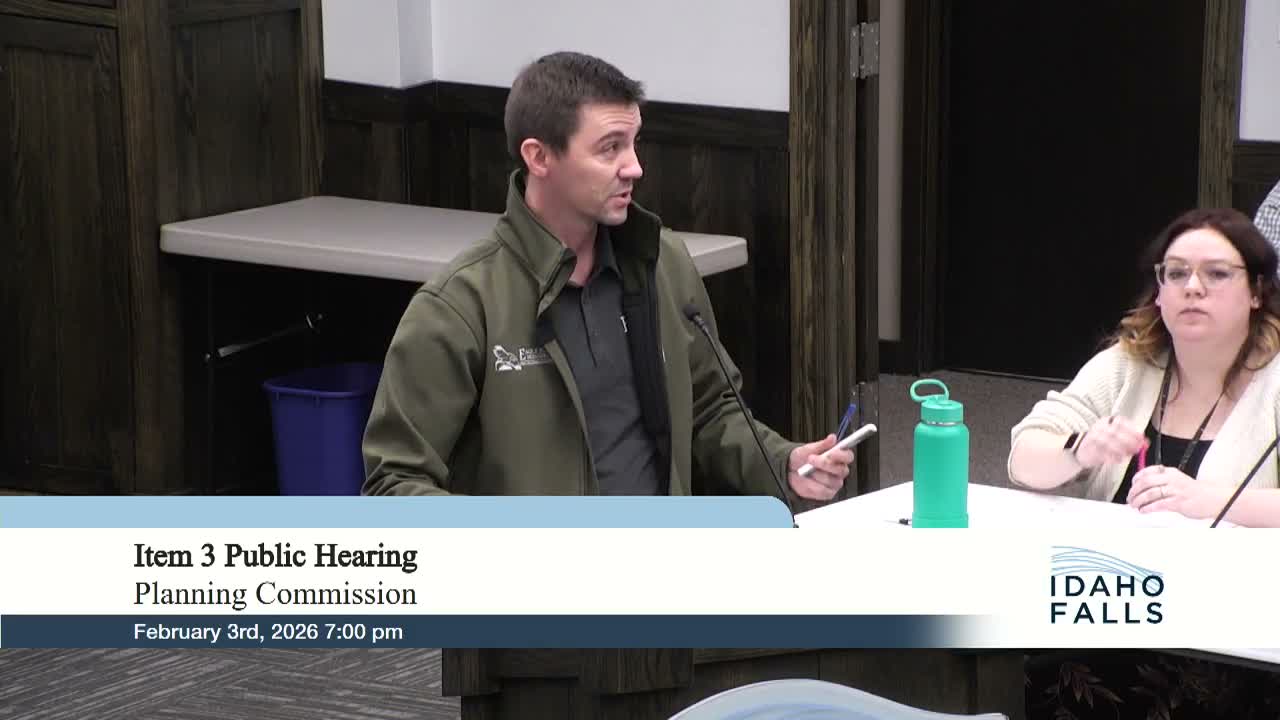
At the public hearing, Peter Kelch told the commission that rezoning agricultural acreage to residential would “lose that agricultural ground forever” and warned that water rights associated with agricultural uses are different from culinary water. Ralph Herbert, who identified species counts and wildlife he said inhabit the area, asked the commission to reduce density by half and cited potential impacts on migratory birds and raptors. Several residents requested an endangered‑species or wildlife study before final approvals.
The developer and project engineer responded that irrigation for lawns and common landscaping would rely on existing surface‑water rights (canal/ditch water) and not city culinary water. Nate Clark of Rockwell Homes said state rules now require developments with access to surface water to install dedicated pumping and irrigation systems, and that the developer has altered lot sizes bordering the Hallmark Estates neighborhood — removing two lots and increasing neighboring lot sizes — to address immediate adjacency concerns. The applicant and staff said Idaho Irrigation District review and final‑plat conditions will be used to limit irrigation pumping to allowed amounts and that the design includes a stormwater pond in the southwest corner of the plat.
Traffic, connectivity and utilities
Residents pressed for traffic mitigation and changes to a low‑hanging fiber‑optic line along 65th South that some farmers said obstructs large implements. The applicant and staff said turn lanes and roadway improvements are being planned for 65th South and that the city’s access‑management plan has been considered in the access layout. Staff also said that some utilities and right‑of‑way will be annexed and that the city would have greater ability to manage roadway improvements if the property is annexed.
Commission action and next steps
After asking follow‑up questions about water metering and whether surface‑water irrigation could be mechanically capped to the rights’ allotment, commissioners concluded the plat met zoning and subdivision standards and moved to approve the preliminary plat. The commission’s roll‑call vote recorded a majority of 'aye' votes and the recommendation will proceed to City Council. If the council concurs, developers will continue engineering work required for final plat approval; the record notes that final‑plat conditions will include Idaho Irrigation District sign‑offs, stormwater design, and details about turn lanes and other right‑of‑way improvements.
What remains uncertain: Neighbors asked how curtailment of surface‑water rights during dry seasons would affect irrigation and whether the city would ever allow use of culinary water for landscapes if canal rights are curtailed. Commissioners and staff said the city has curtailment authority and that curtailment would be a city‑wide enforcement action; the question of long‑term aquifer recharge and regional water allocations remains a point of community concern to be addressed in later regulatory steps.
The commission’s recommendation to approve the Arbor Estates preliminary plat now goes to the Idaho Falls City Council for final action.