
Investigators map multiple PFAS plumes; phase‑2 assessment and risk studies planned for former fire‑training site
Get AI-powered insights, summaries, and transcripts
Subscribe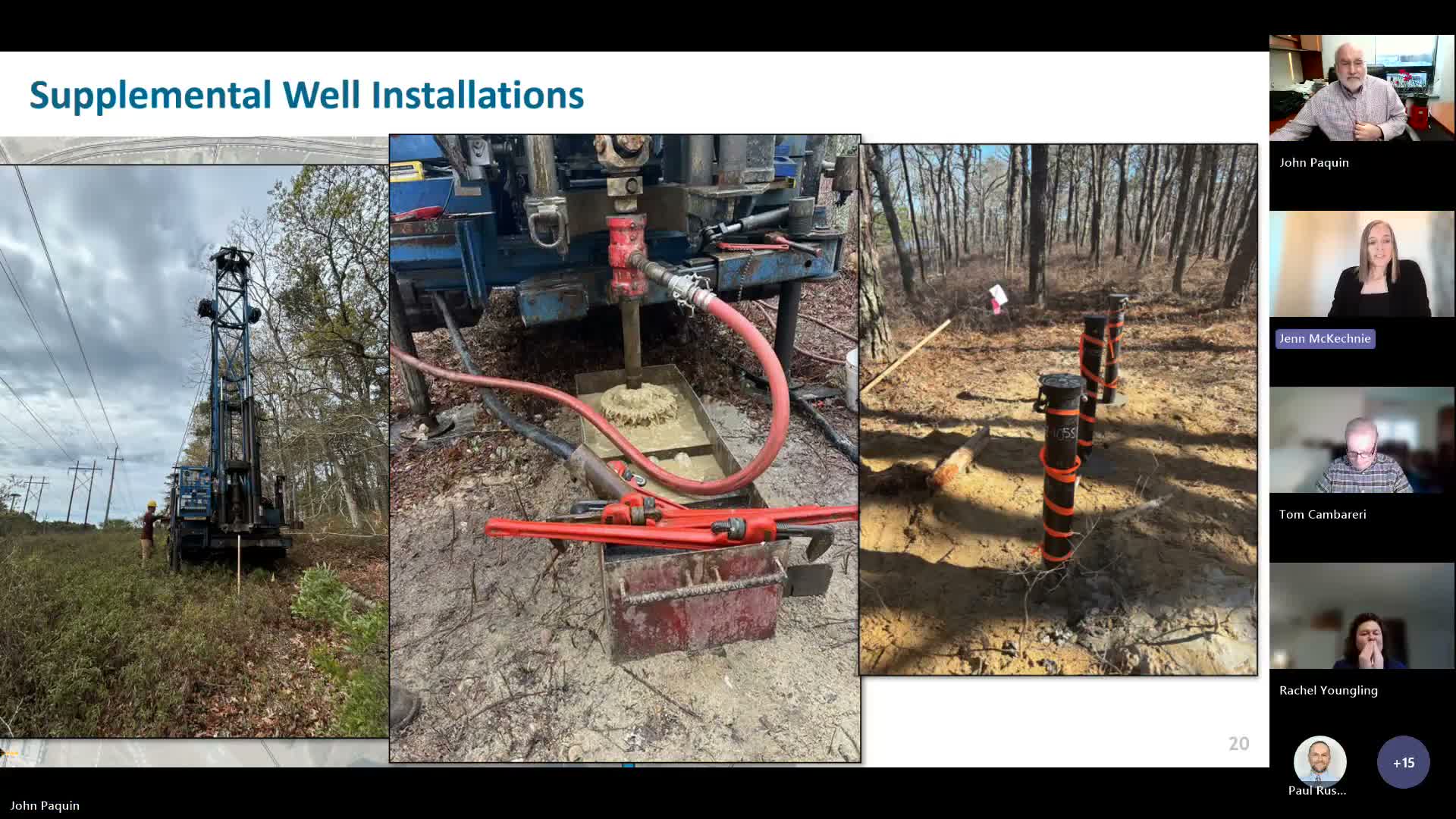
Summary
GZA told the public it compiled an extensive environmental database, identified multiple PFAS plumes including commingling with airport‑related releases, completed targeted December 2025 sampling (27 wells), and will proceed with a phase‑2 comprehensive site assessment followed by a phase‑3 remedial action plan and continued monitoring.
Consultants for Barnstable County said their investigation at the former Municipal Fire Training Site has identified multiple PFAS plumes in shallow and deeper aquifers, including off‑site plumes that appear to commingle with the site’s plume and others associated with nearby airport operations.
John Paquin, vice president at GZA, said the team compiled an environmental database containing over 42,000 analytical results from roughly 1,800 samples (data spanning roughly 2012–2024) and resurveyed more than 120 existing monitoring wells to ensure consistent elevations for modeling. "We have over 42,000 results in our database from over 1,800 samples," Paquin said.
Jen McKechnie, senior project manager, described field work to fill data gaps: six locations with triplicate well nests (shallow/intermediate/deep) were drilled to near the confining silty clay layer (~50–90 feet bgs). The team sampled 27 monitoring wells in December 2025 for PFAS and conducted limited sucralose testing (a wastewater tracer); Paquin and McKechnie said sucralose was detected in airport monitoring wells but not in samples collected on the MTF property.
GZA is using multiple lines of evidence—groundwater modeling, PFAS forensics, historic records and interviews with users of the training facility—to sort source contributions. McKechnie said a draft ecological risk assessment is complete with initial results indicating limited risk to ecological receptors, but that a phase‑2 comprehensive site assessment (to define nature and extent and finalize human‑health and ecological risk assessments) and a phase‑3 remedial action plan will follow.
The consultants asked the public to share any historical information about past training activities or chemical use that could help the forensic analysis. No regulatory enforcement actions or new formal commitments were announced during the update.