
Portland schools name Beverly Cleary, Rose City Park for full seismic retrofits under $100M plan
Get AI-powered insights, summaries, and transcripts
Subscribe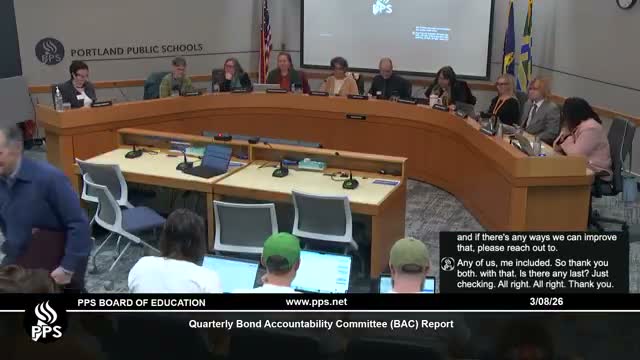
Summary
District staff recommended prioritizing Beverly Cleary (Fernwood) and Rose City Park for full campus seismic retrofits and listed targeted retrofits at other schools, citing a formula that weights seismic risk, deferred maintenance and enrollment. The board discussed timing, swing‑space and equity as rightsizing work continues in parallel.
Portland Public Schools staff presented a seismic‑prioritization plan to the board on March 10 that would set aside $100 million from modernization savings in the 2025 bond to address the district’s highest‑risk buildings.
The district’s proposed formula gives 90% weight to a seismic safety risk score (derived from Hazus/FEMA guidance and local assessments), 5% to deferred maintenance including CSI/TSI designation as part of the facility condition index, and 5% to enrollment. Using that approach, staff recommended full campus retrofits for Fernwood/Beverly Cleary and Rose City Park and targeted retrofits at campuses with the highest‑risk building parts, such as unreinforced masonry (URM) gym walls and problematic egress stairs.
John Franco, senior chief of operations, told the board the $100 million set‑aside would come from savings on modernization projects and would be supplemented by remaining bond funds and other sources; staff said they will return with a capital plan that could use unspent funds from earlier bonds for additional seismic work. Jennifer Eggers of Home Structures gave a technical campus‑by‑campus briefing, showing examples of URM walls, hollow‑core concrete planks and other elements that raise collapse risk in a major quake.
Board members pressed staff on how partial or roof‑level work affects campus scores, how the district will preserve equity in prioritization, and what flexibility exists if the concurrent ‘‘rightsizing’’ process changes enrollment or campus configurations. Staff said design contracts will come to the board in April and that 2027 construction projects will be bid in early December 2026; several targeted projects (roof‑level seismic bracing at Chavez, Marshall, Vestal and Woodmere) are scheduled for summer construction under prior bond programs.
The district also highlighted opportunities to apply for state Seismic Rehabilitation Grant Program (SRGP) funding for separable building parts (such as gyms) and said early‑release procurement packages are being used to secure long‑lead materials like mass timber.
Next steps: staff will bring design contracts to the board in April, continue refining cost and schedule estimates, flesh out swing‑space plans for schools that will be temporarily displaced during long modernizations, and return with a recommended list of funded projects and implementation phasing.