
Committee gives due-pass to bill requiring ADEQ to submit exceptional-event packets for certain federal-land wildfires
Get AI-powered insights, summaries, and transcripts
Subscribe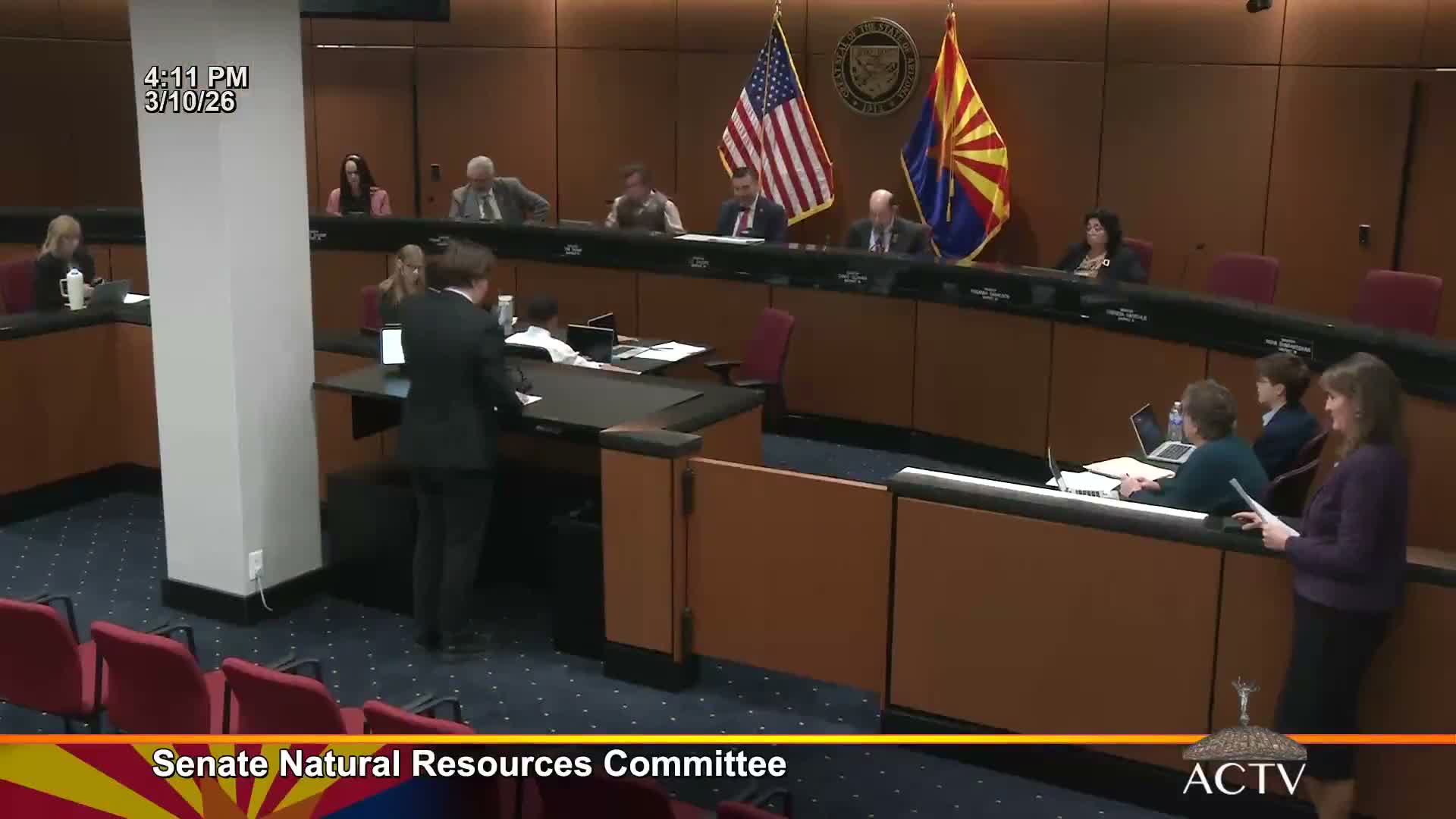
Summary
Lawmakers gave House Bill 2013 a due-pass recommendation after hearing sponsor Rep. Lisa Fink and ADEQ staff; proponents said mandated submissions would improve Arizona ir-quality records while opponents warned it duplicates current process and could strain ADEQ resources.
Rep. Lisa Fink, R-LD 27, told the Natural Resources Committee that House Bill 2013 would require the Arizona Department of Environmental Quality to submit an "exceptional event demonstration" to the U.S. Environmental Protection Agency when a wildfire on federally managed land affects Arizona air quality. "The term exceptional event means an event that affects air quality, is not reasonably controlled or preventable," Fink said, arguing that more exclusions for wildfire-driven exceedances would improve Arizona's attainment record and could help Maricopa County in EPA evaluations.
The Sierra ClubArizona chapter director, Sandy Bahr, urged the committee to reject the bill, saying Arizona already has an established exceptional-event process and that "filing for one every time there's a fire on public lands makes no sense." Bahr also noted she did not see an appropriation for the additional workload and warned ADEQ is already challenged to do its existing work.
An ADEQ liaison testified the agency is neutral on HB2013 but warned that the EPA will act only on submissions that meet its regulatory-significance criteria. ADEQ told the committee that preparing, researching and submitting a single demonstration can require roughly 200 staff or contract hours, and cautioned a mandate could divert agency resources to filings that EPA will not act on.
A committee member moved that HB2013 receive a due-pass recommendation; the motion carried on a roll call the committee reported as 5 ayes, 3 noes, 0 not voting. The committee did not adopt any amendments during the hearing.
The bill now moves toward floor consideration, where sponsors and opponents indicated they may seek technical changes or an appropriation to cover ADEQ's increased workload.