Assembly committee advances bill to expand tribal diversion services aimed at keeping Native youth out of foster care
Loading...
Summary
The Assembly Human Services Committee voted unanimously to advance AB 1574, which would allow tribes greater access to state prevention and diversion funding so tribal programs can intervene before children enter foster care; tribal leaders and attorneys testified about ICWA and potential savings.
Assemblymember Chris Rogers' AB 1574, intended to expand tribal access to diversion and prevention services so Native youth are less likely to enter foster care, was advanced unanimously by the Assembly Human Services Committee on a vote to send the measure to the Assembly Appropriations Committee.
Rogers told the committee the bill revises a previously vetoed, bipartisan proposal and would allow additional tribes to participate in a state grant program to provide culturally appropriate early‑intervention services. "The goal of the bill is to expand access to diversion services to keep our tribal youth out of the foster care system," Rogers said.
Catalina Chacon, a councilwoman and vice chairwoman of the California Tribal Families Coalition, testified that the Indian Child Welfare Act (ICWA) is crucial to preserving tribal families and culture and argued tribes are "best positioned" to deliver services that prevent removals. "Failing to provide funding to do this work for tribes and by only looking to community‑based organizations and counties, we again fail those children most disproportionately impacted," Chacon said.
Denise Wainwright, senior staff attorney with the California Tribal Families Coalition and a Pit River tribal member, described long‑term harms from removals and said tribal prevention programs have had dramatic local impacts. Wainwright cited an example in which a tribal prevention program that received a small county grant reduced entries to foster care by 98% and stated, "we estimate that it would also save the state of California over $40,000,000 annually in foster care‑related costs."
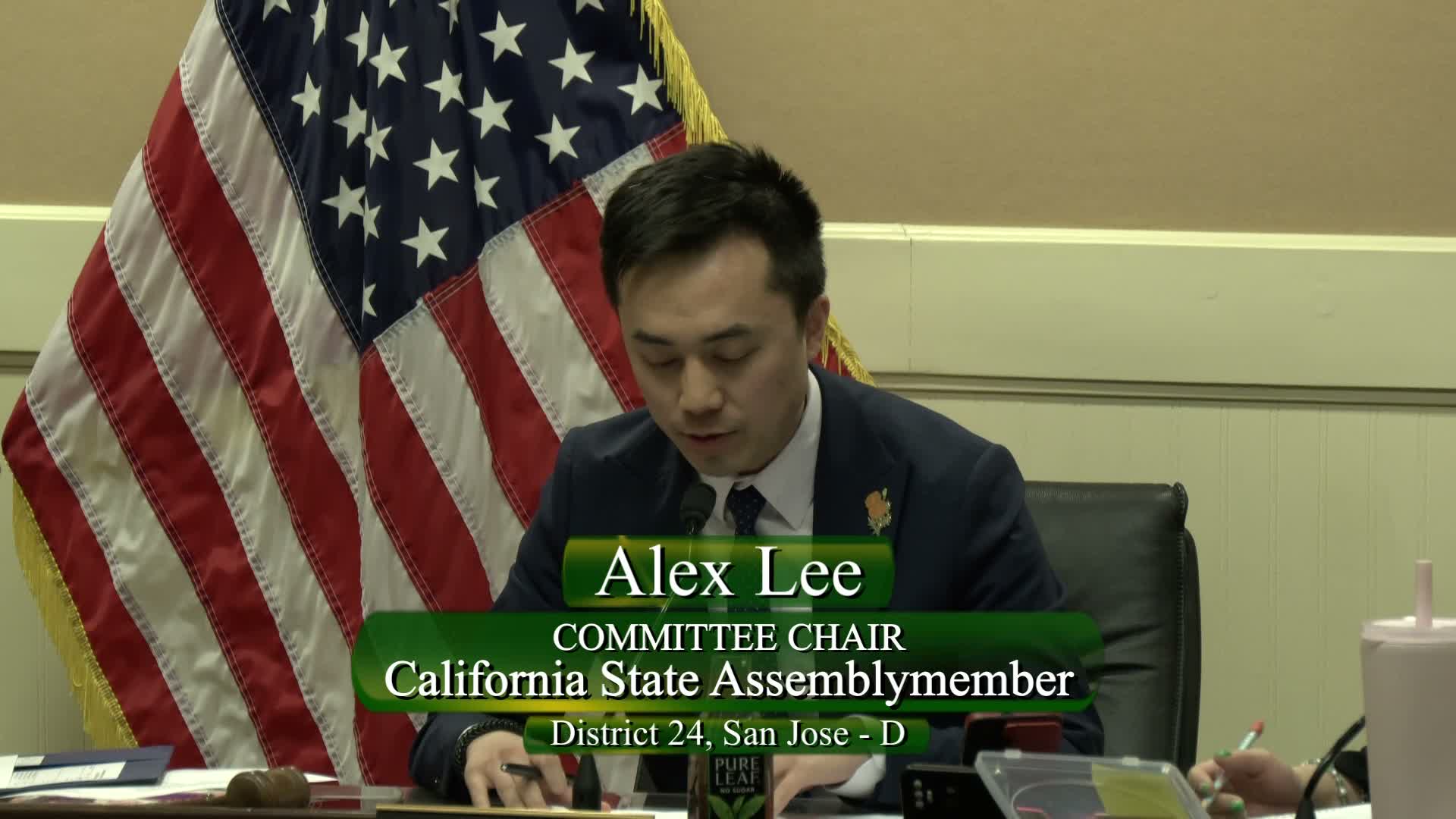
No witnesses opposed the bill. After members thanked supporters and the author, the committee moved and seconded a motion to pass AB 1574 to the Assembly Appropriations Committee; the roll call recorded unanimous 'aye' votes and the chair announced the bill was out of committee.
The next formal step for AB 1574 is consideration in the Assembly Appropriations Committee. The bill's supporters said it aims to both reduce foster‑care entries among tribal children and relieve pressure on county child‑welfare systems.