State board says five‑year recharge permits are working but cost, CEQA and method hurdles limit use
Loading...
Summary
A legislative hearing reviewed AB 658 implementation and the State Water Resources Control Board’s use of five‑year temporary groundwater recharge permits; board staff cited recent gains (seven five‑year permits and more than 43,000 acre‑feet authorized this season), while water districts warned high front‑end costs, CEQA‑related conditions and the 90/20 flow test keep actual diversions far below permitted amounts.
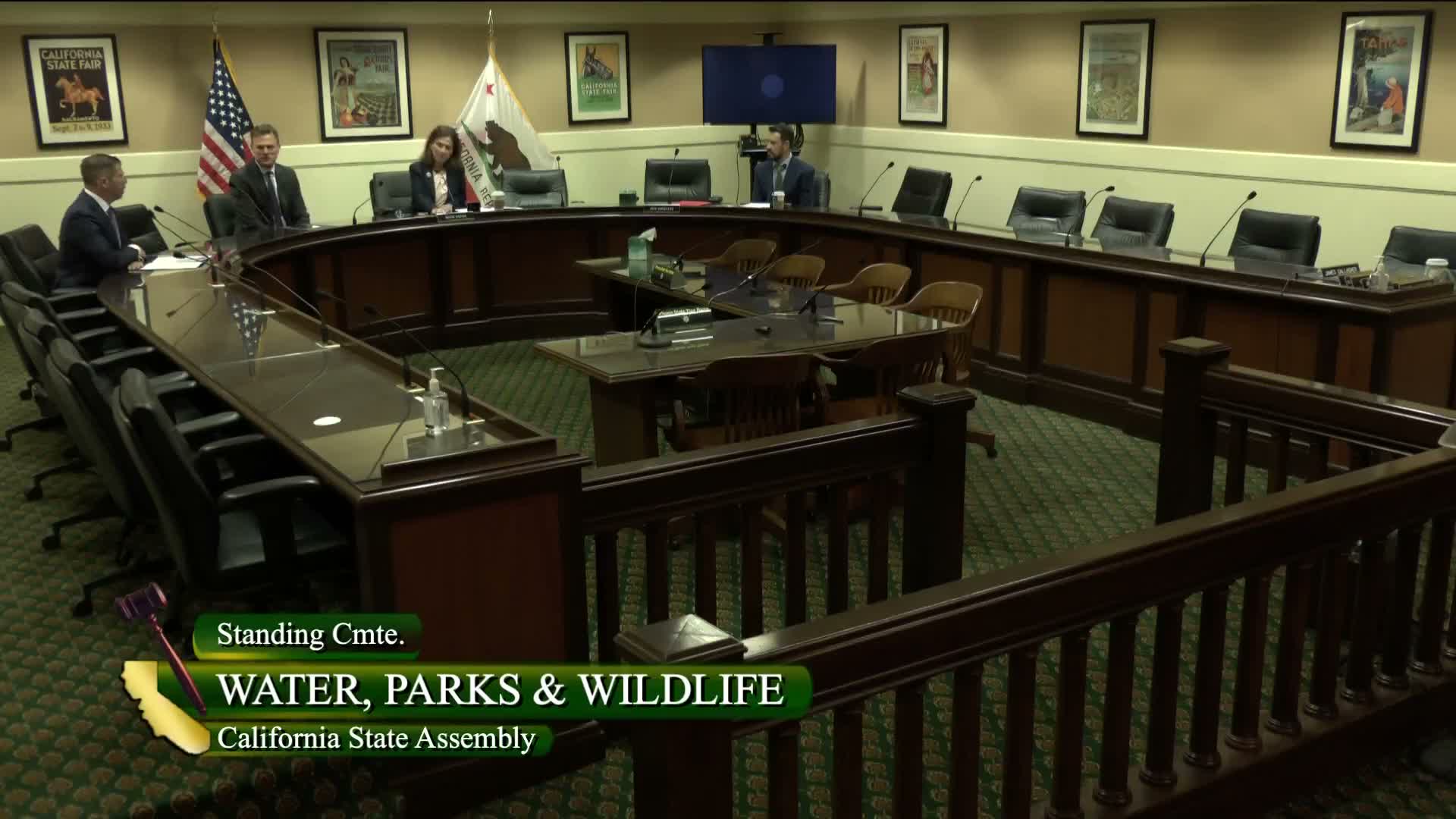
The California State Assembly convened a committee hearing on March 11 to review implementation of AB 658 and the State Water Resources Control Board’s use of five‑year temporary permits for managed groundwater recharge.
State Water Resources Control Board Chair Joaquin Esquivel told the committee that the board has used the authority created by AB 658 to streamline temporary permits and that recent permitting this season authorized more than 43,000 acre‑feet of underground storage, including seven five‑year permits. "These permits matter because they allow permittees to recharge for five consecutive years without reapplying, creating consistency and allowing applicants to plan and invest in related projects with confidence," Esquivel said.
Why it matters: California’s sustainable groundwater goals—driven by SGMA—rely in part on capturing high flows during storms and storing them underground. The administration’s water supply strategy and recent legislation envision large increases in recharge capacity; committee members said clarifying permit rules and reducing barriers will be needed to translate authorized volumes into actual recharge.
Committee discussion and board recommendations Esquivel and board staff described operational improvements since AB 658, including a shortened review timeline (about four months on average) and a broader set of safeguards for water quality and fish and wildlife. The board urged several legislative or administrative changes to improve uptake: allow a two‑year implementation window before the five‑year clock begins, codify the current CEQA suspensions that have enabled rapid permit reviews, and move from a public‑objection model to a public‑comment model so permit issuance is not halted while every objection is resolved.
“Without some kind of process to examine existing water uses, someone upstream could start taking flows that the city currently relies on to bring water to taps,” Esquivel said, explaining why the board retains multi‑part tests to assess potential injury to existing water right holders.
District experiences: costs, CEQA conditions, 90/20 limits Water district officials and consultants told the committee that, in practice, permitted volumes have often outpaced what districts could capture. Justin Hopkins, general manager of Stockton East Water District, said his district’s four temporary permits yielded 161 acre‑feet diverted to storage over several years, with a single 180‑day permit year peaking at 119 acre‑feet. Hopkins said the first year required heavy consultant work—about $50,000—which DWR initially covered for pilot projects, and that his district has not yet used its five‑year permit largely because of timing and flow thresholds.
Hopkins also raised permit conditions that can impede responsive day‑of diversions: his district’s five‑year permit carried a requirement for a burrowing‑owl survey before each recharge activity, which is hard to meet on short notice. "It would be nice to make it a true CEQA exemption so the regulatory agencies can’t use permit conditioning as a workaround," Hopkins said.
Mike Wakeman, general manager for the (Cosumnes basin) Omachumny‑Hartnell Water District, described long local practice with flashboard dams and flood irrigation for recharge but warned that small districts lack staff and capital to cover consultant and fee costs. Wakeman and other small‑district witnesses urged simplifying requirements, reducing upfront fees (or crediting fees against actual diverted volume), and continuing grant support for conveyance and monitoring infrastructure.
Consultant case studies: 90/20 vs. standard approaches Consultant Laura Foglio (Larry Walker Associates) presented three case studies (including Scott Valley and Sierra Valley) showing how the choice of water‑availability method affects practical recharge days. Foglio said the streamlined "90/20" method (which compares daily flows to the 90th‑percentile historical daily flow) can limit recharge days in some basins, while a tailored standard analysis informed by local data and stakeholder agreements produced substantially more usable days in their pilots. In Scott Valley, for example, a standard approach enabled months of recharge and measurable groundwater‑level rises after stakeholders and agencies agreed to a protective threshold.
Stakeholders and next steps Stakeholders from the Northern California Water Association, Association of California Water Agencies and San Joaquin Valley collaborative emphasized the need for infrastructure funding and procedural reforms to scale recharge. Committee members asked the board to follow up with specific timelines and cost estimates for statewide or prioritized‑basin water‑availability assessments and to report on whether SGMA/Prop‑4 funds or other grant streams can subsidize initial data and conveyance needs.
No formal vote or action was taken; the committee indicated it will consider legislative options—such as a codified CEQA exemption, a two‑year implementation window, fee reforms tied to actual diverted volumes, and targeted grant programs—to increase participation in five‑year recharge permits.
The committee moved to public comment and then adjourned.