Get Full Government Meeting Transcripts, Videos, & Alerts Forever!
Get email alerts on the Water topic
No spam. Unsubscribe anytime.
Consultants present One Water plan for Wimberley, propose conservation targets and coordinated utility steps
Summary
Langford presented a final comprehensive plan draft and linked One Water study recommending per‑capita water reductions and better coordination among fragmented suppliers to protect Jacob's Well and Cypress Creek; the city will open a public comment portal in January and hold a town‑hall on Jan. 29.
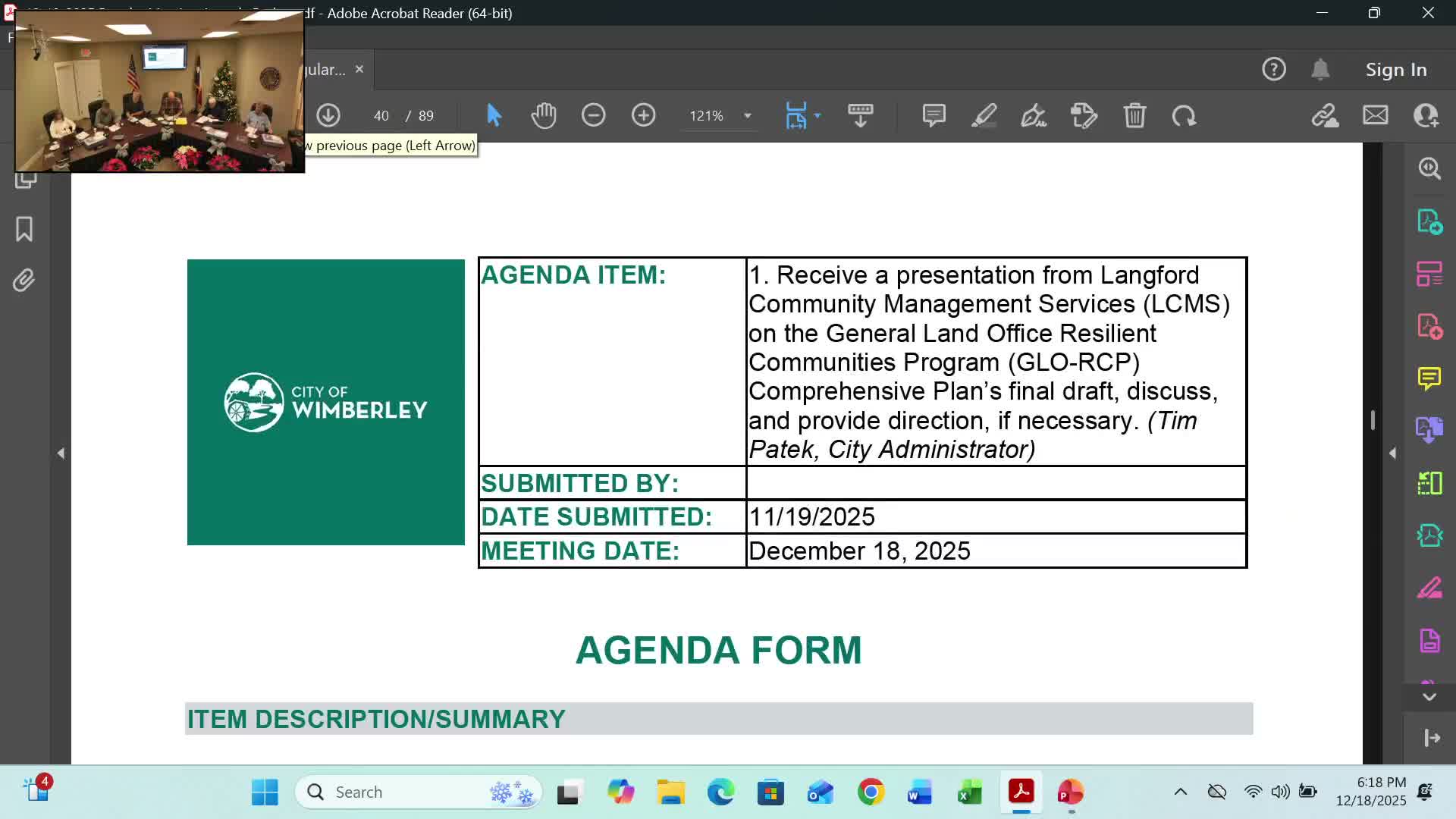
Jerry with Langford Community Management Services presented the final draft of Wimberley’s comprehensive plan and the linked One Water study, saying the study is roughly 90% complete and is designed to give the city a practical roadmap to conserve water and guide capital projects.
The presentation outlined numerical goals and implementation steps. "We want to get 15 to 25 percent of total demand from rainwater and reuse in Wimberley," the Langford consultant said, and the plan sets a per‑capita target to reduce daily water use from about 130 gallons to roughly 110 gallons per person. Jerry said appendices include spring‑flow and Jacob's Well analyses and that the study provides implementation priorities tied to the city’s capital improvement program.
Councilmember Bob Clark highlighted the urgency the consultants attributed to the region's flows: "We had 495 days of 0 flow ever since 2022," Clark said, and he characterized the observed decline as an almost 90% reduction in flow that the study seeks to address through conservation and land‑use alignment.
Langford staff described coordination as central: the study recommends ongoing collaboration among multiple suppliers and wastewater providers, incorporation of water targets into land‑use decisions, and consideration of a public utility authority to guide some infrastructure and financing tasks. The consultants told the council the plan includes both near‑term, practical measures and more aspirational options (the report notes a 'net‑zero water' conceptual approach as a long‑term vision).
The consultants asked the community to review the draft and submit feedback: the online portal will open in the first weeks of January and the firm will host an open‑house/town hall Jan. 29 from 4–7 p.m. to display maps, answer questions and gather final input before Langford pursues GLO approval in February. Jerry noted the General Land Office’s Resilient Communities program has paused new funding after Dec. 31, and the team said it hopes leftover program money will be directed toward implementation but could not promise funding.
The presentation closed with staff noting the study’s implementation chapter links specific projects to the city's CIP and identifies potential grant and capital strategies. Councilmembers thanked the Langford team and invited residents to the January comment period and town hall.