Get Full Government Meeting Transcripts, Videos, & Alerts Forever!
Get email alerts on the School Traffic Safety topic
No spam. Unsubscribe anytime.
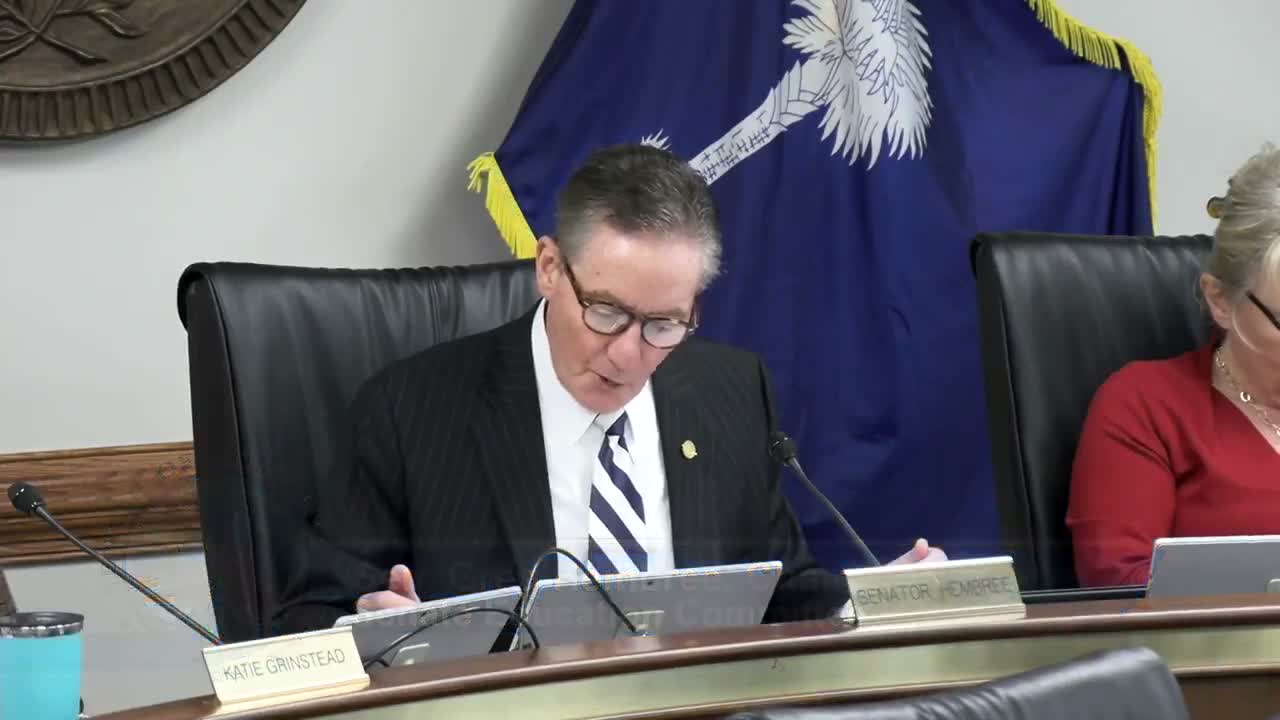
Senate education committee advances bill to let trained school crossing guards direct traffic
Summary
The committee gave a favorable report to S7 11 after adopting an amendment requiring the South Carolina Criminal Justice Academy to implement a train‑the‑trainer program so law enforcement can certify individuals to direct traffic at schools; members debated liability and volunteer protections.
The South Carolina Senate Education Committee on March 11 advanced S7 11, a bill that would expand the authority of designated school crossing guards to direct and control vehicular traffic on public roadways near schools for drop‑off and pickup periods.
Katie Grinstead, the committee’s research director, told members the bill would require school districts to ensure designated individuals receive appropriate traffic‑safety training and that the South Carolina Criminal Justice Academy would train law enforcement officers who would, in turn, train those designees. “It would be a train‑the‑trainer model,” Grinstead said, and the Criminal Justice Academy “is okay with that model.”
Senator Johnson, the bill’s sponsor and subcommittee chair, said some districts previously hired private companies to manage traffic but were forced to rely on off‑duty law enforcement after an attorney general opinion limited who may direct traffic. “These schools have had to hire off‑duty law enforcement,” Johnson said, adding many departments lack personnel to staff morning and afternoon shifts. He urged flexibility for districts to use trained, contracted personnel where officers are unavailable.
Committee members pressed on liability and volunteer protections. Senator Rice asked whether contractors would assume liability; Johnson replied the contracts typically allocate that risk. Senator Grooms, who said he had been a volunteer crossing guard, raised concerns that the bill could unintentionally bar volunteers who simply hold a stop sign to let children cross. “I don’t want to do anything to prevent a volunteer school crossing guard from holding up a stop sign,” Grooms said; Johnson and other members said they would work on language to preserve volunteers’ ability to stop pedestrian crossings while distinguishing that from directing vehicular traffic in and out of parking areas.
The committee adopted a subcommittee amendment to specify that the Criminal Justice Academy will provide the training and moved for a favorable report as amended; the motion carried.
The committee’s action sends S7 11 forward with a training requirement intended to create uniform practices and to reduce liability risks by standardizing instruction. Sponsors said they will continue to refine language to protect volunteers while allowing districts options where law enforcement is not available.