
Senate committee advances DCS supplemental budget after debate over caseloads and privatized case management
Get AI-powered insights, summaries, and transcripts
Subscribe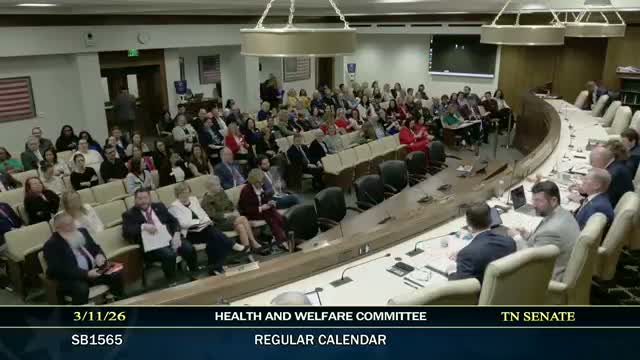
Summary
The Department of Children's Services presented a supplemental budget request emphasizing residential custodial care ($36.8M) and private provider case management ($34.5M). Lawmakers questioned high caseload averages in parts of the state and whether private contractors are the right long-term solution; the committee voted to send the budget to Finance.
The Tennessee Department of Children’s Services (DCS) presented a supplemental budget request to the Senate Health and Welfare Committee focused on addressing placement shortages, workforce stability and rising costs for high-acuity residential care. Commissioner Margie Quinn said the largest drivers of the FY27 request are a $36.8 million residential custodial budget increase and $34.5 million for private provider case management.
Quinn told the committee that the supplemental funding would prevent placement disruptions by expanding residential and private-provider capacity and by stabilizing workforce costs. The presentation noted a 5% decline in children in custody from 2022 to 2026, improvements in placement stability and expanded programs such as safe-baby courts and relative caregiver support.
Committee members pressed the department on specific operational concerns. Senator Hensley pointed to a regional average caseload as high as about 56 children per worker and asked why case management positions had not been reallocated sooner. Commissioner Quinn said the department has targeted hires in the hardest-hit counties (notably Davidson County), has reduced some regional averages dramatically (from 96 to roughly half in Mid State since 2022), and plans to convert open foster-care-support positions to child-protective-service (CPS) positions over time. Quinn emphasized that privatized case managers cannot perform CPS investigations but can handle foster-care support and related work; as openings occur, the department intends to reallocate state workers toward CPS duties.
Senator Massey and others asked about youth placed out of state. Frank Mix, executive director of network development and provider relations, said that one year ago 188 young people were in residential care outside Tennessee; that number is 76 now, a reduction of nearly 60 percent. Quinn described an ongoing project in Morristown to renovate an abandoned hospital into a 96–124 bed level-3 psychiatric residential treatment facility and noted plans to add medically fragile beds.
Lawmakers also discussed the relative caregiver program: Quinn said the program is at a $32 million maximum liability, has served over 4,200 unique children, and currently carries a waiting list (about 998 children). The department is rebidding provider contracts to try to increase direct payments to families rather than providers.
After the discussion, Senator Watson moved that the committee forward the supplemental budget to the Finance Committee for further consideration; the chair recorded the motion and announced the budget was referred to Finance (the chair announced eight ayes). The referral allows Finance to further examine funding levels and program specifics.
What happens next: The Finance Committee will schedule the supplemental budget for its fiscal review and may request further reporting or technical adjustments from DCS.