
Sen. Roberts' measure to let adults 21+ forgo motorcycle helmets fails in committee
Get AI-powered insights, summaries, and transcripts
Subscribe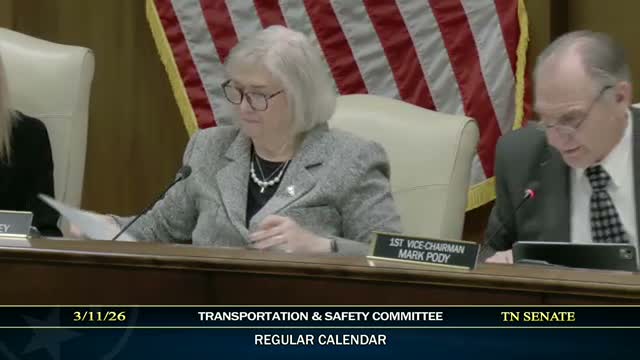
Summary
The Tennessee Senate Transportation and Safety Committee debated a bill to let motorcyclists age 21 and older choose whether to wear helmets; supporters cited tourism and economic benefits, opponents cited safety data and lifelong costs from traumatic brain injury. The measure failed in committee.
NASHVILLE — The Senate Transportation and Safety Committee on Monday rejected legislation that would have allowed motorcycle riders age 21 and older to ride without helmets.
Sponsor Sen. Roberts framed the proposal as a policy of personal choice, telling the committee that the bill would align Tennessee with more than 30 other states and could boost tourism and county‑level economic activity: “Are we arguing that helmets are a bad idea…? No, not at all. The point is…we want to let people make a choice,” Roberts said.
Mayor Mike Pagriba of Humphreys County, who testified in favor, emphasized potential tourism dollars and local events that he said ride away from states with mandatory laws. He estimated large statewide gains for restaurants, festivals and small businesses and said, “We conservatively estimate that an annual revenue increase of over $1,000,000,000 in added revenues for Tennessee.”
Opponents pressed the committee on safety and costs to taxpayers. A committee member who said she formerly ran an intellectual‑disability agency argued that lifelong care for traumatic brain injury vastly exceeds typical insurance coverage, and cited federal research showing helmets reduce risk of death and head injury. Another law‑enforcement veteran described responding to a fatal motorcycle crash and said he could not support weakening helmet requirements.
Sen. Roberts acknowledged the fiscal and safety questions but said those fiscal discussions belong in the finance committee and reiterated the bill was a policy choice about adult decision‑making.
After debate and questions, the committee voted. The voice roll reflected 4 ayes and 5 no votes; the chair announced the bill “dies” in committee.
What happens next: The sponsor could seek to amend the proposal and reintroduce it in another committee or session, but under the committee vote the measure will not move forward from Transportation and Safety at this time.