
Oklahoma House approves bill limiting changes to birth‑certificate sex designation after heated debate
Get AI-powered insights, summaries, and transcripts
Subscribe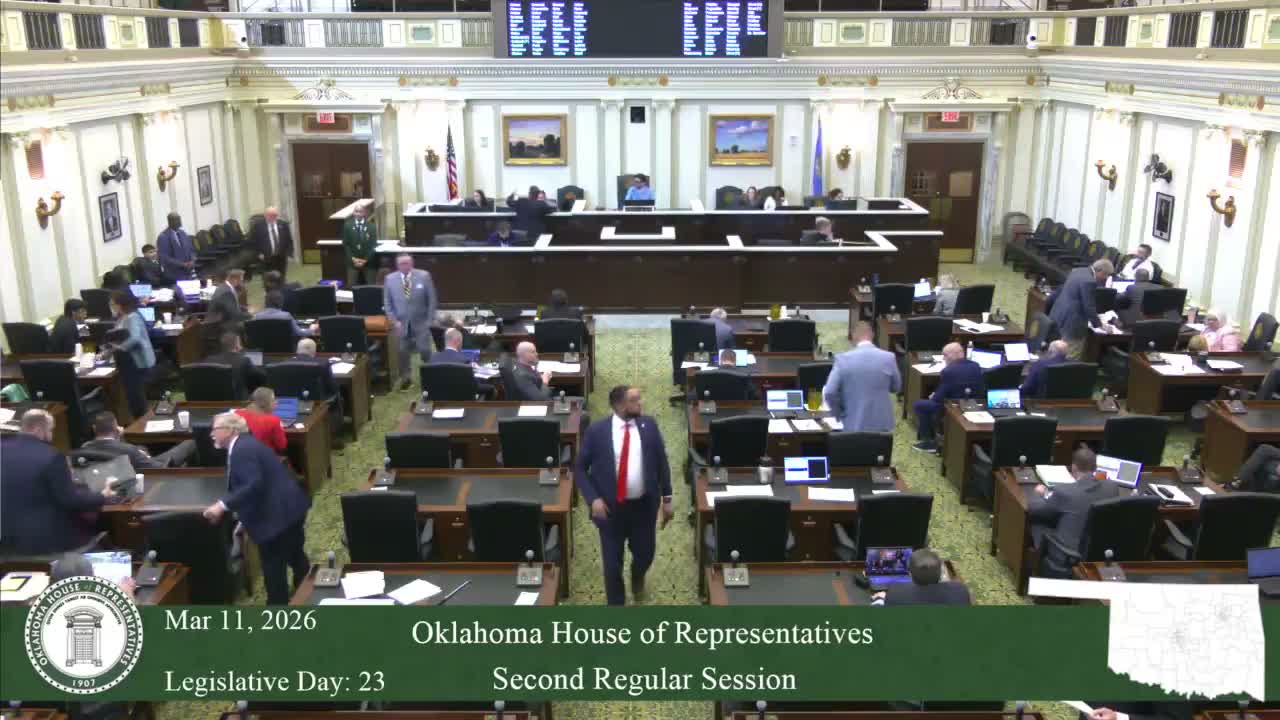
Summary
The Oklahoma House passed House Bill 12‑25, which tightens what can be changed on birth certificates and draws sharp debate over self‑determination, intersex births and a cited court decision; the measure passed on a recorded vote after prolonged questioning of the author.
The Oklahoma House of Representatives passed House Bill 12‑25, a measure amending state rules on what information may be changed on birth certificates, after extended floor debate and questions about its impact on intersex infants and adults who have changed gender.
Representative Kevin West, the bill’s sponsor, told the chamber the measure is meant to ensure accuracy in vital records and align statutory language with existing administrative rules. “This bill does not change that in those instances,” West said when pressed about intersex births and later corrections, adding the state’s health department “already has rules to address” such cases.
Opponents framed the bill as an intrusion on personal autonomy. Representative Deck, speaking against the measure, opened his remarks by calling the debate “one of self determination,” and said the bill would take from adults the right to “determine who you are.” Representative Fugate cited earlier court rulings and warned the change could be unconstitutional in practice.
Members raised legal and practical questions, including whether state action should “record biological fact” and how law enforcement would reconcile identification if appearance and documents differed. The case Fowler v. Stitt was invoked on the floor as precedent cited by members who said similar language had been found not to serve a legitimate state interest.
The House recorded the vote during roll call and the Clerk announced the tally as 73 aye, 18 nay. The Speaker declared the bill passed.
The debate on the House floor focused on the limits of administrative rules versus statute, the state’s stated interest in accurate vital statistics, and concerns from members about individual rights and potential legal challenges. The bill’s sponsor emphasized statutory alignment with the administrative code; opponents emphasized individual self‑determination and cited court precedent.
The House declared the bill passed by the recorded count announced on the floor; the transcript does not record subsequent steps in the legislative process.