
Bill to license sign‑language interpreters draws testimony about medical harm; committee rolls bill for a week
Get AI-powered insights, summaries, and transcripts
Subscribe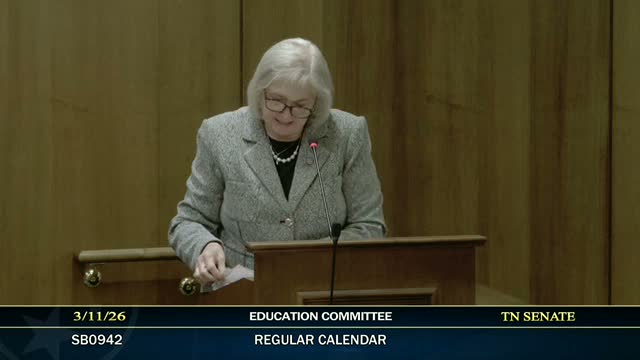
Summary
Senator Massey’s bill to create state licensure and a five‑member board for sign‑language interpreters prompted testimony describing a medical misinterpretation that led to emergency surgery; members requested more information and the bill was rolled one week for additional stakeholder input.
Senator Massey presented a bill (noted in committee as SB 9‑42) to establish a state licensure system for paid sign‑language interpreters and create a five‑member board under the Department of Health. Massey said licensure would set minimum qualifications, a code of ethics, a complaint process and pathways for credential growth.
Jade Sims, a deaf advocate who said she has worked with offices for deaf and hard‑of‑hearing services in Maryland and Florida, described a patient safety incident she said resulted from poor interpretation during a medical appointment. She told the committee an interpreter conveyed that a kidney stone was "tiny" when it was later determined to be 13 millimeters; the patient required emergency surgery and suffered a decline in kidney function. "The risk of misinterpretation is significant," she told the panel.
Senators asked whether the bill would reduce availability of interpreters by creating barriers to entry, whether volunteers would be restricted, and whether the bill should be narrower (for example limited to health‑care settings). The witness and sponsor said licensure would accept multiple credential paths and would not require national certification, and that exemptions could exist for volunteers or emergency contexts. Senator Hale suggested the bill might better live in a different statutory location than a health related board.
Senator Pote said he lacked information to support establishing a new board; other members asked for workforce numbers and details about costs. Senator Massey offered to roll the bill for a week to gather more details from the deaf community and agencies; the committee agreed and set the bill to be rolled one week.
What’s next: Senator Massey will gather additional information about workforce size, licensure costs, exemptions for volunteers and settings to refine the proposal before it returns to committee.