Council hears $17 million incentive package for Covell I‑35 retail development; EEDA and developer call it 'catalytic'
Loading...
Summary
City staff, the EEDA and developers presented a proposed $17M incentive tied to 9 anchor retailers at I‑35 and Covell; payments would be milestone‑based (50% on certificate of occupancy and sales‑tax permit, 50% after 180 days). Consultants modeled a breakeven in about 4–5 years for the named tenants and an estimated $595M total economic impact for those tenants.
At the same meeting, council members heard a detailed presentation of a proposed development‑incentive agreement for the Covell retail site at I‑35 and Covell (the proposed "Legacy at Covell"). City staff and the Edmond Economic Development Authority (EEDA) described the concept as a 250,000‑square‑foot retail complex with nine targeted retailers and two named priority anchors — Dick's Sporting Goods and Whole Foods.
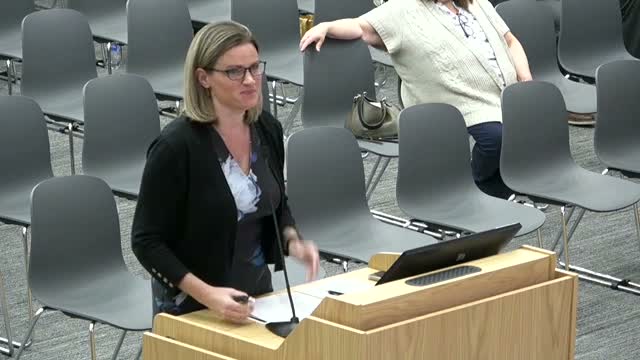
EEDA representative Heather McDowell told the council the project is intended to be catalytic for the I‑35 corridor and to attract regional visitors. Jennifer Springer, EEDA’s contracted economist, presented IMPLAN input‑output modeling using the nine retailers’ sales estimates; she reported the modeled local sales‑tax receipts from those nine tenants would recoup the proposed $17 million maximum incentive between the end of year 4 and year 5. Springer also presented a total economic‑impact figure of roughly $595 million for the modeled tenants when direct, indirect and induced effects are included.
Staff outlined payment and performance milestones. Under the draft agreement the maximum $17,000,000 incentive would be split among the nine retailers (roughly $1.88M per named tenant). Each retailer’s opening payment would be 50% of its allocation and would be released after four conditions are met: a city certificate of occupancy, the retailer occupying and operating in the premises, the retailer being open for business to the public, and holding a valid Oklahoma sales‑tax permit. The remaining 50% of a retailer’s allocation would be paid 180 days after the opening payment, provided continuous operation. The agreement includes an important sequencing caveat: the developer must secure the two priority anchors (Dick’s and Whole Foods) before incentive payments for other named retailers are triggered.
Developer representatives described nearly 20 years of land assembly and prior public‑private work at the site, and forecast substantial additional private investment if anchors and pad sites proceed; staff and the developer estimated utility fee generation and ongoing sales‑tax flows that would accompany full build‑out. Council members asked about multifamily housing prospects adjacent to the site, the developer’s timeline for tenant commitments, and whether incentivized dollars would be paid to the developer; staff confirmed the city’s payments flow to the developer under the proposed structure.
Several council members supported using incentives as a competitive economic tool — citing comparable recent incentives in neighboring cities — and highlighted the potential to generate hotel, utility and sales‑tax revenue and to support schools and local services. At least one council member cautioned about funding a deal that primarily benefits national retailers and asked staff to tighten contractual language around encumbrances and mortgages on the property; the mayor specifically asked staff and legal counsel to resolve lien/mortgage language before the council takes action. Council requested the city attorney and city manager coordinate with the developer on encumbrances and noted the item would return for council consideration in about two weeks.
No final action was taken at this workshop. Council members signaled broad interest but asked for clarified contract language on liens/encumbrances and options to capture a portion of future revenue for a city economic‑development fund rather than treating the incentive strictly as a one‑time TIF‑style allocation. Staff indicated they will continue negotiating contract details, provide legal clarifications, and return the item to the full council for a formal vote once the outstanding issues are resolved.