Get Full Government Meeting Transcripts, Videos, & Alerts Forever!
Get email alerts on the Human Trafficking topic
No spam. Unsubscribe anytime.
Oklahoma Bureau of Narcotics presents "You Are Not Alone" campaign to Edmond council
Summary
A state Bureau of Narcotics representative briefed Edmond council on a statewide "You Are Not Alone" campaign that uses QR codes and partner shelters to connect trafficking victims with services. Council members agreed staff will coordinate to place materials in public facilities.
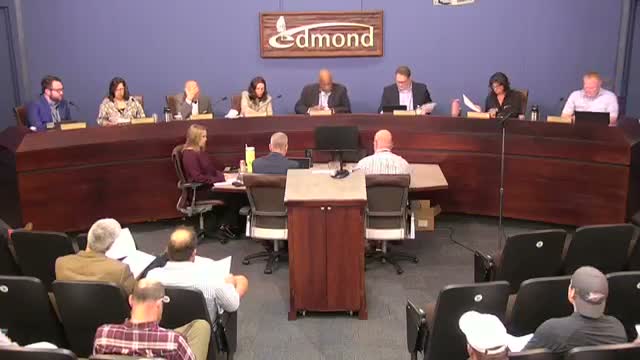
Craig Williams, who said he was standing in for Captain Varney of the Oklahoma Bureau of Narcotics, told the Edmond City Council on Oct. 14 that the bureau has a dedicated human‑trafficking unit and is promoting a "You Are Not Alone" campaign to help victims find resources.
"An activity prevented is you'll never be able to measure it," Williams said, summarizing the campaign's prevention focus. He described the campaign's core elements as simple public messaging, a poster and a 3‑by‑3 QR code linked to vetted service providers and crisis hotlines. Williams said the bureau works with the National Center for Missing and Exploited Children, the National Human Trafficking Resource Center and certified adult shelters vetted through the Oklahoma Attorney General's office.
The presentation emphasized juvenile victims and early intervention. Williams said outreach targets places where a victim might briefly be alone — public restrooms were cited as an example — so a QR code there could let someone discreetly access help. He also noted that the bureau maintains an online resource page and has investigative tools that intersect with narcotics enforcement, and that Oklahoma has one of the few stand‑alone full‑time human‑trafficking units in the country.
Council members asked whether the bureau could supply posters and QR codes for city facilities and suggested training for municipal court and other staff who interact with juveniles. Williams said the bureau will provide printed materials and training on request.
The council took no formal action but directed city staff to coordinate with the bureau to obtain campaign posters and QR codes for placement in applicable public spaces.
The presentation ran at the start of the regular meeting and was followed by brief council questions about local deployment and juvenile‑focused training.