
Senate panel advances amended HB 4852 to clarify food‑additive rules, adds exemptions for soft drinks and local manufacturers
Get AI-powered insights, summaries, and transcripts
Subscribe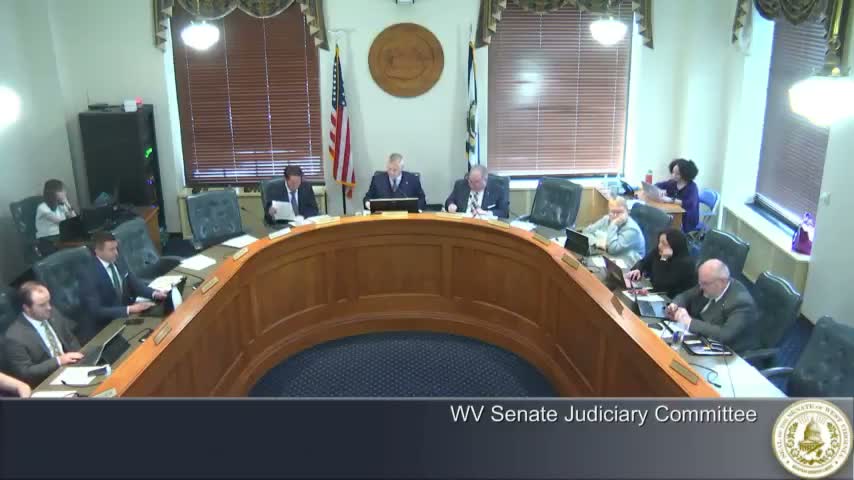
Summary
A Senate committee adopted a strike‑and‑insert to clarify West Virginia’s food and color additive law, retained the list of banned additives, added carve‑outs for bottled soft drinks and some local manufacturers, rejected an FDA‑trigger amendment, and voted to report the bill to the full Senate.
Chair opened debate on the strike‑and‑insert for House Bill 4852, which moves specified additives from an adulteration provision into a new code section and creates civil penalties for manufacturers who knowingly sell food containing listed additives after set effective dates. Counsel told the committee the effective manufacturing date would be Jan. 1, 2028, and retailers could sell existing inventory until July 1, 2028.
The bill drew industry testimony and public‑health advocacy. Jennifer Gardner, director of state government affairs for the National Confectioners Association, told the committee the association opposes HB 4852 as drafted, saying the state action risks duplicative regulation and higher consumer costs; “West Virginia consumers will pay almost $200,000,000 a year in additional grocery spending due to last year’s finalized food and color additive ban,” Gardner said. Jay West, senior director for chemical products at the American Chemistry Council, stayed on the line to answer technical questions about whether the committee planned to expand the list of additives.
Environmental Working Group vice president Melanie Benish testified in support of the strike‑and‑insert as a necessary clarification after a federal court found earlier language ambiguous. “This legislation … rectifies any uncertainty created by the way the bill that you passed last year was drafted,” Benish said, arguing industry announcements to phase out certain dyes align with the law’s 2028 effective date.
Members debated scope and exemptions at length. The senior senator from the fourth proposed an amendment that would have made the ban effective only after the Food and Drug Administration affirmatively finds the named additives poisonous or injurious; that amendment failed in a divided vote, 6–8. The committee then considered several exceptions: a narrowly drafted termination‑upon‑federal‑action amendment was defeated, but a definition‑based exemption for bottled soft drinks (using the State code definition for “bottled soft drink”) and an exception carving out manufacturing of certain frozen confections (popsicles) were adopted. Separate proposed carve‑outs for ‘pepperoni rolls’ and a broad “Frito‑Lay‑type snack” exemption were rejected.
After adopting the amendments that survived, the committee approved the strike‑and‑insert as amended and voted to report HB 4852 to the full Senate with a recommendation that it pass.
What happens next: The bill, as amended, will go to the full Senate for further consideration and any additional floor amendments.