Get Full Government Meeting Transcripts, Videos, & Alerts Forever!
Get email alerts on the Water Supply topic
No spam. Unsubscribe anytime.
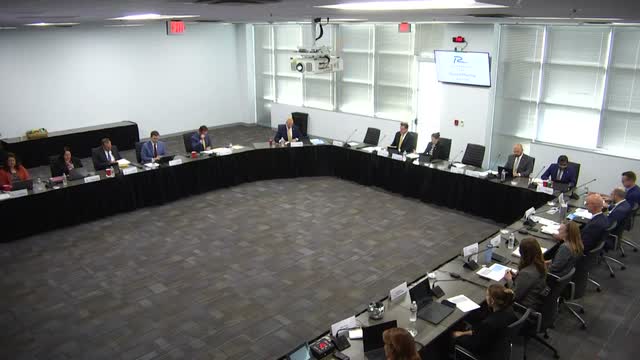
North Texas Municipal Water District briefs Richardson on supply plans, conservation and desalination backup
Summary
District officials told the City Council that conservation already saves roughly 96 million gallons per day, outlined projects including plant expansions and reuse, and said a Lake Texoma desalination plant (50 million gpd) could be a five‑year backup if other supplies fall short.
North Texas Municipal Water District officials told the Richardson City Council that the region will need a broad portfolio of supply and conservation measures to meet growth, and that the district is pursuing both near‑term conservation and multi‑decade water‑supply projects.
The district presentation, led by Jenna Covington and water‑planning lead Billy George, outlined an array of strategies: expanding the Leonard and Wylie treatment plants, bringing more Lake Texoma supplies online through pipelines and blending, pursuing reuse projects including the Sister Grove regional water‑recovery facility, exploring aquifer storage and recovery, and keeping desalination of Lake Texoma as a contingency. “If we are unable to develop another supply to get us beyond that mid‑2030s, Lake Texoma desalination will be the project that we can implement,” Billy George said, estimating the desalination capacity at roughly 50,000,000 gallons per day and noting a 3‑year construction window after two years of design.
Jean Chipperfield, who presented the district’s strategic financial plans, said the regional capital improvement program will be the primary driver of higher rates: the district plans to spend more than $1,000,000,000 on water‑related infrastructure next year, much of it for pipelines and treatment expansions to move Texoma water to Leonard and Wylie. Chipperfield said use of subsidized financing through the Texas Water Development Board’s SWIFT program has saved the district hundreds of millions on past projects and remains a funding avenue going forward.
Alex Johnson described conservation programs that the district is piloting and expanding. “We’re currently saving more than the firm yield of a Bo D’Arc Lake on a daily basis,” he told council, quantifying current conservation savings at about 96,000,000 gallons per day; he said conservation’s projected long‑term savings could be equivalent to multiple reservoirs. The district is piloting irrigation evaluations (Richardson was the first participating city), a Water My Yard program user‑experience study, an expanded youth education program and regional conservation visioning with partners including the Tarrant Regional Water District.
Council members pressed presenters on timelines and tradeoffs. Councilmember Justice asked whether Texoma desalination would be built proactively or held as a backup; Billy George said preliminary engineering and permits exist from years ago and the facility could be delivered in about five years, but that building it now would be an inefficient use of public funds if other near‑term strategies and conserved supplies will meet demand sooner. Members also pressed the district about groundwater extraction in East Texas, reuse options, and how conservation incentives would affect revenue. The district said the new five‑year rolling average methodology for wholesale purchases will create stronger incentives for retail conservation, and that more aggressive conservation could reduce future capital needs though fixed costs would remain.
On system efficiency and leakage, the district said it is stepping up data analysis; the board requested a briefing on gallons‑per‑capita consumption and water loss so member cities can compare trends. The district described leak‑detection programs including “SmartBall” pipeline testing and satellite/technology tools for identifying areas of loss.
What’s next: the district said it will continue to refine near‑term projects (some expected within 4–10 years), pursue state funding opportunities and present more data on water loss and waste‑water capacity in future committee briefings. Council members asked staff to return with more detail during budget work sessions and to explore short‑term, city‑level conservation incentives and pilot programs.