Get Full Government Meeting Transcripts, Videos, & Alerts Forever!
Get email alerts on the Human Relations Commission topic
No spam. Unsubscribe anytime.
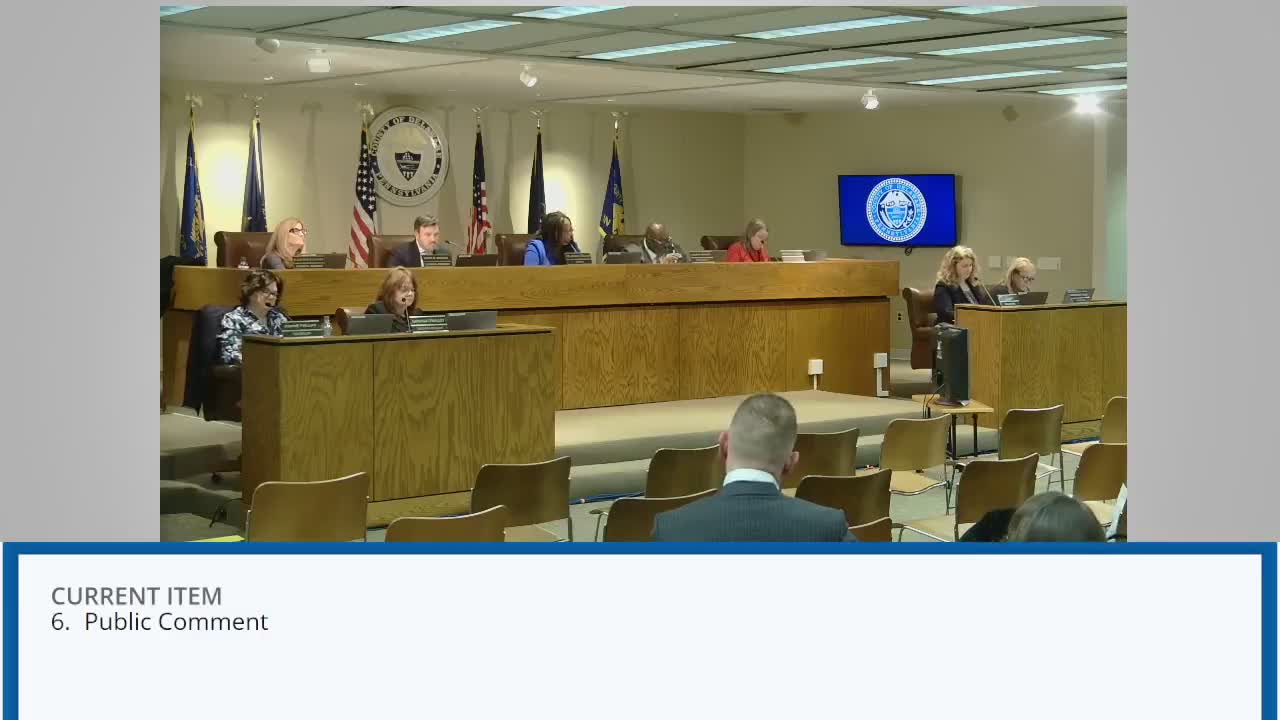
Delaware County Council adopts Human Relations Commission ordinance after contested public hearing
Summary
After an extended public hearing on civil rights, Delaware County Council voted 5-0 to adopt Ordinance 2025-06 establishing a county Human Relations Commission with procedural safeguards, a modest startup budget and reporting requirements.
Delaware County Council voted unanimously Wednesday to adopt Ordinance 2025-06, creating a county Human Relations Commission intended to investigate and mediate civil complaints of discrimination in employment, housing, public accommodations, education and healthcare.
The ordinance passed after a sometimes heated public hearing in which residents voiced sharply different views. Some speakers urged the county to establish a local forum for discrimination complaints and local outreach; others warned the ordinance could expand government power, open the county to lawsuits, or infringe on free‑speech rights.
"Don't infringe on our First Amendment rights by bringing the thought police to Delaware County," one speaker warned during public comment, using profanity and threatening language. The chair and other council members repeatedly distinguished constitutionally protected speech from the ordinance's targeted civil practices, and Solicitor Aubrey explained the ordinance's scope and exemptions.
Solicitor Aubrey summarized the ordinance's authority and limits, noting exemptions for mission‑driven religious and charitable organizations and a requirement that the commission "require the approval of the executive director and county controller prior to the expenditure of any monies necessary" to implement certain powers. She stressed the commission focuses on civil remedies and may decline jurisdiction or refer matters to other agencies.
Executive Director Barbara O'Malley and other council members said start‑up costs were expected to be small. O'Malley told the council the county had benchmarked other counties and that a modest solicitor's‑office budget line of roughly $3,000 was anticipated for initial expenses; council members added procedural safeguards that require executive‑director and controller approval for expenditures.
Supporters at the hearing said a local commission can provide faster, community‑based responses than state agencies and can emphasize education and mediation.
Roll call: Ms. Reuther, Ms. Schaeffer, Mr. Madden, Mr. Womack and Dr. Taylor recorded aye votes and the ordinance passed 5-0. The council plans to appoint commissioners in early 2026; the ordinance includes reporting requirements and a process for the commission to decline jurisdiction or refer complex cases to state authorities.
What happens next: The county will begin recruiting and training volunteer commissioners, with volunteer appointments expected early next year and casework or formal proceedings to follow once the commission is operational. The council said it will monitor costs and adjust procedures as experience dictates.