Lifetime Citizen Portal Access — AI Briefings, Alerts & Unlimited Follows
Residents urge Tulsa City Council to create independent monitor for police after multi‑million settlements
Loading...
Summary
Nine speakers at a council public hearing urged a charter amendment to establish an Office of the Independent Monitor for the Tulsa Police Department, citing recent multi‑million-dollar settlements, equity data and concerns that civilian oversight could restore public trust and save taxpayer dollars.
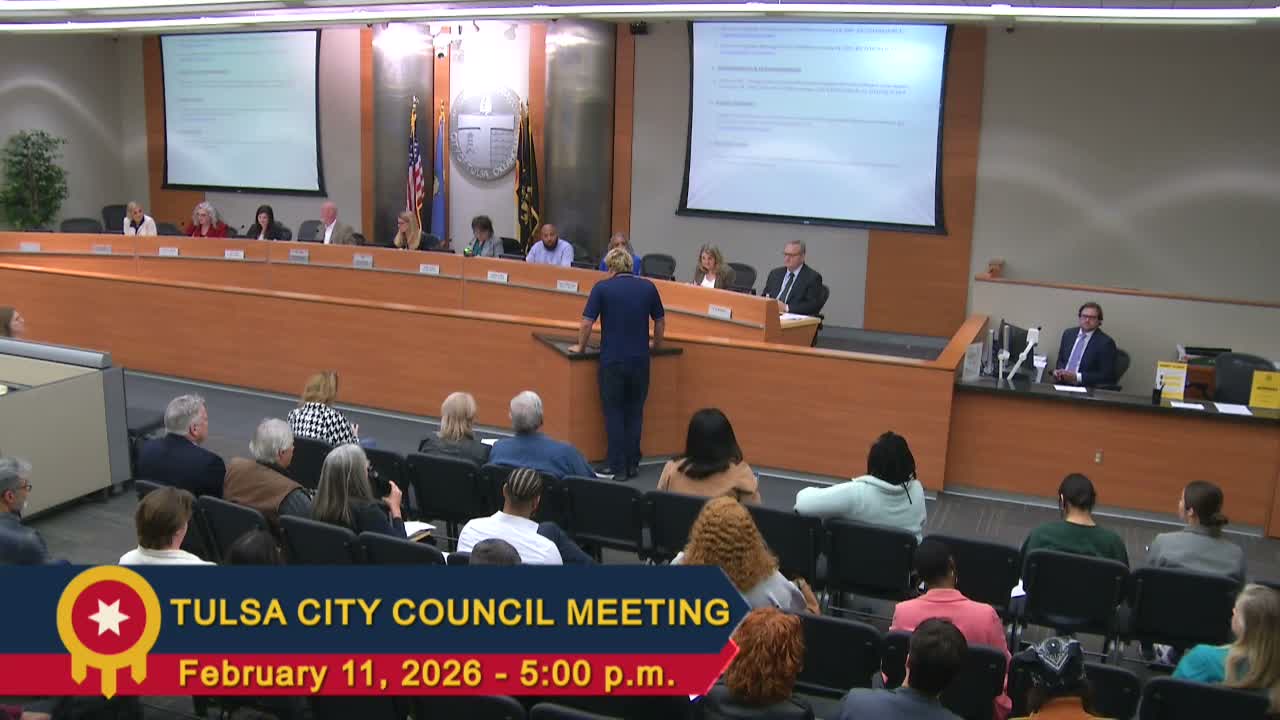
The Tulsa City Council heard nine public comments urging a charter amendment to create an Office of the Independent Monitor (OIM) for the Tulsa Police Department, with speakers pointing to recent multi‑million-dollar settlements and racial disparities in officer use of force.
Hudson Harder, a teacher and District 9 constituent, told the council the city has spent "many millions of dollars" on misconduct settlements. "This includes, but is not limited to, a 4 and a half million dollar wrongful incarceration suit from last month as well as a $26,250,000 paid to William Jamieson for his 2 decades of wrongful imprisonment," Harder said, urging a community‑appointed monitor with investigative authority and professional staff.
"This is not anti‑police. It is pro accountability," Christine Poe, a District 8 resident, said, citing the city's 2024 equality indicators report and its findings about higher rates of officer use of force involving Black residents. Poe told the council that an independent, community‑appointed office "would create real structural accountability" and help prevent costly settlements by examining records and recommending policy changes.
Other speakers pressed similar themes. John Kenny said the city has paid what he characterized as "over $41,000,000 in wrongful‑conviction settlements" and called for civilian and council oversight. Paula Warlick cited recent payouts and said Tulsa's equality indicators score on officer use of force is troubling; Mitch Gillum and John Chrisant (a school board member) urged the council to adopt a charter amendment to strengthen oversight and improve public safety.
Tashi McKellop, a Muscogee Nation citizen, described how Indigenous people in her community often feel fear rather than safety in interactions with police and said an independent monitor would make her community feel safer.
Speakers described structural features they want the OIM to have: community appointment, independence from mayoral or council influence, full‑time professional staff, the ability to meaningfully investigate police records and to issue policy recommendations. Several commenters framed the proposal as both a moral and fiscal imperative, arguing that oversight could reduce future settlement costs.
The council opened the public hearing and received comments but did not take a final vote on a charter amendment during the meeting. The public hearing concluded and the council moved on to other agenda items.