Get AI Briefings, Transcripts & Alerts on Local & National Government Meetings — Forever.
Hundreds of Tulsa residents urge council to put an independent police monitor on the ballot
Loading...
Summary
At a lengthy public hearing, two dozen speakers urged the Tulsa City Council to place a charter amendment before voters to create a community‑led Office of Independent Monitor (OIM) with investigatory powers, citing repeated misconduct payouts and fatal police encounters.
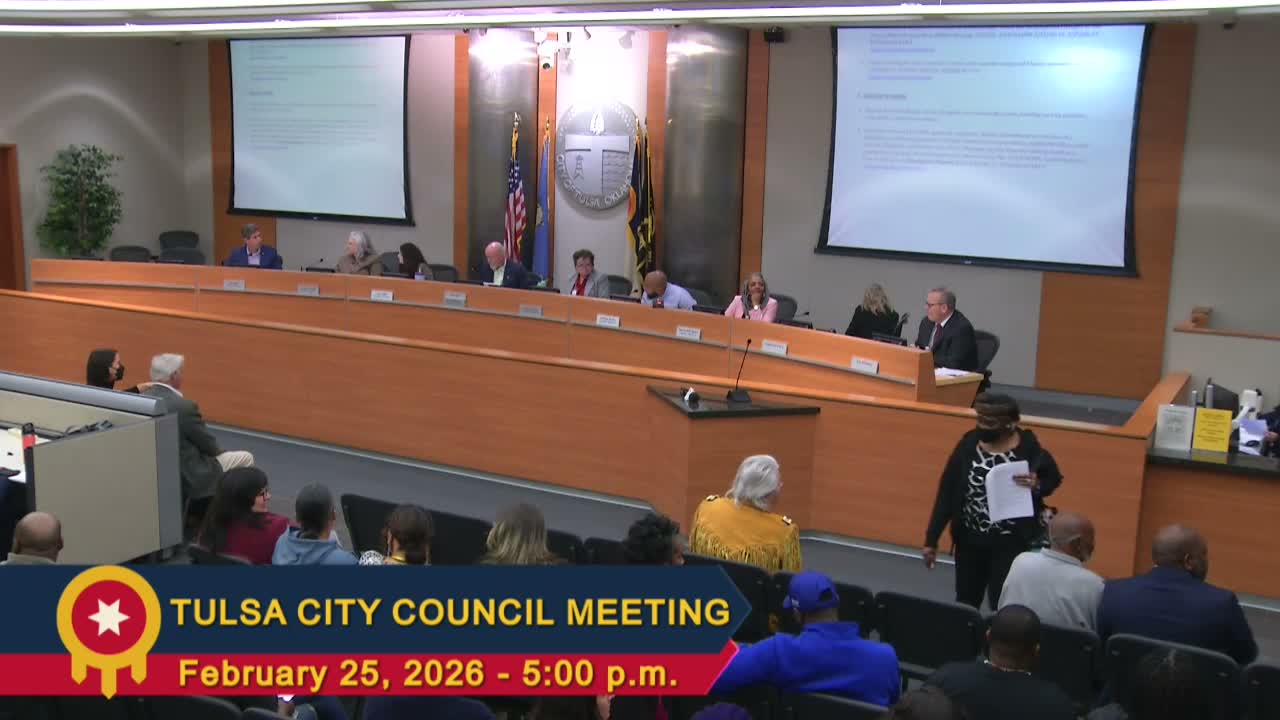
The Tulsa City Council heard more than 20 speakers during a public hearing on proposed charter amendments, with many urging the council to allow voters to consider creating an Office of Independent Monitor (OIM) for the Tulsa Police Department.
Jamelle Dyer, a North Tulsa pastor, said prior advisory processes felt performative and argued that chartered, community‑led oversight with investigatory authority would protect residents and taxpayers. Multiple speakers cited large recent legal payouts and patterns of misconduct as reasons to make the monitor independent of political influence.
Speakers repeatedly referenced recent litigation figures. Several commenters said the city has paid more than $41 million in settlements in the past year and cited individual payouts mentioned in public remarks (examples included an $800,000 settlement tied to a failure to protect a 911 caller and a $26,250,000 award referenced by a commenter). Those figures were presented by speakers as evidence that the city needs independent review to prevent future harm and reduce taxpayer exposure.
Tracy Jones, a licensed clinical social worker, described the fatal police encounter involving Michael Glunt during a mental‑health crisis and urged structural change so that crisis calls are met with de‑escalation and clinical care rather than lethal force. Other speakers — including community advocates, pastors, artists and lawyers — urged an OIM with a full‑time monitor, professional staff, authority to review records and powers to make binding or publicly reported recommendations.
A number of speakers also linked the oversight request to broader concerns about transparency across city institutions (including arts funding and commissions), saying independent oversight could strengthen trust across many city systems.
Councilors did not take a vote on a charter amendment at the meeting; staff noted additional public hearings are scheduled and speakers were reminded the amendment would ultimately go to voters if the council places it on the ballot.
Why it matters: Speakers framed the charter amendment as both a civil‑rights and fiscal issue — arguing independent oversight could reduce harm, restore community trust and limit costly settlements paid by taxpayers. The council will continue the public record in subsequent hearings before deciding whether to place an amendment on a future ballot.
What happens next: Council scheduled further public hearings on charter amendments; no council action or vote was taken at the meeting.