Lifetime Citizen Portal Access — AI Briefings, Alerts & Unlimited Follows
Council hears first public hearing on major downtown TIF amendment; developers pitch $95M Philcade rehab
Loading...
Summary
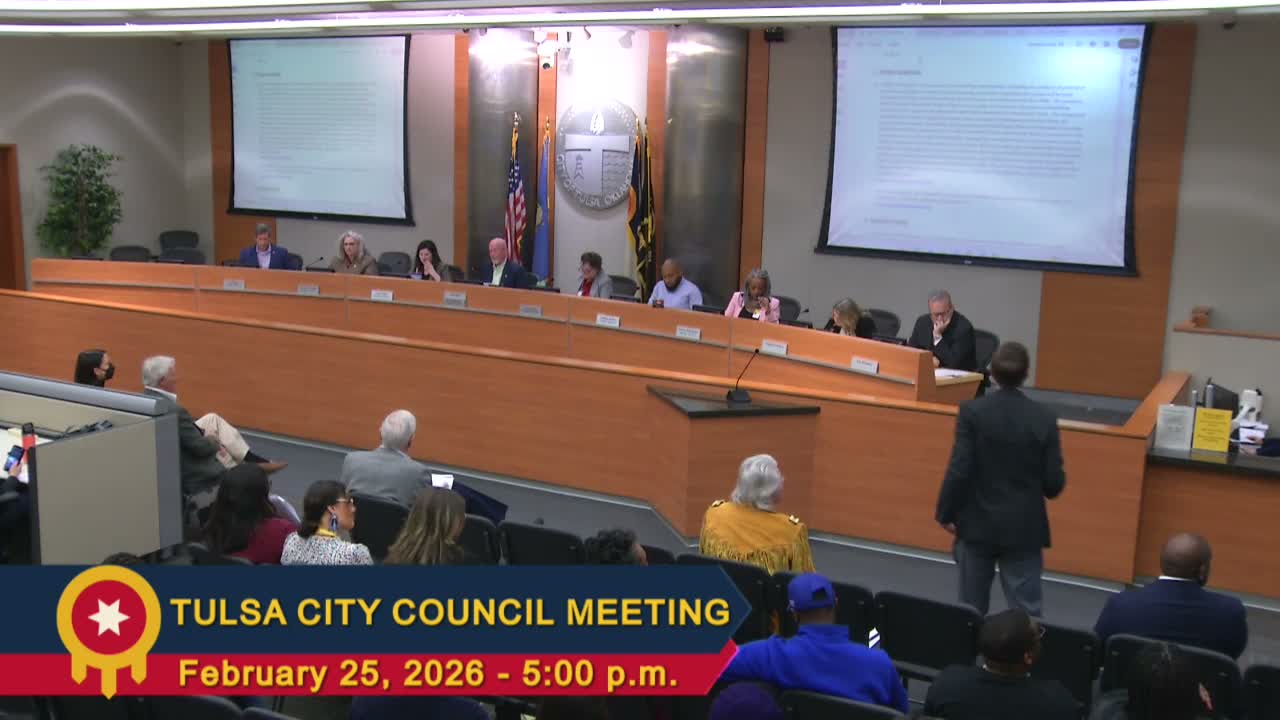
At a Feb. 2026 public hearing, TIF counsel and downtown developers outlined proposed changes that would add two Philcade increment districts, increase authorized TIF project costs by about $260 million and allow the Philcade to be rehabilitated as a mixed‑use project; council set a second hearing for March 11.
At a public hearing on the Downtown Area Economic Development Project Plan, TIF counsel Jeff Sabin told the Tulsa City Council the second‑amended project plan would add two increment districts for the Philcade Building, add sales‑tax increment to the Cathedral District and remove the Evans Fin Tube increment district. Sabin said those changes, combined with updated development assumptions, increase the project plan's authorized costs by about $260,000,000.
The downtown planning group and developers presented numbers and a vision. Emily Scott, interim president and CEO of the Downtown Tulsa Partnership, said the Cathedral District remains under‑invested, with about 47% of developable land used for surface parking. Scott said a predevelopment plan identifies six catalytic sites and estimates roughly $300,000,000 in near‑term development potential and nearly $900,000,000 at full buildout, and she told council many residential products need roughly $30,000–$40,000 subsidy per unit to be viable.
Developers seeking tools to rehabilitate the Philcade described a $95,000,000 mixed‑use project that would restore the landmark. Robert Lykham of American Residential Group said the plan includes 115 apartments, a 125‑room full‑service hotel, about 30,000 square feet of retail and roughly 15,000 square feet of meeting and event space. The developers estimated about 200 construction jobs during a 28‑month build and more than 150 permanent jobs after opening.
Developers and TIF counsel said the changes would create two Philcade increment districts: a sales‑tax district (TIF J) and an ad valorem/lodging tax district (TIF K). Sabin outlined broader budget changes he said result from updated development assumptions: roughly $192,000,000 for public improvements and about $373,000,000 for development assistance for a combined authorized budget of about $565,000,000 over the districts' lives. He also said updated assumptions could raise the Cathedral District (TIF D) generation potential to as much as $225,000,000; TIF J and K were described with generation potential estimates of about $14,000,000 and $86,000,000 respectively.
Several downtown stakeholders spoke in support. Richard Wensley, a retired university administrator associated with Boston Avenue United Methodist Church, urged council to back the Cathedral District TIF expansion and said church property could be part of mixed‑use housing. Jay Hellman and other longtime downtown developers said incentives are often necessary to make large rehabilitation projects financially viable.
Sabin told council this was the first public hearing; he said the statutory process requires a review committee reconvening and further hearings for a major amendment. The council did not vote on the amendment; Sabin said the second public hearing is scheduled for March 11 at 5 p.m.
Why it matters: The proposed revisions would enlarge the downtown TIF budget, change which tax revenues are captured for projects and create separate increment districts structured to support a high‑cost rehabilitation of a landmark building. If the council advances a major amendment, the changes could reshape investment, tax flows and redevelopment near the city core. The TIF plan as presented also maintains a policy to dedicate 10% of ad valorem increment revenue to Tulsa Public Schools, a provision Sabin said was retained in the amendments.
What happens next: The council will hear the second public hearing on March 11 and — if the amendment is considered a major amendment under state law — the proposal will return to the statutory review committee and the Tulsa Metropolitan Area Planning Commission for further action before any adoption vote.