Lifetime Citizen Portal Access — AI Briefings, Alerts & Unlimited Follows
Broward property appraiser warns proposed homestead amendments could strip Miramar of tens of millions
Loading...
Summary
Broward County Property Appraiser Marty Kier told the Miramar City Commission that competing Florida proposals to expand homestead exemptions could cut county and city property-tax revenue significantly — Miramar could lose roughly $48.1 million under one House proposal — and urged residents to follow ballot language closely.
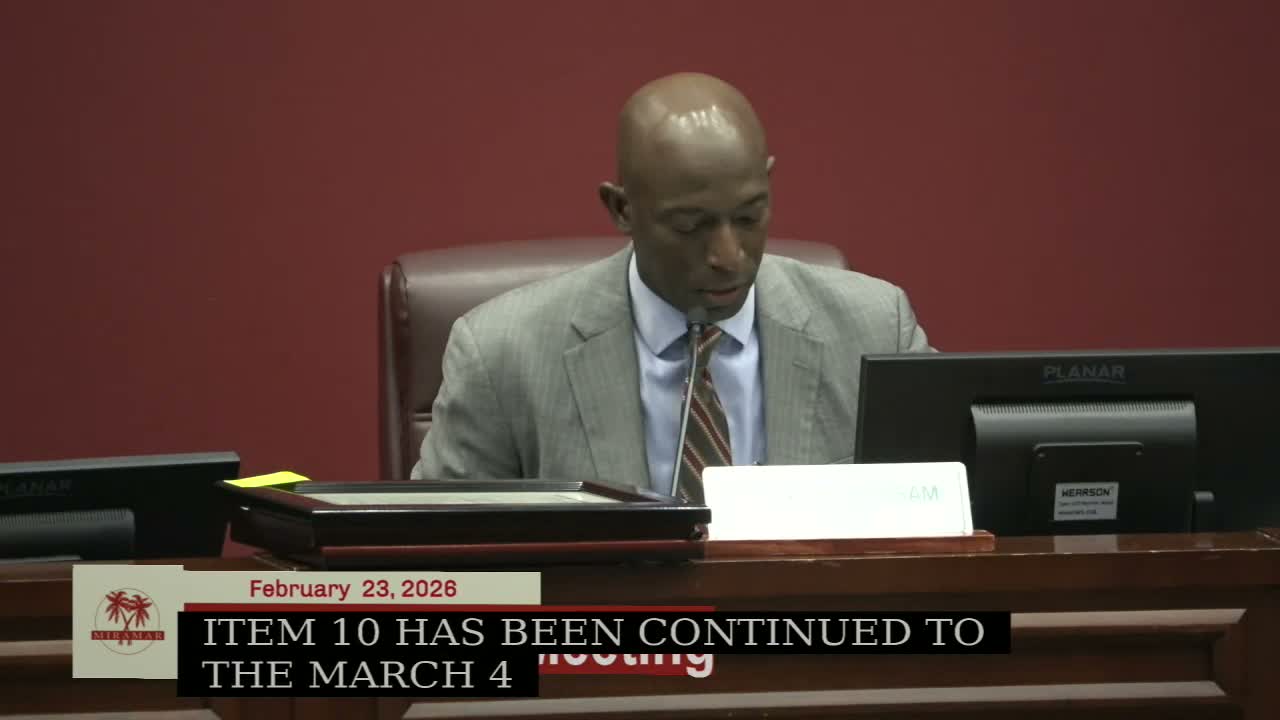
Marty Kier, Broward County property appraiser, told the Miramar City Commission on Feb. 23 that a series of proposed state constitutional amendments targeting homestead exemptions could sharply reduce local tax revenue and materially change how local governments pay for services.
Kier said one House proposal, House Joint Resolution 203, would eliminate most homestead property taxes except for the school portion and would require local governments to keep police, firefighters and paramedics fully funded. Using 2025 tax-year data, he estimated Broward County’s loss at about $624,000,000 (a roughly 34.6% reduction) and said Miramar — which has 27,740 homesteaded properties — could face an approximate $48,140,000 revenue shortfall (about 42%). “Whatever they put on the ballot will be by far the most consequential vote I think they’ll ever take,” Kier said.
Kier walked commission members through several alternative proposals under discussion in Tallahassee. Another House proposal, he said, would fully exempt homeowners 65 and older (except for school taxes). Kier estimated that change would cost Broward roughly $161,000,000 (a 9% decrease) and Miramar about $8,400,000 (a 7.3% decrease) if enacted as described.
He also described a plan that would grant an additional $200,000 exemption to homesteads with a specified homeowners-insurance condition and cautioned that modeling that idea is difficult because insurance holdings vary; in an upper-bound scenario where every homestead had qualifying insurance, his estimate showed county revenue could fall by about $329,000,000 and Miramar by roughly $30,000,000.
On portability, Kier said one proposal would remove the $500,000 portability cap (except for school taxes) that lets homeowners transfer accrued Save Our Homes assessment benefits when they buy another primary residence. Kier said that change would have minimal budget impact in Miramar (he estimated about $22,000) because relatively few Miramar properties used the portability benefit last year (177 properties).
Kier also described a proposal to move to a three-year reassessment cycle with limits on assessed-value growth (residential assessed values limited to 3% growth over three years and commercial to 15% over the same period), and he warned the implementation details and revenue effects would depend on how the reassessments were staged.
During follow-up questions, commissioners pressed Kier on whether multiple ballot measures could appear simultaneously and how the governor, Senate and House positions might interact. Kier said the House has floated several concrete proposals and that the final ballot language — and any implementing statutory changes to replace local revenue — remain uncertain. He urged Miramar residents to review the truth-in-millage notices mailed in August and to attend county and district budget hearings; he also offered Broward County Property Appraiser resources and in-person help at the Miramar cultural center.
Kier repeatedly emphasized that, while proposals vary, the common challenge will be replacing lost local revenue without diminishing essential services. He encouraged the commission to continue community outreach so residents understand both potential savings to homeowners and projected shortfalls to local government.
The commission took no formal action on the state proposals during the meeting; Kier said final language and statutory implementing bills would determine the ultimate local impact.